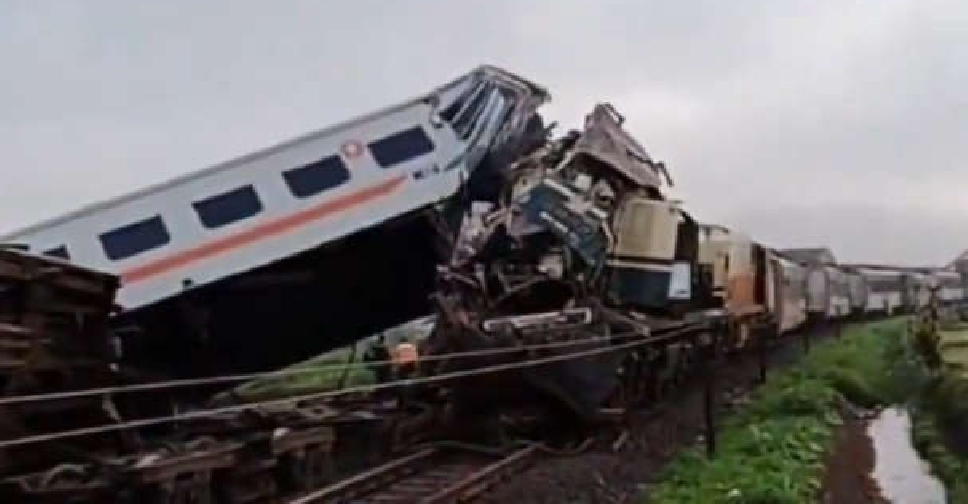
Indonesian authorities have confirmed the identities of ten victims out of fifteen who lost their lives in a collision between an electric train and a diesel train at Bekasi East station. The tragic incident took place on the evening of April 27, and the victims were identified through their personal data.
In a press conference held by the head of the police hospital in Kramat Jati, General Prima Hero Yuli Hartono, it was explained that the identification process was conducted in collaboration with a specialized disaster victim identification team. Initial data such as fingerprints and secondary data including medical markers and personal belongings were utilized.
Details of the Incident
The unfortunate accident occurred late on Monday evening, where an electric train (KRL) collided with a diesel train (KRD) at Bekasi East station. The collision resulted in the deaths of fifteen individuals, while several injured passengers were transported to nearby hospitals for treatment. Ten of the victims have been identified, while the identities of the remaining five are still under investigation.
The bodies were transferred to the police hospital in Kramat Jati, where necessary examinations were conducted to determine their identities. The identification of the victims was expedited through their personal data, facilitating the identification process.
Background & Context
Train accidents in Indonesia are a common issue, often attributed to outdated infrastructure and lack of maintenance. Over the years, the country has witnessed numerous tragic incidents that have claimed many lives. This incident comes at a sensitive time as the government is striving to improve public transportation systems and modernize railways.
Historically, Indonesia has faced significant challenges in transportation, leading to increasing calls for enhanced safety measures and infrastructure upgrades. Recurring accidents raise public concern and compel the government to take urgent actions to improve the situation.
Impact & Consequences
This incident serves as a painful reminder of the critical need to enhance safety in public transportation. Fatal accidents undermine public trust in the transportation system and increase pressure on the government to improve services. It is anticipated that this incident will lead to renewed calls for comprehensive investigations into the causes of the accident and accountability.
The accident may also affect transportation flow in the region, as some lines may be temporarily closed for necessary inspections. This could lead to traffic congestion and increased travel times for commuters.
Regional Significance
Although the accident occurred in Indonesia, it highlights safety issues in transportation that many countries, including Arab nations, face. Fatal incidents in public transport are a global concern that requires international attention and cooperation among nations to improve safety standards.
Arab countries can benefit from international experiences in improving their transportation systems, as enhancing safety in transportation can contribute to economic growth and increase public trust in government services.
The tragic incident in Bekasi East underscores the urgent need for improvements in transportation systems and public safety. This incident should serve as a catalyst for governments around the world, including those in Arab nations, to take serious steps towards enhancing infrastructure and providing safe transportation for citizens.