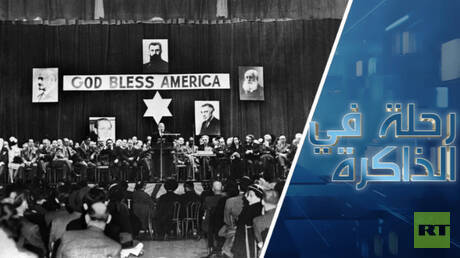
Questions are rising about the origins and influence of the pro-Jewish lobby in the United States. The role of Christian Zionism in supporting political Zionism led by Theodor Herzl is also highlighted.
Historically, the influence of the Zionist lobby in the United States dates back to the late 19th century, when it began to form as a political and social pressure group. A combination of factors contributed to this influence, including Jewish migrations to America and the economic growth the country experienced during that period.
Details of the Event
In 1897, Theodor Herzl established the first Zionist Congress in Basel, Switzerland, which marked the beginning of political Zionism. This congress had a significant impact on Jewish communities in the United States, as many American Jews began to engage in political and social issues that concerned them. This movement contributed to the formation of a strong lobby supporting Jewish causes.
This coincided with the emergence of Christian Zionism, which viewed the return of Jews to Palestine as part of a divine plan. This movement played an important role in enhancing American support for Israel, as it saw backing the Jewish state as a religious and moral duty.
Background & Context
Over the decades, the relationship between the United States and Israel evolved, with the United States becoming one of Israel's most prominent supporters politically and economically. A variety of factors contributed to strengthening these relations, including shared strategic interests and cultural and religious orientations.
In the 1970s and 1980s, the relationship between the Zionist lobby and the White House saw increased closeness, with cooperation in defense and security fields being enhanced. These dynamics shaped American foreign policy towards the Middle East.
Impact & Consequences
The influence of the Zionist lobby on American decision-making is a controversial issue, with some arguing that this influence strengthens the United States' position in the region, while others consider it a factor exacerbating the Israeli-Palestinian conflict. These dynamics have impacted numerous American political decisions, including military and economic aid to Israel.
Moreover, the Zionist influence on American decision-making has contributed to shaping American public opinion towards Arab issues, leading to varying positions among different segments of American society.
Regional Significance
The Zionist lobby affects the relations between the United States and Arab countries, as many Arab nations view American support for Israel as a reason for instability in the region. This has led to heightened tensions between Arabs and Israel, impacting peace efforts in the area.
In recent years, with the increasing normalization between some Arab countries and Israel, the influence of the Zionist lobby has become more evident, as many Arab leaders seek to achieve their national interests by enhancing relations with the United States.
In conclusion, the influence of the Zionist lobby on American decision-making remains a complex topic that requires in-depth study to understand its dimensions and implications for the Arab region and the world.