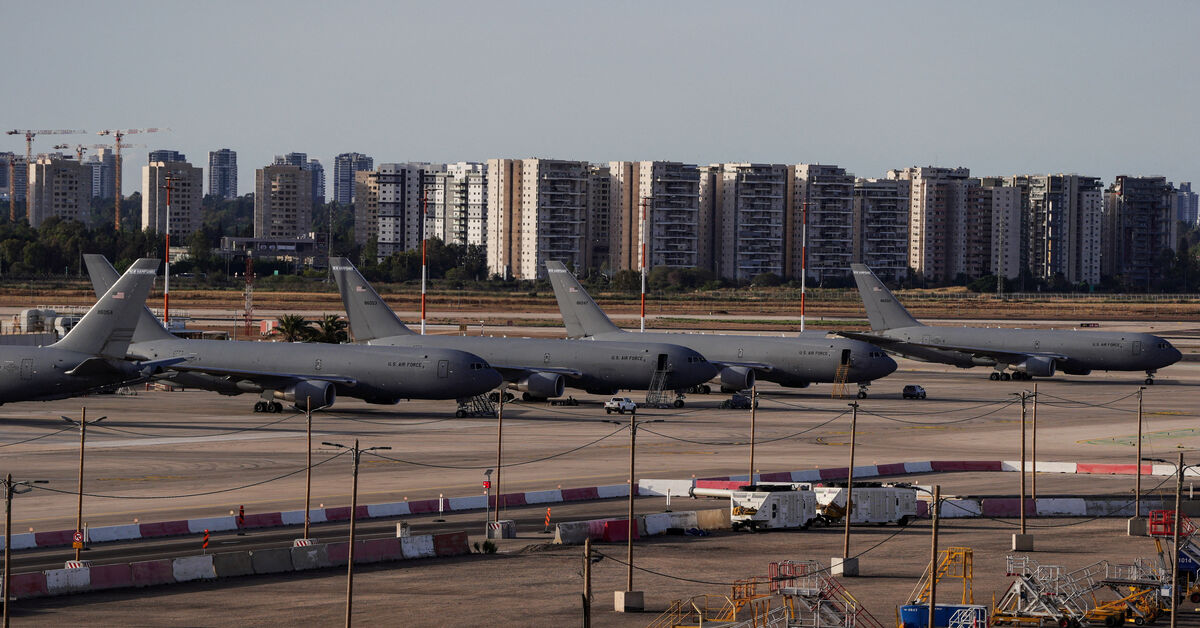
The director of the Israeli Airports Authority, Sharon Kedmi, announced that Ben Gurion International Airport, which is considered the main air gateway to Israel near Tel Aviv, is currently operating at less than 30% of its capacity. This decline in operational capability is a result of the presence of US military refueling aircraft, which threatens to cancel a significant number of flights during the summer.
Kedmi explained in an interview with Kan Radio that 70% of the airport's activity is restricted due to the space and resources occupied by US military operations, negatively impacting commercial air traffic.
Details of the Situation
This crisis at Ben Gurion Airport is part of the ongoing tensions in the region, where US military activities in the Middle East have increased in recent years. The airport is a vital point for tourism and commercial travel, making the impact of these restrictions more evident amid expectations of increased travel during the summer.
These statements come at a sensitive time for Israel, as the country is expected to see an increase in incoming tourists, making it crucial to address this issue promptly. Kedmi noted that the current situation could lead to the cancellation of many flights, which could adversely affect the Israeli economy, which heavily relies on tourism.
Background & Context
Historically, the relationship between the United States and Israel has involved close military cooperation, with the US being one of the largest supporters of Israel in various fields. However, the presence of US military aircraft in the region raises questions about the impact on commercial and civilian activities.
In recent years, the US has increased its military presence in the Middle East, leading to heightened tensions in the region. These activities have affected air traffic at many airports, not just in Israel, highlighting the challenges countries face in dealing with foreign military activities.
Impact & Consequences
The restrictions imposed on Ben Gurion Airport could lead to significant economic repercussions, as many businesses rely on air traffic for the transport of goods and individuals. Additionally, flight cancellations may affect the airport's reputation as a major travel destination, which could negatively reflect on the Israeli economy as a whole.
Moreover, the continuation of these restrictions may increase pressure on the Israeli government to take urgent action to resolve the issue. This may require reassessing relations with the United States or seeking alternative solutions to ensure the continuity of air traffic.
Regional Significance
This issue is particularly significant for neighboring Arab countries, as the restrictions imposed on Ben Gurion Airport may affect travel between Arab states and Israel. Amid ongoing tensions in the region, many Arab tourists may seek to visit Israel, making it essential to address this problem to ensure smooth travel.
Ultimately, the question remains regarding how these restrictions will affect Israeli-American relations and whether they will lead to changes in US military policy in the region. Resolving this issue will have far-reaching implications for air traffic and tourism in Israel and the region as a whole.