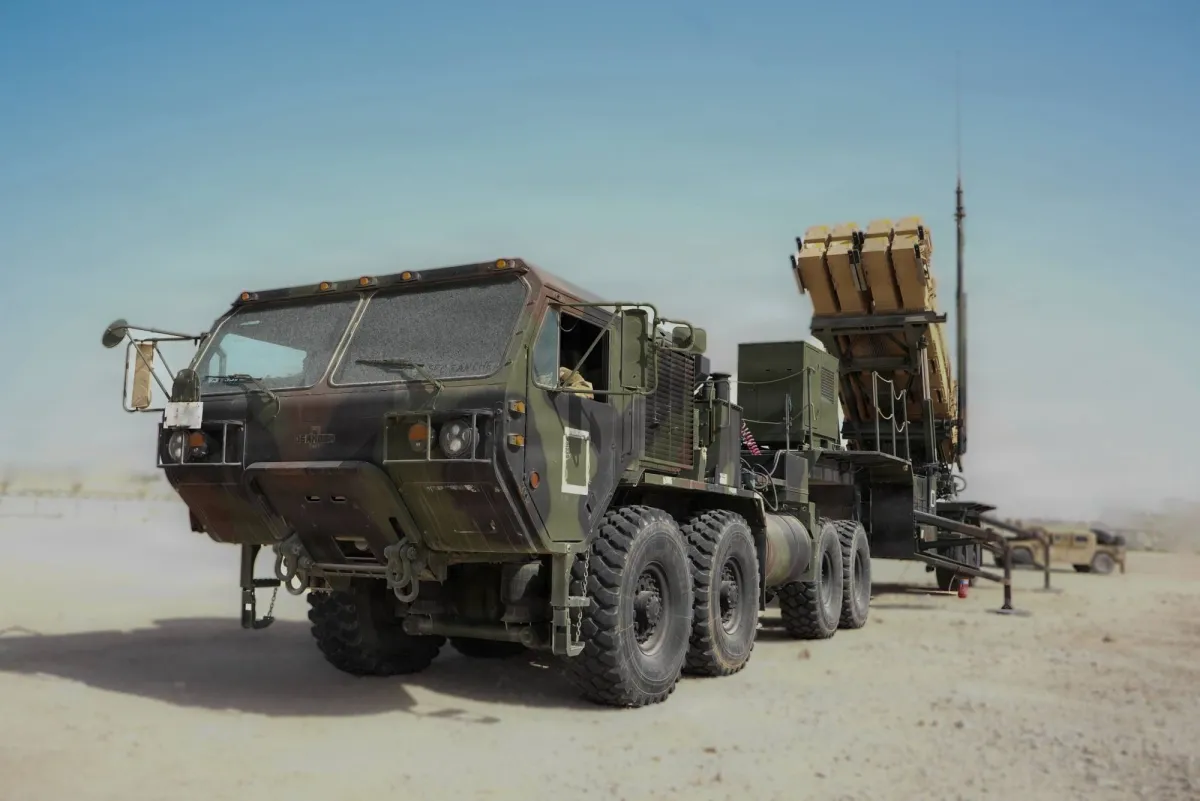
Recent analysis reveals that U.S. defense contractors need at least three years to replenish stocks of three major weapon systems that were heavily utilized in the war with Iran. This situation heightens fears that U.S. forces may face limited firepower in any future conflict, especially as tensions with China escalate.
The systems in question include Tomahawk cruise missiles, which are used to strike targets deep within enemy territory, as well as Patriot and THAAD interception systems designed to defend against missiles and drones. According to the Associated Press, the Center for Strategic and International Studies has indicated that while the U.S. possesses sufficient ammunition for any potential scenario in the war with Iran, depleted stocks create a vulnerability window for a possible conflict in the Western Pacific.
Details of the Situation
China has announced its goal to ensure its military can control Taiwan by force by 2027, which many experts view as more of an ambition than a strict deadline. Chinese President Xi Jinping has warned that any mismanagement by Washington of its relations with the island could lead to clashes or even open conflict.
The analysis considers the historical defense budget proposal from former President Donald Trump for 2027, which amounted to $1.5 trillion, aimed at accelerating spending on advanced munitions. Despite bipartisan agreement in Congress on increasing stocks, the report suggests that the issue lies not in funding but in the time required to expand production capacity and build complex systems.
Background & Context
Estimates indicate that this period of vulnerability will last for several years until stocks return to previous levels, with several more years needed to reach the levels desired by war planners. Although ammunition stocks are classified, there is enough public information in Pentagon budget materials to estimate production timelines.
President Donald Trump and Defense Secretary Pete Hegseth have asserted that the U.S. is capable of engaging in any war, urging defense contractors to expedite ammunition production. However, some military experts have contested this, noting that Pentagon officials were aware of the reality of military stockpiles.
Impact & Consequences
Concerns over dwindling stocks have been central to recent congressional hearings. For Democrats, ammunition supply serves as a measure against the war with Iran, which Trump initiated without legislative approval. Meanwhile, some Republicans argue that the problem stems from the U.S. sending Patriot missile defense systems to Ukraine following the Russian invasion in 2022.
Mark Cancian, a retired Marine colonel, states that the roots of the impasse trace back to the end of the Cold War, where the U.S. assumed future wars would be short and regional. However, Russia's war in Ukraine has demonstrated that wars can be prolonged and require substantial stocks of advanced weaponry.
Regional Significance
The Arab region is directly affected by these developments, as any potential conflict between the U.S. and China could destabilize the area. Additionally, concerns over dwindling U.S. stocks may impact America's ability to support its allies in the Middle East, potentially allowing other powers to enhance their influence.
In conclusion, the challenges facing the U.S. military in replenishing its weapon stocks are critical, as responding to any future threats requires precise strategic planning and adequate resources to ensure military superiority.