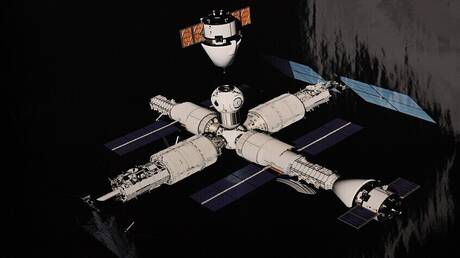
Dmitry Gorshkov, Director of Digital Transformation at 'Roscosmos', announced the integration of artificial intelligence software in the control and management of the orbital station (ROS). This initiative is part of Russia's efforts to enhance its capabilities in space and develop modern technologies that contribute to improving the efficiency of space operations.
The (ROS) orbital station is an ambitious project aimed at creating an advanced research platform in space, allowing scientists and researchers to conduct scientific experiments in a zero-gravity environment. The introduction of artificial intelligence in managing this station will enable improved performance and reduce human errors, thereby enhancing the chances of success for future space missions.
Event Details
Gorshkov clarified that the use of artificial intelligence will allow the station to make quick and effective decisions in real-time, enhancing its ability to tackle various challenges it may face in space. He also noted that this technology will aid in optimizing resource management and controlling various systems within the station.
The project also includes the development of advanced software for data analysis, enabling scientists to obtain accurate and rapid information about the experiments being conducted. This step aligns with Russia's vision to strengthen its leadership in the field of space, especially amid increasing competition with other countries.
Background & Context
Historically, Russia was one of the first countries to explore space, launching the first satellite 'Sputnik' in 1957. Since then, Russia has achieved significant milestones in this field, including sending the first human into space, Yuri Gagarin, in 1961. However, current challenges require a continuous update of the technologies used in space.
In recent years, the Russian space industry has faced several challenges, including the need to modernize the infrastructure and technologies employed. The introduction of artificial intelligence in managing the (ROS) station represents a strategic step towards improving performance and increasing the competitiveness of the Russian space sector.
Impact & Consequences
The introduction of artificial intelligence in managing the (ROS) station could have significant implications for the future of space. This technology will help achieve greater efficiency and reduce costs, potentially opening the door for more space projects. It may also enhance international cooperation in space, as other countries can benefit from these advanced technologies.
Moreover, the use of artificial intelligence in space could lead to the development of new applications in various fields, such as communications, navigation, and scientific research, thereby enhancing the economic and social benefits of these projects.
Regional Significance
With the growing Arab interest in the field of space, Russia's experience in integrating artificial intelligence into the (ROS) station could serve as a model. Arab countries, such as the UAE and Saudi Arabia, have begun significant investments in the space sector, reflecting their desire to enhance their technological capabilities.
These developments could contribute to strengthening Arab cooperation in space, allowing for the exchange of experiences and technologies among Arab nations, thereby enhancing their standing on the international stage.
In conclusion, the introduction of artificial intelligence in managing the (ROS) station represents an important step towards a more innovative future in the field of space. This move not only enhances Russia's capabilities but also opens new horizons for cooperation and development in this vital area.