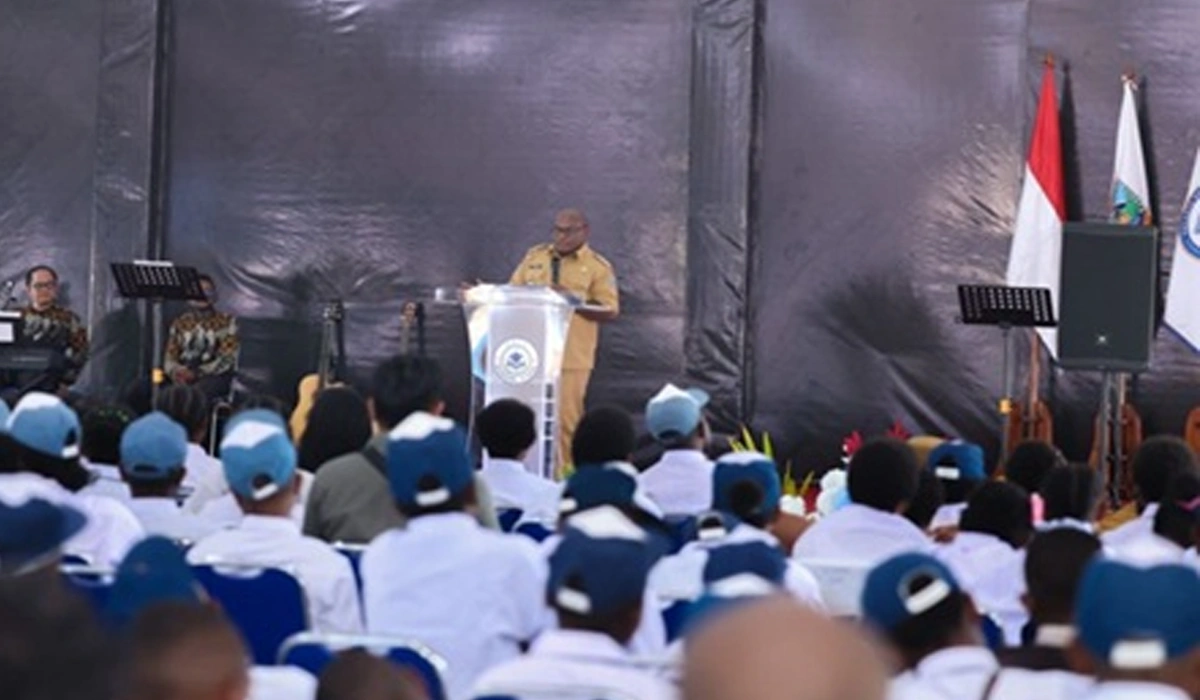
The Central Papua government has announced the adoption of the Full-Day School Program as a primary strategy to enhance the quality of education for children in remote regions. Central Papua Governor Miki Nawayba emphasized that this program aims to provide an inclusive educational environment that meets essential student needs, including healthy food and sanitary facilities.
In his statements during a press conference in Napier, Nawayba noted that the program represents an innovative educational model, allowing students to receive formal education while addressing their daily needs. A budget of approximately 20 billion rupiah has been allocated to build a prototype school in Puncak district, and initial results have shown remarkable success.
Program Details and Implementation
The Full-Day School Program aims to tackle the challenges of accessing education in remote areas. The program is designed to serve as a model, with the government seeking to implement it across all districts in Central Papua. Nawayba explained that each district will have two schools of this type, one funded by the regional government and the other by the local government.
He added that the program aligns with government efforts to support the free nutrition program, as many children in mountainous areas suffer from malnutrition. Consequently, this initiative has been integrated with the Full-Day Schools to ensure that children receive the necessary nutrition.
Background & Context
Historically, Central Papua has faced significant challenges in education, with many remote areas lacking schools and educational facilities. However, the current government is striving to improve this situation through innovative strategies like the Full-Day School Program.
Government data indicates that the Human Development Index in Central Papua is expected to rise from 60.25 points to 60.64 points by 2025, reflecting efforts to enhance the quality of education and essential services.
Impact & Consequences
The Full-Day School Program is considered an important step towards achieving inclusive education in Central Papua. It contributes to improving educational quality and enhances children's opportunities to receive a good education, positively impacting their future.
This program may also help reduce the educational gap between urban and remote areas, promoting equal opportunities for children throughout the region.
Regional Significance
This educational model serves as an example for many Arab countries facing similar challenges in education, particularly in remote areas. Arab nations could benefit from adopting similar strategies to improve educational quality and provide an inclusive learning environment.
In conclusion, the Full-Day School Program in Central Papua represents a positive step towards improving education and reflects the government's commitment to providing equal educational opportunities for all children, contributing to the development of a knowledgeable generation capable of competing in the future.