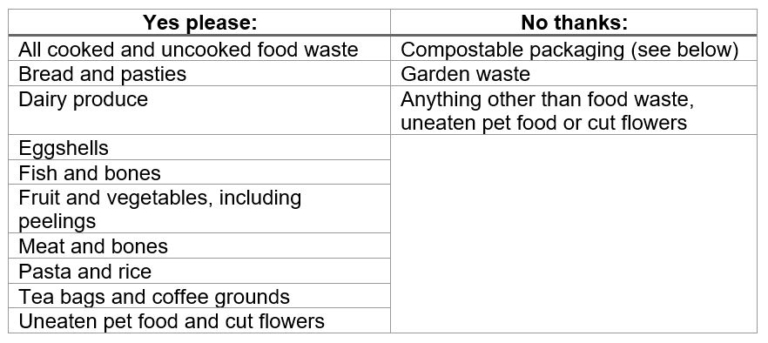
New regulations regarding food waste collection have come into effect in England, mandating that all households collect food waste on a weekly basis. However, many local councils remain unprepared to provide this service, raising questions about the effectiveness of these new laws.
A previous investigation by the BBC revealed that 79 local councils in England, equivalent to a quarter of the councils, do not expect to meet the deadline set for March 31. Local councils attributed this delay to the increasing demand for specialized vehicles and funding issues, despite the Department for Environment, Food and Rural Affairs (Defra) having provided over £340 million in grants to support these initiatives.
Details of the New Regulations
The Department for Environment has stated that it will continue to work with local waste management networks and the broader industry, providing targeted support to address remaining issues. The organization WRAP, a non-governmental organization focused on climate action, described the new recycling rules as "the biggest change in recycling policy in England in 20 years."
When food waste is collected separately, it can be used to generate electricity, reducing the amount of waste that decomposes in landfills and emits greenhouse gases. These new rules are also expected to encourage people to reduce the amount of food they waste in the first place.
Background & Context
Prior to the establishment of these new laws, about half of local councils did not collect food waste weekly, while some councils had started collecting it over a decade ago. This means that not all councils need to make changes to comply with the new rules, but the BBC has reached out to every local authority responsible for waste collection to find out what is happening in their areas.
At least 57 councils that reported they would miss the deadline aim to launch services for all households by the end of 2026, while more than ten of them could not specify an approximate date for starting the service. Meanwhile, 31 councils have secured agreements allowing them to start the service later, meaning they will not be considered as having missed the deadline.
Impact & Consequences
These transitional agreements allow for delays in service provision, in some cases for over a decade, due to their commitments to existing contracts that would be very costly to change. When accounting for these councils, more than a third of English councils will not collect food waste from all households yet.
Claire Shrewsbury, Director of Innovation and Insights at WRAP, noted that the new rules mean that "wherever you are, you will receive the same service at home, at work, and when you are out." She added that most households throw away two or more items each week that could be recycled, reflecting a state of confusion.
Regional Significance
This move in England is part of broader global efforts to improve waste management and reduce environmental impact. In the Arab region, where many countries face similar challenges in waste management, this experience could serve as a model. Arab countries can benefit from international experiences in improving waste collection systems and promoting a recycling culture.
In conclusion, these new rules in England represent an important step towards improving waste management, but the challenges faced by local councils indicate the need for further support and resources to ensure the success of these initiatives.