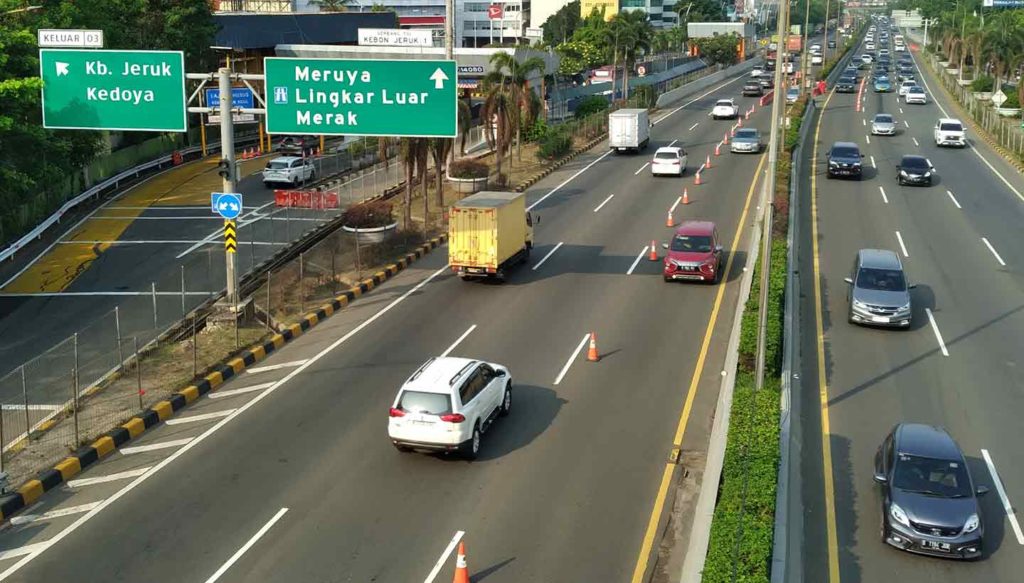
Indonesian authorities, in collaboration with PT Jasamarga Transjawa Tol (JTT) and the police, have announced the implementation of a reverse traffic system on the Jakarta-Cikampek road to address the significant increase in traffic heading towards the eastern regions of Java Island during the Good Friday holiday. This system was put into effect starting at 9:18 AM, covering the stretch from kilometer 47 to kilometer 66 in the direction of Cikampek.
Ria Marlinda Palo, Deputy Head of Public Relations and Legal Affairs at PT Jasamarga Transjawa Tol, stated that this measure is a strategic step aimed at alleviating the traffic congestion experienced on the road. She confirmed that the implementation of the reverse traffic system will be location-specific, taking into account the ground traffic conditions and continuous coordination between JTT and the police to ensure the safety and comfort of road users.
Details of the Implementation
The reverse traffic system on the Jakarta-Cikampek road is a procedure that involves redirecting traffic in two different directions on the same lane, which helps reduce congestion. This system was implemented based on police assessments, with the designated route from kilometer 47 to kilometer 66 in the direction of Cikampek.
JTT and the police continue to monitor traffic closely to ensure smooth operations. Road users have been advised to adhere to traffic safety rules and ensure that vehicles and drivers are prepared before embarking on their journeys.
Background & Context
The Good Friday holiday is considered one of the busiest periods in Indonesia, as many people travel to tourist areas or return home to spend the holiday with their families. Historically, this period has seen a noticeable increase in traffic, necessitating special measures to ensure the safety and comfort of travelers.
The Indonesian government is constantly striving to improve road infrastructure and implement innovative traffic systems to address the challenges associated with traffic, especially during periods of increased traveler numbers.
Impact & Consequences
The implementation of the reverse traffic system reflects the Indonesian government's efforts to enhance traffic management and is seen as a positive step towards reducing congestion and ensuring citizen safety. This system could serve as a model for other countries facing similar issues, as it may contribute to improving travel experiences during busy periods.
Moreover, the coordination between JTT and the police highlights the importance of collaboration among various entities in managing traffic crises, ensuring a swift and effective response to the challenges faced by traffic flow.
Regional Significance
Traffic management is a critical issue that many Arab countries also face, as major cities experience significant traffic congestion. Arab nations could benefit from experiences such as the reverse traffic system in Indonesia, as such systems could help improve traffic flow and reduce accidents.
In light of the increasing challenges in transportation, Arab countries must consider innovative and effective solutions to ensure the safety of road users and enhance travel experiences.