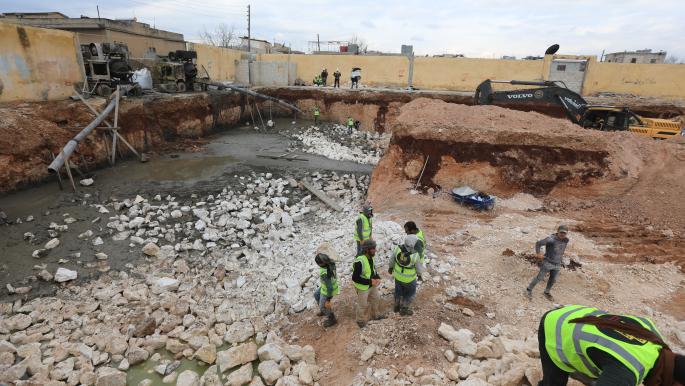
Building violations are increasing in the city of Aleppo, as residents take advantage of the current circumstances and the weak oversight from relevant authorities. These violations are particularly concentrated in areas that experienced partial destruction during the years of war, raising local residents' concerns about their safety and the future of their city.
Aleppo is considered one of the most affected cities in Syria due to the war, with many of its neighborhoods destroyed. As military activity has decreased, some residents have begun to rebuild their homes, but they often bypass existing laws and regulations, leading to a surge in informal construction.
Details of the Situation
Reports indicate that many of the new buildings being constructed do not comply with engineering standards, increasing the risk of collapse in the event of an earthquake or natural disaster. Several architects have expressed their concerns about these practices, warning that these buildings may not withstand harsh weather conditions or seismic activity.
In the absence of effective oversight, residents continue to build without obtaining the necessary permits, raising questions about the role of local authorities in regulating these activities. Some residents have indicated that they feel compelled to do so due to the urgent need for housing, especially after years of conflict.
Background & Context
Aleppo, once one of the largest cities in Syria, has witnessed widespread destruction during the ongoing conflict that has lasted for over a decade. With many historical buildings and homes destroyed, residents have begun returning to the city, but they face significant challenges in rebuilding their lives. In this context, building violations have become a part of daily life.
Historically, Aleppo was an important commercial and cultural center in the region, but the war has radically changed its landscape. As the number of returning displaced persons increases, the demand for housing has risen sharply, prompting some to make hasty and ill-considered construction decisions.
Impact & Consequences
The repercussions of building violations in Aleppo extend beyond individual cases, affecting the community as a whole. With the increasing number of non-compliant buildings, the risks to residents' lives grow, potentially leading to humanitarian disasters in the future.
Moreover, this phenomenon could negatively impact reconstruction efforts in the city. Illegal buildings may require demolition and reconstruction according to proper standards, increasing costs and hindering the recovery process.
Regional Significance
The issue of building violations in Aleppo exemplifies the challenges faced by many Arab cities that have suffered from conflicts. With the rising number of displaced persons returning to affected areas, it becomes essential to establish effective strategies for regulating construction and providing safe housing.
Addressing this issue requires a concerted effort between the government and civil society to ensure that past mistakes are not repeated and to achieve sustainable development. There must be clear mechanisms for monitoring construction and strictly enforcing laws to ensure the safety of residents and contribute to the rebuilding of affected cities.
In conclusion, the issue of building violations in Aleppo remains a sensitive matter that requires urgent attention from all stakeholders. The challenges facing the city are not merely humanitarian but also relate to stability and security in the region as a whole.