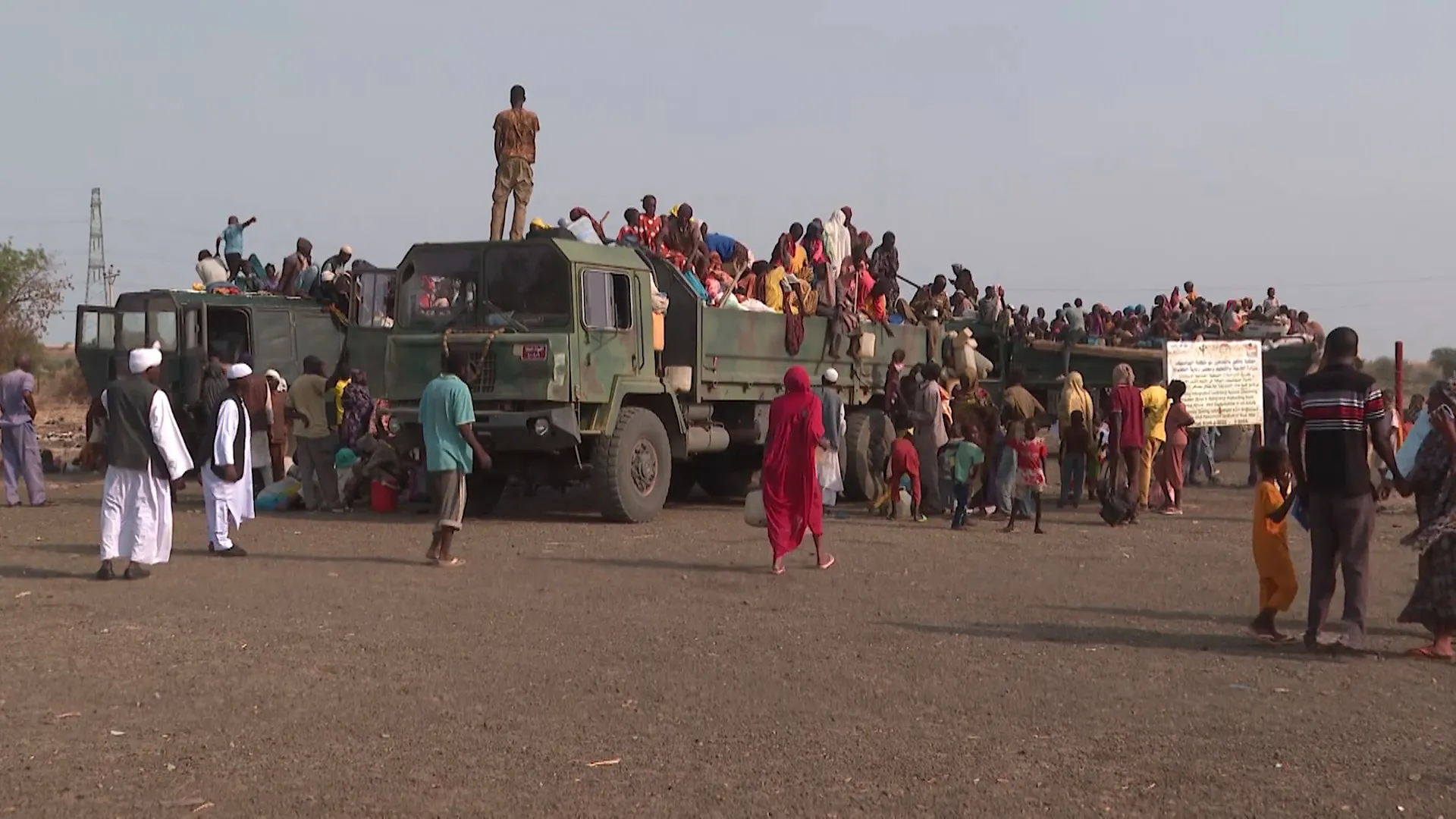
The humanitarian situation in the Blue Nile region of Sudan is deteriorating, with an increasing number of displaced individuals moving to the city of Damazin due to ongoing battles in the areas of Kurmuk and Qaisan. Reports indicate that a large number of displaced people, including women, children, and the elderly, have arrived, exacerbating their suffering under the difficult conditions they face.
In a related context, the regional governor announced the arrival of military reinforcements for the Sudanese army, indicating that government forces intend to regain control of the city of Kurmuk soon. These developments come at a time when civilians are suffering from severe shortages of food, water, and healthcare, complicating the humanitarian situation further.
Details of the Ongoing Conflict
Fighting in the Blue Nile region has been ongoing for several weeks, with government forces competing against armed groups for control of strategic areas. The clashes have been concentrated in Kurmuk and Qaisan, leading to the displacement of thousands of families to the city of Damazin, which is itself under significant pressure on its resources.
Reports indicate that many displaced individuals are facing difficulties in obtaining shelter and food, as the camps lack basic services. Additionally, the deteriorating security situation hampers relief efforts, putting the lives of many at risk.
Background & Context
The Blue Nile region is one of the Sudanese regions that has experienced ongoing tensions and conflicts over the past years. The roots of the conflict in this area date back a long time, with overlapping political, economic, and social factors. These conflicts have exacerbated the humanitarian situation, making the region one of the most affected by crises in Sudan.
It is worth noting that the conflict in the Blue Nile is not an isolated case; rather, it is part of a series of conflicts occurring in the country, which include other areas such as Darfur. These conflicts reflect the significant challenges faced by the Sudanese government in achieving peace and stability in the country.
Impact & Consequences
The repercussions of the conflict in the Blue Nile extend beyond the region, affecting overall regional stability. The increasing number of displaced individuals may worsen the humanitarian situation in neighboring countries, necessitating an urgent response from the international community.
Moreover, the continuation of fighting may hinder peace efforts in Sudan and complicate the political landscape further. Under these circumstances, it becomes essential for local and international efforts to converge to find sustainable solutions to the crisis.
Regional Significance
The situation in the Blue Nile serves as an indicator of the challenges faced by many Arab countries in terms of security and stability. Armed conflicts and mass displacement can lead to the outbreak of humanitarian crises, calling for greater attention from Arab nations and the international community.
The humanitarian crises in Sudan may affect relations between Arab countries, as pressures on governments to accommodate displaced individuals and provide humanitarian support may increase. Therefore, addressing these crises requires effective international coordination and a swift response from all concerned parties.
In conclusion, the humanitarian situation in the Blue Nile region of Sudan urgently needs intervention, as the current situation demands a comprehensive response from the international community to ensure the protection of civilians and provide the necessary assistance.