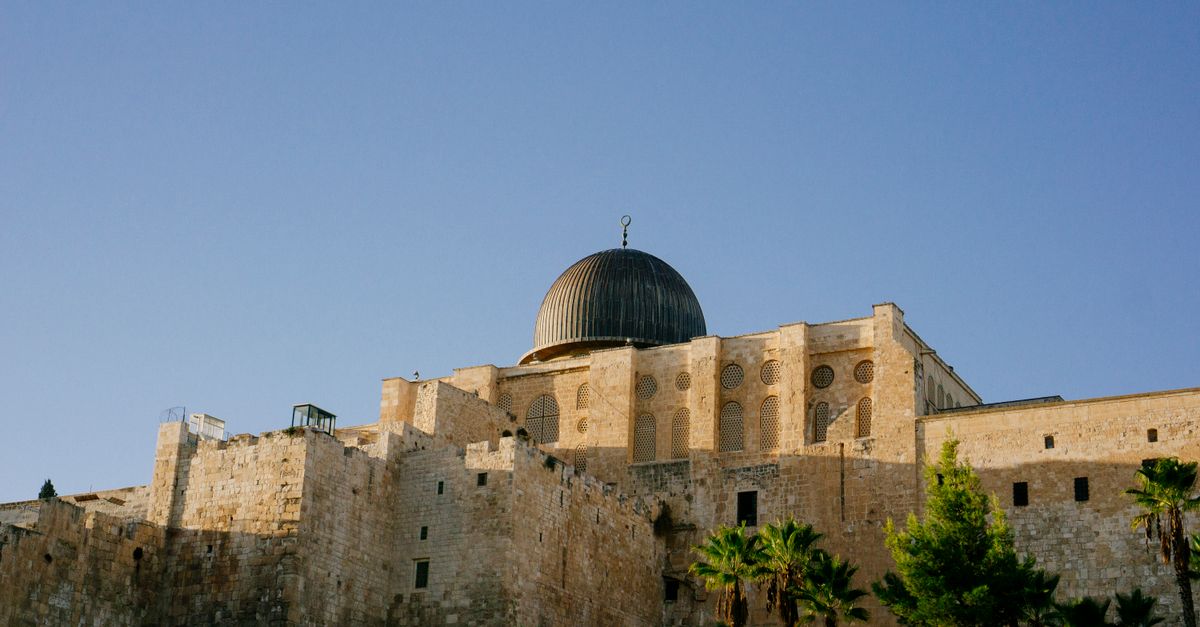
The Palestinian Ministry of Awqaf has announced a rise in Israeli assaults on Islamic and Christian holy sites during May, with 23 attacks recorded at Al-Aqsa Mosque and 74 instances of prayer restrictions at the Ibrahimi Mosque in Hebron.
The ministry's monthly report indicated that Israeli forces imposed stringent restrictions on access to Al-Aqsa Mosque, preventing many Palestinians from fulfilling their religious duties. In recent days, there has been an increase in the number of settlers storming Al-Aqsa, with 1,400 settlers entering in a single day, coinciding with the celebrations of what is referred to as 'Jerusalem Day.'
Details of the Incidents
The report highlighted that the Israeli assaults were not limited to Al-Aqsa Mosque; they also included the Ibrahimi Mosque in Hebron, where 425 Israeli soldiers entered the complex during May. Restrictions were imposed on worshippers, including the closure of certain mosque areas and delays in the call to prayer.
In related reports, it was noted that settlers performed religious rituals inside Al-Aqsa Mosque, including group prayers, singing, and dancing, which provoked outrage among Palestinians and was deemed an infringement on the sanctity of the site.
Background & Context
Israeli assaults on Islamic holy sites in Jerusalem continue, as these actions are seen as part of a policy aimed at altering the status quo in the holy city. Historically, Al-Aqsa Mosque has witnessed numerous tensions due to attempts by Israel to assert control over the site, which is considered the third holiest place in Islam.
The roots of the conflict surrounding Al-Aqsa date back decades, as Palestinians strive to maintain their religious and national identity in the face of attempts at Judaization. These assaults have notably increased in recent years, leading to heightened tensions between Palestinians and Israelis.
Impact & Consequences
These assaults indicate a rise in tensions in the region, affecting relations between Palestinians and Israelis and exacerbating the ongoing conflict. Furthermore, these events may elicit reactions from Arab and Islamic countries, which are closely monitoring the situation.
Moreover, the continued assaults on holy sites could worsen the humanitarian situation in the Palestinian territories, where Palestinians face severe restrictions on their movement and daily lives. Such conditions may contribute to increasing discontent and anger among Palestinians, potentially leading to escalated protests and confrontations.
Regional Significance
The Israeli assaults on Al-Aqsa Mosque are a central issue for Arabs and Muslims, representing a symbol of religious and national identity. These events may impact relations between Arab states and Israel, especially amid rising tensions.
Additionally, these assaults could bring human rights and justice issues back to the forefront in the region, necessitating Arab and Islamic action to support Palestinians against these violations. Preserving and protecting Al-Aqsa Mosque is a collective responsibility, and Arab nations must take clear stances against these assaults.