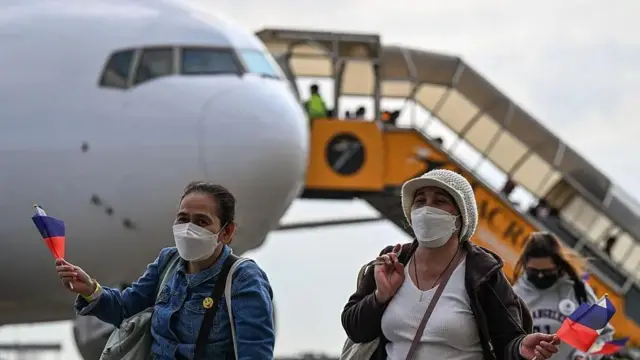
Concerns are rising in the wealthy Gulf states as regional tensions escalate, making these countries targets of Iranian attacks due to their hosting of American military bases. This has led to a significant exodus of migrant workers, who are a crucial part of the labor market in these nations, while tourists and travelers have hesitated to visit.
Migrant labor from Asian countries such as India, Pakistan, and Nepal forms the backbone of the Gulf economy. With the increase in security threats, these workers face tough choices between continuing to work in a perilous environment or returning to their home countries.
Details of the Situation
Reports indicate that many migrant workers have left the Gulf states in recent weeks due to growing concerns over potential Iranian attacks. Official data has shown a significant decline in the number of incoming workers, raising questions about the future of the labor market in these countries.
At the same time, reports have shown that tourists and travelers have declined in visiting the Gulf states, negatively impacting the tourism sector, which heavily relies on visitors from around the world. Many travel agencies have expressed concern over the effects of these conditions on tourism offerings in the region.
Background & Context
Historically, the Gulf states have been a major destination for migrant labor, offering attractive job opportunities and high wages compared to many Asian countries. However, the increasing geopolitical tensions, especially following the escalation of Iranian military activities, have altered this dynamic.
The American military bases in the Gulf are part of a broader strategy to counter Iranian threats. However, this strategy comes at a cost, placing the region in the line of fire and increasing personal security risks for migrant workers and tourists.
Impact & Consequences
Forecasts suggest that the continuation of these conditions may exacerbate labor shortages in the Gulf states, affecting key economic sectors such as construction and services. Additionally, the decline in tourism could lead to significant economic losses, as many businesses depend on the influx of visitors.
Furthermore, the departure of migrant workers may increase pressure on Gulf governments to find alternative solutions to compensate for the workforce shortage. This may require new strategies to attract labor from other countries or improve working conditions for current workers.
Regional Significance
The events in the Gulf have significant implications for the Arab region as a whole. With rising tensions, relations between Arab countries and Iran may be affected, increasing instability in the region.
Moreover, the decline in migrant labor could impact the remittances sent by these workers to their home countries, potentially leading to negative economic repercussions for labor-exporting nations.
In conclusion, the situation in the Gulf remains complex, as security tensions intertwine with economic challenges. As events unfold, it will be crucial to monitor their impacts on labor and tourism in the region.