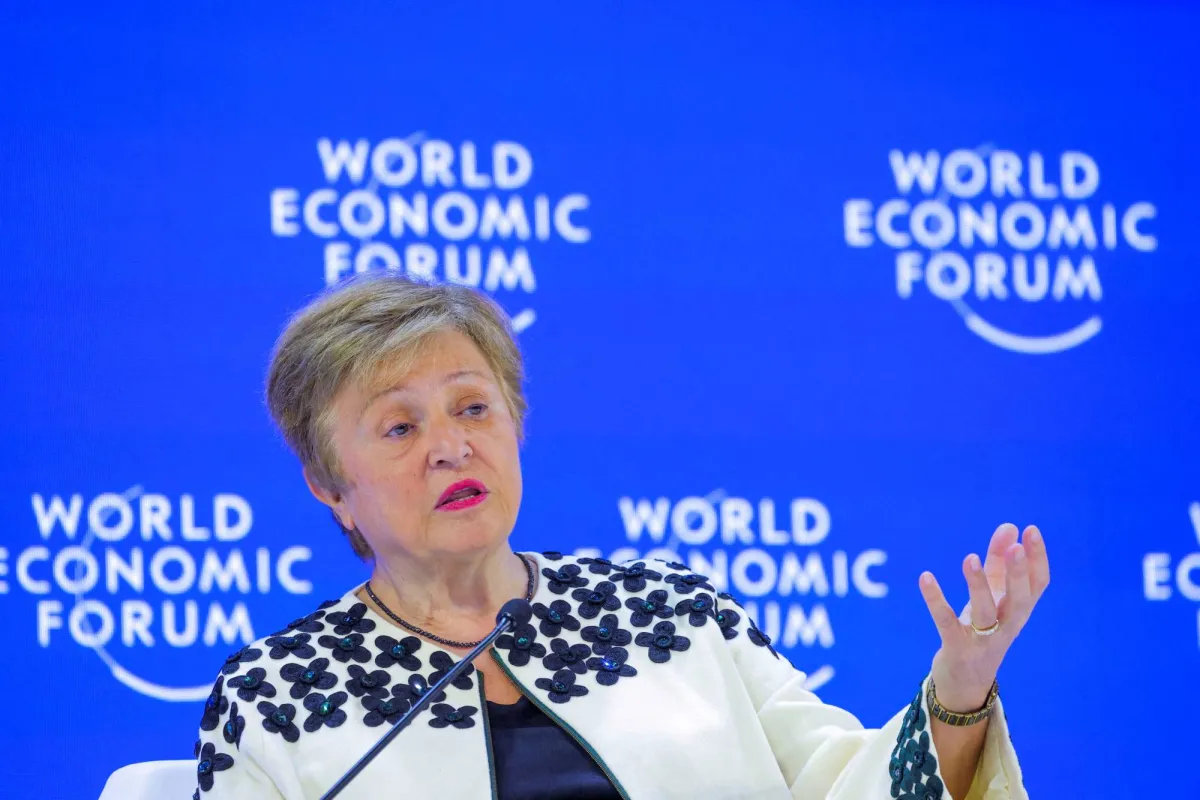
Kristalina Georgieva, the head of the International Monetary Fund, stated that the ongoing conflict in the Middle East will lead to increased inflation and a slowdown in global economic growth, in remarks made ahead of the release of new global economic forecasts next week.
Georgieva noted that the war has caused the worst disruption ever to global energy supplies, with millions of barrels of oil halted from production due to the Iranian blockade of the Strait of Hormuz, which is considered a vital passage for shipping about 20% of the world's oil and gas production. Even if the conflict is resolved quickly, the IMF is expected to lower its growth forecasts and raise its inflation expectations.
Details of the Event
The war is expected to dominate discussions among financial officials from around the world during the meetings held by the IMF and the World Bank in Washington next week. The Fund is scheduled to release a set of scenarios in its upcoming report titled "World Economic Outlook" on April 14.
The IMF had previously indicated the possibility of lowering its forecasts, pointing to the asymmetric shock caused by the war and the deterioration of financial conditions. Georgieva explained that without the war, a slight increase in global growth forecasts to 3.3% in 2026 and 3.2% in 2027 could have been anticipated, as economies continue to recover from the effects of the pandemic.
Background & Context
Global markets are experiencing uncertainty due to geopolitical tensions, technological advancements, and climate shocks. Georgieva emphasized that these factors mean that after recovering from the current shock, we must be prepared for the next one. The war has led to a 13% reduction in global oil supplies, affecting oil and gas shipments and related supply chains.
She pointed out that even if hostilities cease quickly, it would lead to a "relatively minor" revision of growth forecasts, while if the war continues for a longer period, the impact on inflation and growth will be greater.
Impact & Consequences
Georgieva clarified that poor and fragile countries lacking energy reserves will be the most affected, as many of these countries do not have sufficient financial resources to help their populations cope with rising prices caused by the war. These conditions have increased the likelihood of social unrest.
She also confirmed that some countries have requested financial assistance, but their names have not been disclosed. Georgieva noted that the IMF could enhance some existing lending programs to meet the needs of affected countries.
Regional Significance
Arab countries are significantly affected by the repercussions of the war in the Middle East, as many of these nations rely on energy supplies. Reports have shown that energy-importing countries are particularly suffering, but even exporting countries like Qatar have been severely impacted due to pressures on their production facilities.
Under these circumstances, the impact of the war on oil and gas prices is expected to continue, potentially exacerbating the economic conditions in the region. Additionally, the situation requires Arab countries to take urgent measures to address the increasing economic and social challenges.