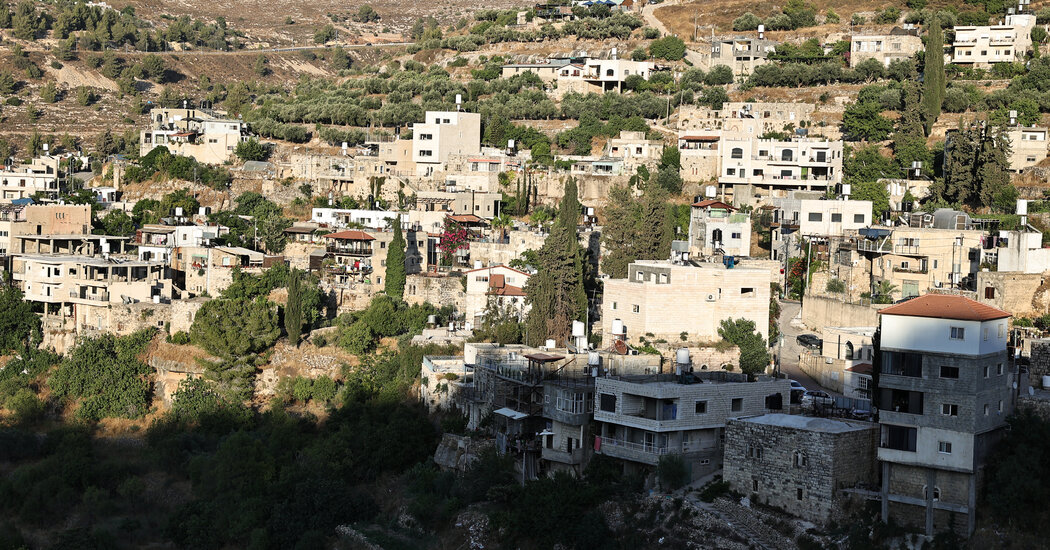
The West Bank has recently experienced a significant escalation in Israeli settlement practices, as the occupying authorities seek to change the visual and cultural identity of the area. Through an intensive dissemination of religious and political symbols, there appears to be an attempt to impose a "visual sovereignty" in preparation for entrenching a permanent settlement reality.
In the past two weeks, field surveys have reported the spread of Israeli flags across vast areas of the West Bank, reflecting a systematic policy aimed at reinforcing the Israeli presence in the region. These practices also include renaming streets and adding new landmarks that carry historical and cultural connotations that bolster the Israeli narrative.
Details of the Situation
Reports regarding these practices are increasing, with experts indicating that the occupation is striving to establish a new reality that goes beyond mere physical control over the land. These steps come at a sensitive time, as international pressure on Israel to comply with international laws regarding settlements is intensifying.
Information suggests that these policies are not new; rather, they are part of a long-term strategy aimed at altering the demographic composition of the West Bank. Through these practices, the Israeli government hopes to strengthen its presence in areas it considers part of its historical lands.
Background & Context
Historically, the West Bank has seen a rise in settlement activities since its occupation in 1967. These activities have manifested in the construction of new settlements and the expansion of existing ones, leading to the erosion of Palestinian lands. Over time, these activities have become part of official Israeli policy, with the Israeli government supporting settlements and considering them a part of national security.
In recent years, tensions between Palestinians and Israelis have escalated due to these policies, resulting in increased protests and confrontations. The international community has also expressed concern over these practices, viewing them as violations of international law and human rights.
Impact & Consequences
These practices directly affect the lives of Palestinians, leading to restrictions on their movement and heightened tensions in the region. Additionally, the alteration of the visual identity of the West Bank contributes to reinforcing the Israeli narrative and diminishes the prospects for sustainable peace.
Moreover, these policies may exacerbate the humanitarian situation in the West Bank, where Palestinians suffer from restrictions on access to essential resources such as water and agricultural land. Consequently, these practices could worsen the economic and social crises in the region.
Regional Significance
These settlement practices pose a threat to security and stability in the Arab region as a whole. The tensions arising from Israeli policies could escalate conflicts in neighboring countries, affecting relations between Arab states and Israel.
Furthermore, the continuation of these policies may weaken the chances of achieving peace in the region, as Palestinians feel that their rights are being violated and that the international community is not taking effective steps to halt these violations. This could lead to increased support for resistance movements in the region, complicating the situation further.
In conclusion, the West Bank remains under continuous pressure from Israeli settlement policies, necessitating urgent international action to halt these practices and protect Palestinian rights.