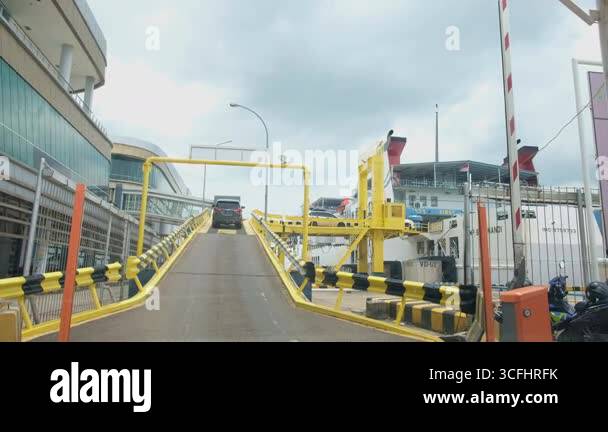
In an effort to facilitate transportation during the return period from Eid al-Fitr, ASDP Indonesia Ferry (Persero) announced the operation of 32 vessels on the Ketapang (Banyuwangi) - Gilimanuk (Bali) route at the peak of the return period, H+7. A special system was implemented to ease congestion, with 18 of these vessels operating under the "Arrive, Discharge, Depart" (TBB) system to facilitate vehicle movement.
In statements made, the General Manager of ASDP at the Ketapang branch, Arif Iko, explained that this system aims to alleviate the congestion experienced at the ports. Four vessels were allocated at the MB-IV dock, 11 vessels at LCM, and three vessels at the Bulusan dock to implement the TBB system. He confirmed that transit movement remains under control thanks to ongoing coordination with relevant authorities such as maritime authorities and police.
Details of the Event
Reports indicate that the return movement on H+7 of Eid al-Fitr 2026 witnessed a significant increase in the number of travelers, with the majority being returning motorcycle riders, followed by private car passengers. The heavy congestion led to the use of the private vehicle ticket gate to facilitate the crossing of motorcycle riders, reflecting the significant pressure on the ports.
According to data from the transportation center in Ketapang, 208 maritime trips were recorded within 24 hours of H+6, with 49,523 individuals crossing from Java Island to Bali, representing a 12.4% decrease compared to the same period last year. The number of vehicles also declined, with 8,925 motorcycles and 5,513 private cars crossing, while the number of trucks increased by 10.2%.
Background & Context
The Eid al-Fitr period in Indonesia is considered one of the busiest times for transportation, as many Indonesians seek to return to their villages and cities after the celebrations. In recent years, there has been an increase in the number of travelers, prompting authorities to enhance maritime transport services and expand their capacities.
Historically, Indonesia has relied heavily on maritime transport due to its geography consisting of thousands of islands. With the growing population and increased travel movement, it has become essential to improve maritime transport infrastructure to meet citizens' needs.
Impact & Consequences
This increase in maritime traffic highlights the importance of improving logistics services in Indonesia, as it can impact the local economy by facilitating the movement of goods and people. Additionally, enhancing transport services can contribute to reducing road traffic congestion, thereby improving overall transport efficiency.
Moreover, improving maritime transport services can boost tourism in Bali, as the island is a major tourist destination. Consequently, the increase in maritime traffic may lead to a rise in tourism revenues.
Regional Significance
Indonesia's experience in improving maritime transport services serves as a model that Arab countries can benefit from, especially those that rely on maritime transport as a primary means of travel between islands. With the increasing travel movement in the Arab region, it may be necessary to enhance maritime transport infrastructure to meet citizens' needs.
In conclusion, these events reflect the importance of improving maritime transport services in Indonesia and how they can affect the local economy and tourism. They also highlight the need for knowledge exchange between countries to achieve similar improvements in the Arab region.