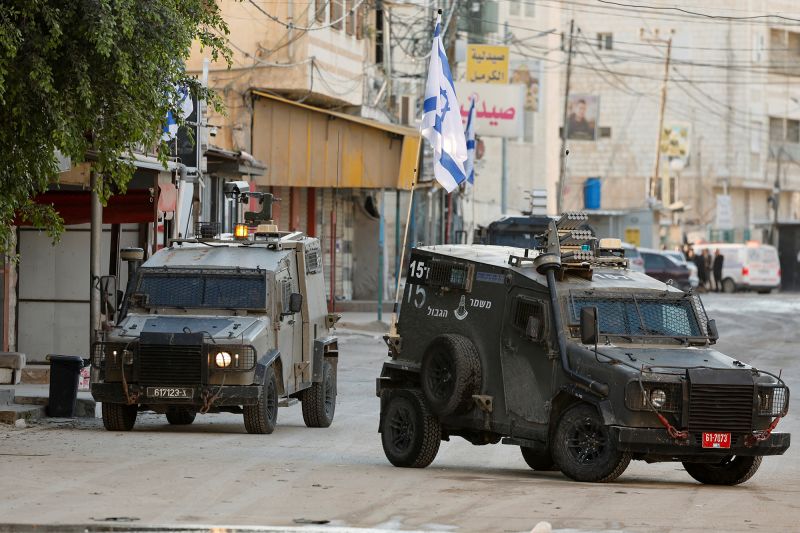
Reports indicate that Israeli military activity in the West Bank has seen a notable increase, with Israeli forces being granted greater freedom to conduct their operations. This development comes at a time when tensions between Palestinians and Israelis are escalating, raising fears of a larger conflict in the region. This situation has exacerbated humanitarian conditions in Palestinian areas, where residents are suffering from the effects of increased military operations.
In recent weeks, reports have documented a rise in the number of Israeli military operations, which include raids and arrests in various cities across the West Bank. These operations have been carried out under the pretext of combating what is termed terrorism, but they have drawn widespread criticism from human rights organizations that view these actions as violations of human rights.
Details of the Events
According to local sources, Israeli forces have conducted military operations in areas such as Nablus and Jenin, where several Palestinians have been arrested, leading to clashes between Palestinian youth and Israeli forces. These confrontations have resulted in injuries among Palestinians, further increasing tensions in the region.
Reports have also indicated the use of repressive tactics by Israeli forces during these operations, including the use of tear gas and rubber bullets. These methods have fueled anger among Palestinians, who feel increasingly targeted.
Background & Context
Historically, the West Bank has experienced ongoing tensions between Palestinians and Israelis, as this area is considered a focal point of the Israeli-Palestinian conflict. Since the occupation of the West Bank in 1967, the region has witnessed numerous violent events, including two Palestinian intifadas. However, the current situation appears more complex, with the expansion of Israeli settlements in the area intensifying the conflict.
In recent years, the Israeli government has shown an increasing tendency to strengthen control over the West Bank, evidenced by the rise in settlement activity and military operations. This trend has raised concerns within the international community, which has called for a peaceful resolution to the conflict.
Impact & Consequences
The military escalation in the West Bank could have serious repercussions for security and stability in the region. As protests and confrontations increase, the level of violence may escalate, threatening the peace efforts pursued by various parties. Furthermore, the continuation of these operations could worsen humanitarian conditions, as Palestinians suffer from a lack of basic resources due to the occupation.
Moreover, these developments may affect relations between Israel and Arab countries, as many Arab nations are closely monitoring the situation with concern. Continued escalation could lead to a deterioration of diplomatic relations, potentially hindering peace efforts in the region.
Regional Significance
Considering the broader impact on the Arab region, the rising tensions in the West Bank could negatively affect stability in neighboring countries. With an increasing number of Palestinian refugees resulting from the events, neighboring Arab nations may face new challenges in dealing with these populations.
Additionally, the ongoing conflict could impact regional security, as it may lead to heightened tensions among various Palestinian factions, which could reflect on the situations in Gaza and Lebanon. Thus, the situation in the West Bank is not merely a local issue but has wide-ranging regional implications.
In conclusion, the situation in the West Bank appears to be heading towards further complexity, with military operations and tensions significantly increasing. This situation requires urgent action from the international community to alleviate the conflict and work towards peaceful solutions that ensure Palestinian rights and achieve security and stability in the region.