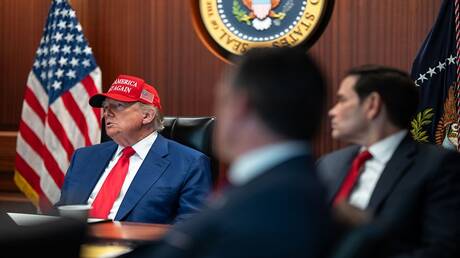
Political pressure is mounting on President Donald Trump to bring an end to the ongoing war against Iran, as reports suggest that this conflict has become a significant burden on the current administration. According to information from informed American sources reported by Reuters, there are movements within the White House to explore new options for resolving the conflict.
This pressure comes at a critical time, as Trump faces both internal and external challenges, increasing the need for strategic decisions that could impact the future of U.S.-Iran relations. Proposals for a unilateral declaration of victory appear to be on the table, which could alter the course of events in the region.
Details of the Situation
The pressure on Trump includes calls from some members of the U.S. Congress to end military operations in the Middle East, particularly those related to Iran. Many observers believe that the continuation of this war could harm U.S. interests in the long term and escalate tensions in the region.
Voices advocating for peace are growing louder, with some arguing that the ongoing conflict will only exacerbate humanitarian conditions and increase civilian suffering. In this context, the importance of diplomatic dialogue emerges as an alternative to military operations.
Background & Context
The roots of the conflict between the United States and Iran date back decades, with tensions between the two countries escalating since the Iranian Revolution in 1979. Since then, the U.S. has pursued a policy of pressure on Iran, including the imposition of economic and military sanctions.
In recent years, tensions have intensified following the U.S. withdrawal from the Iranian nuclear agreement in 2018, leading to an escalation of hostilities between the two sides. These events have significantly impacted stability in the Middle East, where Iran has become a pivotal player in various regional conflicts.
Impact & Consequences
If the war with Iran were to end, it could lead to significant changes in regional dynamics. This may help alleviate tensions between Iran and neighboring countries and open up new opportunities for dialogue and cooperation.
However, a unilateral declaration of victory could provoke negative reactions from Iran and its allies, potentially leading to a new escalation in the conflict. Therefore, any steps towards ending the war must be taken with extreme caution to ensure that conditions do not worsen.
Regional Significance
The U.S.-Iranian war directly impacts Arab countries, as Iran is a key player in many regional conflicts. Ending the conflict could contribute to stabilizing conditions in Iraq, Syria, and Lebanon, where Iranian-backed militias are present.
Moreover, any improvement in U.S.-Iran relations could allow Arab countries to reassess their security and diplomatic strategies. In this context, the importance of Arab cooperation in facing shared challenges becomes evident.
In conclusion, the future of U.S.-Iran relations remains uncertain, but the increasing pressure on Trump may lead to radical changes in American policy towards the Middle East.