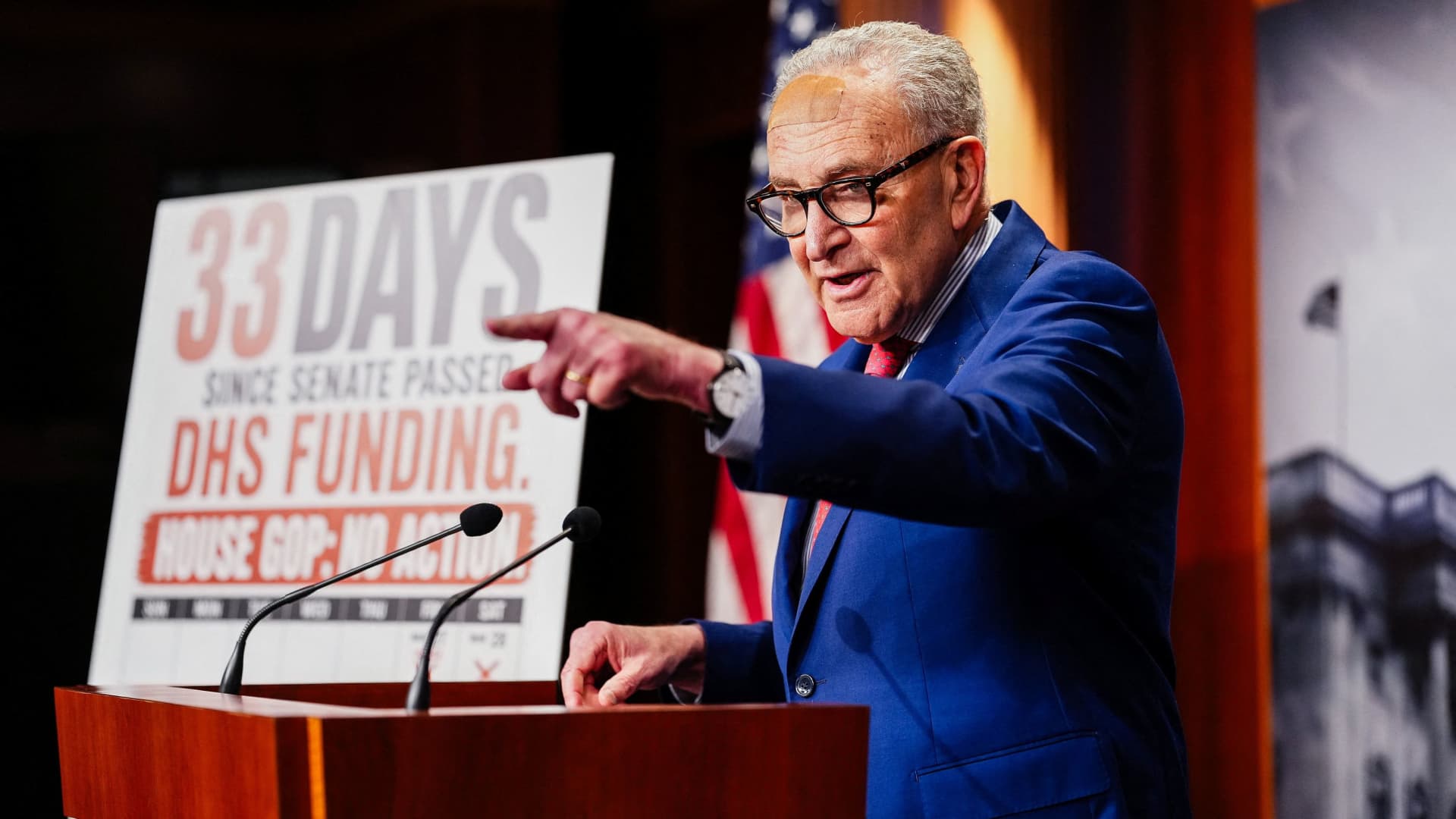
The U.S. Department of Homeland Security has been in a state of shutdown for over 70 days, as Congress struggles to find solutions regarding the department's funding. In this situation, employees of the department, including those in the security, transportation, and secret services, are at risk of losing their salaries.
During a congressional hearing, Representative Virginia Foxx, chair of the Rules Committee, expressed her frustration with the current situation, noting that Congress is facing a long list of unresolved issues, including funding for the Department of Homeland Security, reauthorizing the foreign surveillance program, as well as agricultural and immigration matters.
Details of the Shutdown
This shutdown comes at a critical time, as there have been previous attempts by the Senate to pass a bill to fund the department, but the House of Representatives halted those efforts due to opposition from some members. Minority Leader in the Senate, Chuck Schumer, indicated that the Senate had passed the funding bill by a significant majority, but the House has not moved in that direction.
At the same time, former President Donald Trump indicated that he signed an executive order last April aimed at ensuring the payment of salaries to all employees of the Department of Homeland Security during the shutdown. However, this emergency funding may run out by May 1, threatening the salaries of transportation security employees.
Background & Context
Historically, the United States has experienced numerous government shutdowns due to political disagreements between the two major parties, the Republican and Democratic parties. These disagreements often revolve around sensitive issues such as immigration and budgetary concerns, leading to disruptions in government operations and affecting public services.
In this case, the roots of the current crisis trace back to the killing of American citizens by federal agents during an immigration crackdown, which has deteriorated relations between the parties regarding funding for the Department of Homeland Security.
Impact & Consequences
The continued shutdown of the Department of Homeland Security has serious implications for national security, as it could lead to a shortage of resources needed to address security threats. Additionally, delays in salary payments to transportation security employees could result in significant delays at airports, as seen at the beginning of the shutdown.
Moreover, the political disagreements within the Republican party on how to address these issues may deepen the crisis, complicating efforts to reach a resolution. Some observers have noted that these disagreements reflect inefficiency within the party more than they indicate a partisan divide.
Regional Significance
In light of these circumstances, the Arab region remains affected by political developments in the United States, as any weakness in U.S. national security could impact the stability of the region. Furthermore, U.S. relations with Arab countries may be negatively affected if these political crises persist.
In conclusion, the current situation at the U.S. Department of Homeland Security requires swift action from Congress to reach an agreement that ensures continuity of operations and restores confidence in the American political system.