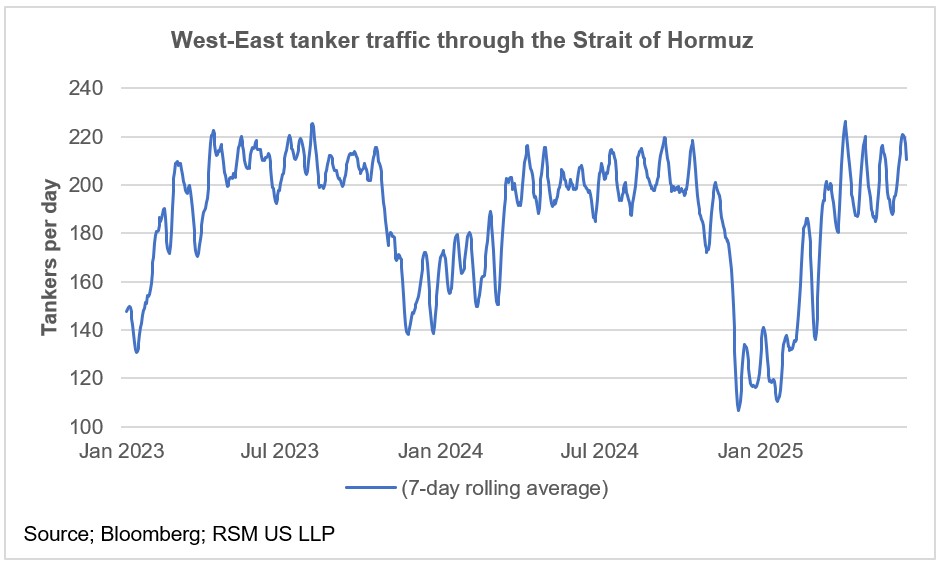
The Strait of Hormuz, considered one of the most important waterways in the world, has witnessed a slight increase in the number of ships crossing it with their signals activated, even though the passage remains effectively closed to most commercial shipments without obtaining permission from Iran. This increase comes amid the tense conditions in the region, raising questions about the future of maritime trade in the Gulf.
According to reports, the number of ships crossing the strait with their signals on has risen slightly, indicating that some companies may have begun to resume their activities despite the imposed restrictions. The Strait of Hormuz is a vital point for the transportation of oil and natural gas, with approximately 20% of the world's total oil passing through it.
Details of the Event
Data shows that the number of ships crossing the Strait of Hormuz with their signals activated has seen a noticeable increase, reflecting attempts by some companies to return to work. However, most commercial vessels still face difficulties in obtaining the necessary permits from Iranian authorities, significantly hindering trade movement.
These developments come at a time of escalating tensions between Iran and Western countries, as Tehran seeks to assert its control over the vital waterway. These tensions have raised concerns about the safety of commercial vessels, prompting many companies to reconsider their business strategies in the region.
Background & Context
The Strait of Hormuz is a crucial transit point for oil and natural gas, with around 18 million barrels of oil passing through it daily. Historically, the strait has witnessed numerous crises and tensions, from the Iran-Iraq War in the 1980s to the current tensions between Iran and Western nations. This background makes the strait a strategic point significantly affected by political and economic events in the region.
In recent years, Iran has increased its military presence in the area, leading to heightened tensions with neighboring countries. Additionally, the economic sanctions imposed on Iran have impacted trade movement in the region, making it difficult for many companies to operate freely.
Impact & Consequences
The current developments in the Strait of Hormuz directly affect global oil prices, as any new tensions could lead to significant price increases. Furthermore, the continued restrictions on ship movements may result in supply shortages, impacting global markets.
Moreover, the increase in the number of ships crossing the strait may also reflect attempts by some companies to return to work despite potential risks. This could lead to changes in market dynamics, as companies may seek new ways to adapt to the changing conditions.
Regional Significance
The Arab countries neighboring the Strait of Hormuz, such as the United Arab Emirates and Oman, are among the most affected by developments in the strait. The economies of these countries heavily rely on maritime trade and oil, and any tensions affecting trade movement will negatively impact their economies.
Furthermore, any escalation of tensions could lead to an increased military presence in the region, potentially causing further instability. Therefore, monitoring developments in the Strait of Hormuz remains vital for Arab countries and the global economy as a whole.