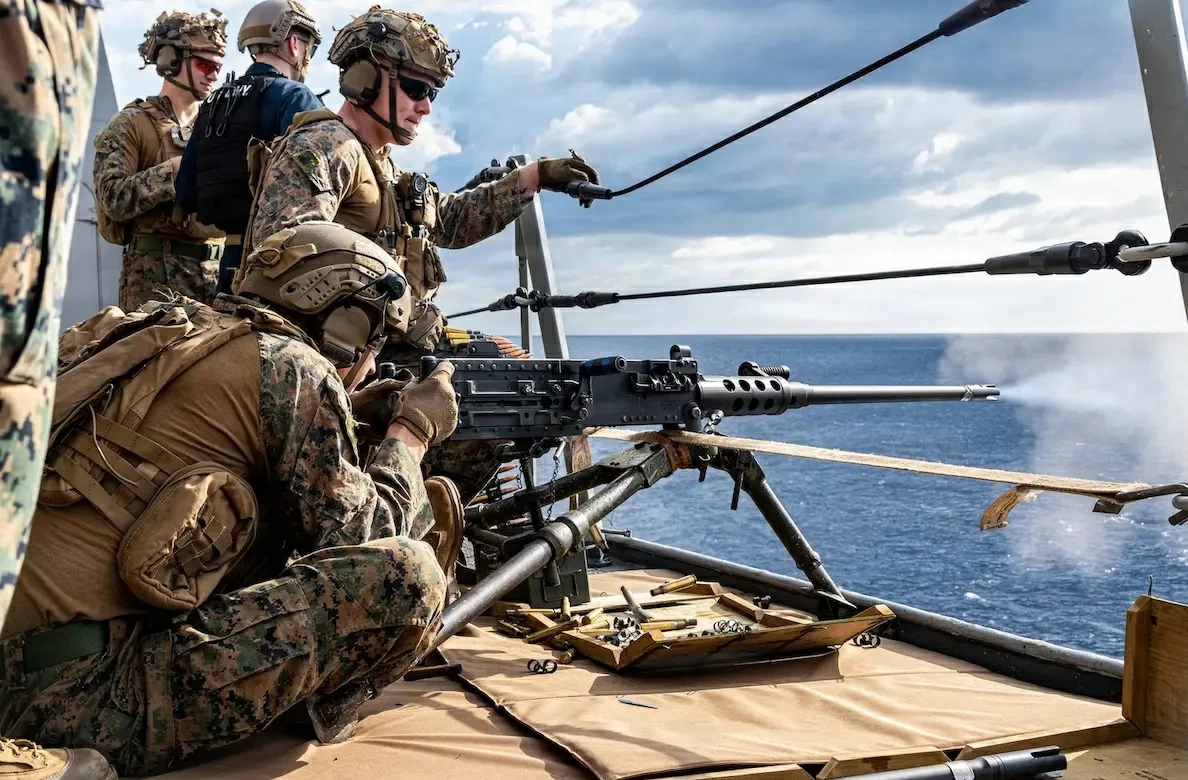
US media reported today (Sunday) that the number of American soldiers in the Middle East has increased to 50,000, following the arrival of 2,500 Marines and 2,500 additional sailors. These steps are part of the US administration's increasing preparations to confront rising tensions with Iran, particularly regarding the Hormuz Strait.
The New York Times quoted US officials stating that President Donald Trump is considering the possibility of launching a larger attack, which may include seizing an island or other territories, as part of his efforts to secure the Hormuz Strait. Meanwhile, the Washington Post indicated that any potential ground operation would not amount to a full-scale invasion, but may involve strikes carried out by joint forces from special operations units and conventional infantry.
Details of the Event
Officials confirmed that these arrangements have been in preparation for weeks within the Pentagon, noting that this mission could expose American military personnel to multiple risks amid potential Iranian attacks using drones and missiles, in addition to ground clashes and improvised explosive devices.
At the same time, Trump has not been clear about his approval of all or some of the Pentagon plans, reflecting a state of ambiguity in the White House regarding the next steps. This hesitation could impact US strategies in the region, especially amid escalating tensions.
Background & Context
These American moves come at a sensitive time, as Israeli Channel 12 reported that Israel and the United States are enhancing their military coordination in preparation for the possibility of negotiations with Iran failing. This military cooperation reflects growing concerns about the potential escalation of conflict in the region, especially given the ongoing Iranian threats.
Meanwhile, Tehran and several Iranian cities are experiencing heavy bombardment, leading to power outages in areas of Tehran and Karaj. Western news agencies attributed the power outages to airstrikes targeting several power stations, further complicating the internal Iranian situation.
Impact & Consequences
The US military escalation in the region could exacerbate conditions, as Iran may respond to any potential attack with military operations targeting American interests and allies in the region. This scenario could drag the area into a broader conflict, threatening regional stability.
Moreover, any military action by the United States could impact global oil prices, especially since the Hormuz Strait is one of the most important maritime routes for oil transport. Any threat to this corridor could lead to price increases, affecting the global economy.
Regional Significance
For Arab countries, the rising tensions in the Gulf region could negatively impact security and stability. Countries that rely on oil imports may face economic challenges in the event of any military escalation. Additionally, any escalation could lead to an influx of refugees and increased internal tensions in some Arab countries.
In conclusion, it seems that the region is heading towards a phase of instability, with increasing military and political risks. Arab countries must be prepared to face these challenges and work on enhancing regional cooperation to ensure security and stability.