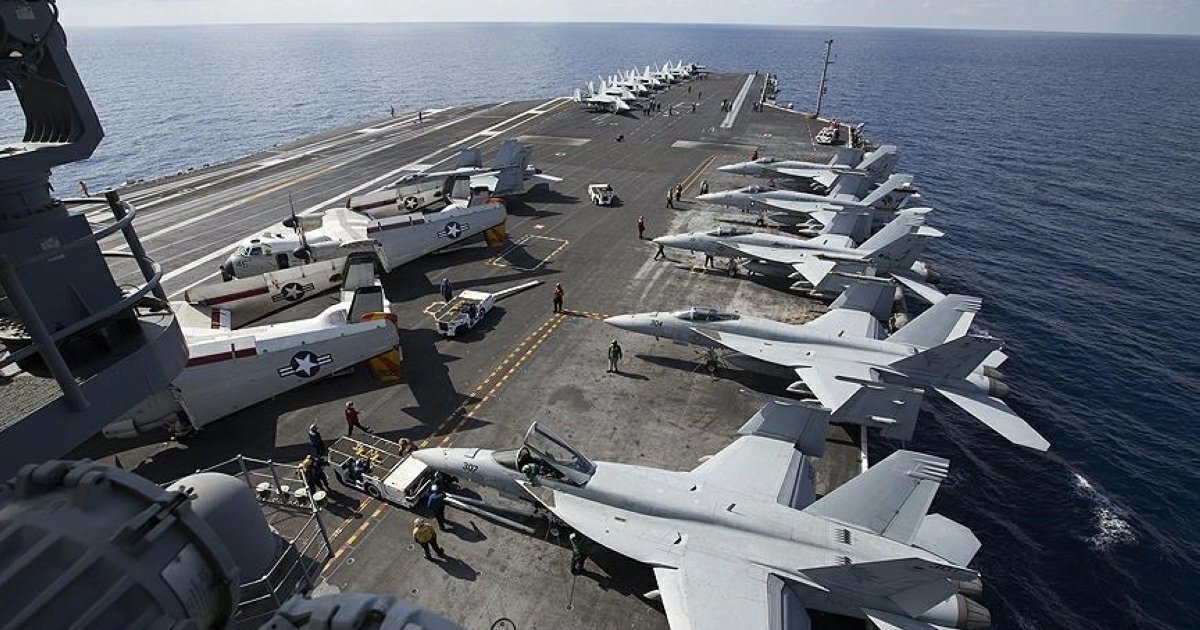
The United States has announced the deployment of the USS George H.W. Bush carrier group from Norfolk, Virginia, to the Middle East, reflecting an escalation in US military presence in the region. This move comes at a sensitive time as US-Iranian relations are increasingly strained due to the ongoing conflict between the US and Israel on one side and Iran on the other.
This carrier group is the third to be deployed in the region, joining the USS Gerald R. Ford and USS Abraham Lincoln, which are already present to support US operations in the Middle East. It is noteworthy that the USS Gerald R. Ford is currently undergoing maintenance in Crete after experiencing a fire onboard, raising questions about its operational readiness.
Details of the Deployment
This step is part of the United States' strategy to enhance its military presence in the Middle East, a region of significant strategic importance to the US, especially amid rising tensions with Iran. The deployment of the three aircraft carriers is believed to be aimed at sending a clear message to Tehran regarding Washington's readiness to defend its interests in the region.
The USS George H.W. Bush carrier group includes a range of advanced fighter aircraft, enhancing the United States' ability to conduct rapid and effective military operations if necessary. This decision also reflects the US commitment to protecting its allies in the region, including Israel, which faces ongoing threats from Iran.
Background & Context
Historically, the United States has bolstered its military presence in the Middle East for decades, particularly following the events of September 11, 2001. The region has witnessed numerous conflicts, including wars in Iraq and Afghanistan, making the US military presence a key component of American strategy in the area.
In recent years, tensions between the US and Iran have escalated, especially after Washington's withdrawal from the Iranian nuclear deal in 2018. These tensions have led to increased military preparations from both sides, making the region more volatile.
Impact & Consequences
This move could escalate tensions in the region, as Iran may respond to the bolstered US military presence with countermeasures. Such escalation could impact regional stability and increase the risks of direct military conflict between the US and Iran.
Moreover, the presence of three US aircraft carriers in the region could enhance the United States' ability to conduct military operations against any potential threats, increasing pressure on Iran and making it think twice before taking any hostile actions.
Regional Significance
Neighboring Arab countries, such as Iraq, Syria, and Lebanon, find themselves in a sensitive position due to these developments. The increase in US military presence may affect regional security, as some Arab nations may be concerned about the rising tensions between the US and Iran.
Additionally, the bolstered US military presence could strengthen the position of US allies in the region, such as Saudi Arabia and Gulf states, potentially leading to changes in the political and military dynamics in the area.
In conclusion, this move reflects the United States' commitment to protecting its interests in the Middle East, but it also carries the risks of escalating tensions in a region already suffering from instability. Monitoring reactions from Iran and other countries in the region in the coming days and weeks will be crucial.