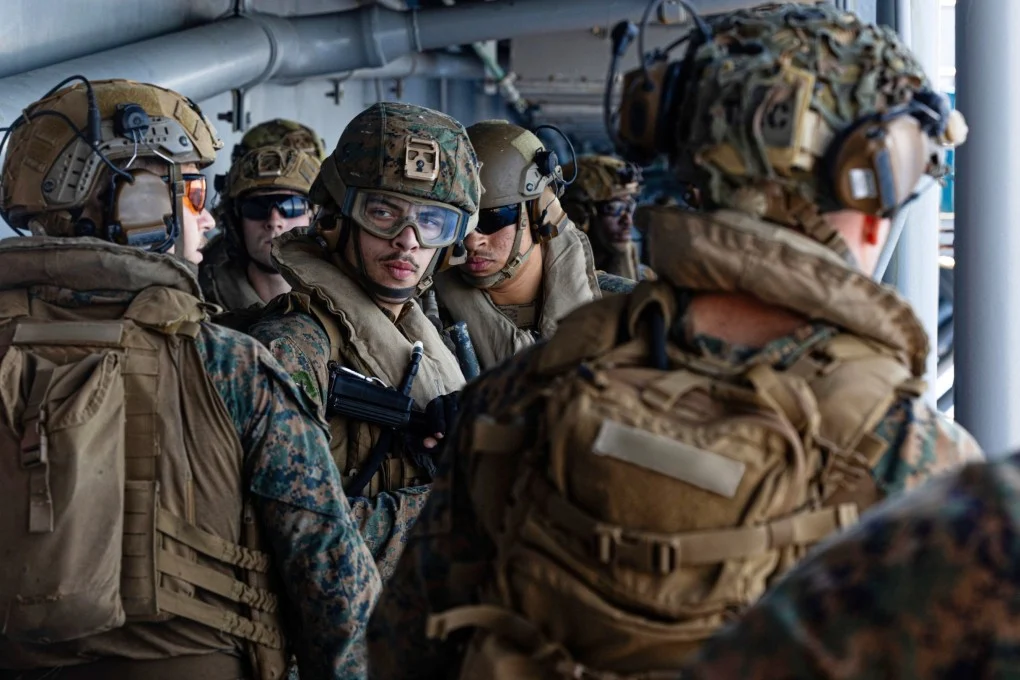
Recent reports indicate that the United States is bolstering its military presence in the Middle East, raising questions about the possibility of the conflict with Iran evolving into a long-term struggle. This move comes as President Donald Trump is set to visit China in May, further complicating the geopolitical landscape in the region.
According to Chinese military analyses, the escalation of U.S. military presence in the Middle East could have far-reaching implications for the ongoing conflict. Several units of the U.S. Army, including Ranger forces, have been deployed to the region, reflecting Washington's concerns over the potential for a costly conflict reminiscent of the Vietnam War.
Details of the Event
In recent days, reports from the New York Times and Washington Post have indicated that several hundred U.S. Army soldiers have been deployed to the Middle East. This is part of a strategy aimed at enhancing U.S. military strength in the face of increasing Iranian challenges. Analysts have noted that this move may be part of a broader plan to avoid entering a long-term conflict.
Additionally, Trump's recent tactics in Venezuela suggest that the U.S. administration is aware of the need to avoid incurring significant losses in lives and resources. This awareness may be a driving force behind swift decisions based on accurate assessments of the military situation in the region.
Background & Context
Historically, U.S.-Iranian relations have seen increasing tensions since the Islamic Revolution in 1979. These tensions have particularly escalated following the U.S. withdrawal from the Iranian nuclear deal in 2018. Since then, Washington has imposed strict economic sanctions on Tehran, exacerbating the situation in the region.
In recent years, we have witnessed a rise in Iranian military activities, including its support for militias in Iraq and Syria, which has heightened concerns among neighboring countries and the United States. These dynamics make it challenging to predict the course of events in the region.
Impact & Consequences
If the U.S. military escalation in the Middle East continues, it could lead to an intensification of the conflict with Iran, negatively affecting regional stability. This could heighten tensions between the United States and its allies on one side, and Iran and its allies on the other, potentially dragging the region into a broader conflict.
Furthermore, any escalation in the conflict could impact global oil prices, as the Middle East is a vital area for oil production. Any disruptions in this region could lead to price increases, affecting the global economy.
Regional Significance
For Arab countries, the escalation of the U.S.-Iranian conflict may have direct implications. Many Arab nations, especially those located near Iran, may find themselves in a precarious position. Increased tensions could lead to a rise in sectarian or military conflicts in the region, exacerbating instability.
Arab countries may also need to reassess their security and military strategies in light of these developments, potentially leading to new alliances or a reshaping of existing ones.
In conclusion, the situation in the Middle East appears to be becoming more complex with the escalation of U.S. military presence, raising questions about the future of international relations in the region. Arab nations must be prepared to face new challenges that may arise from these changing dynamics.