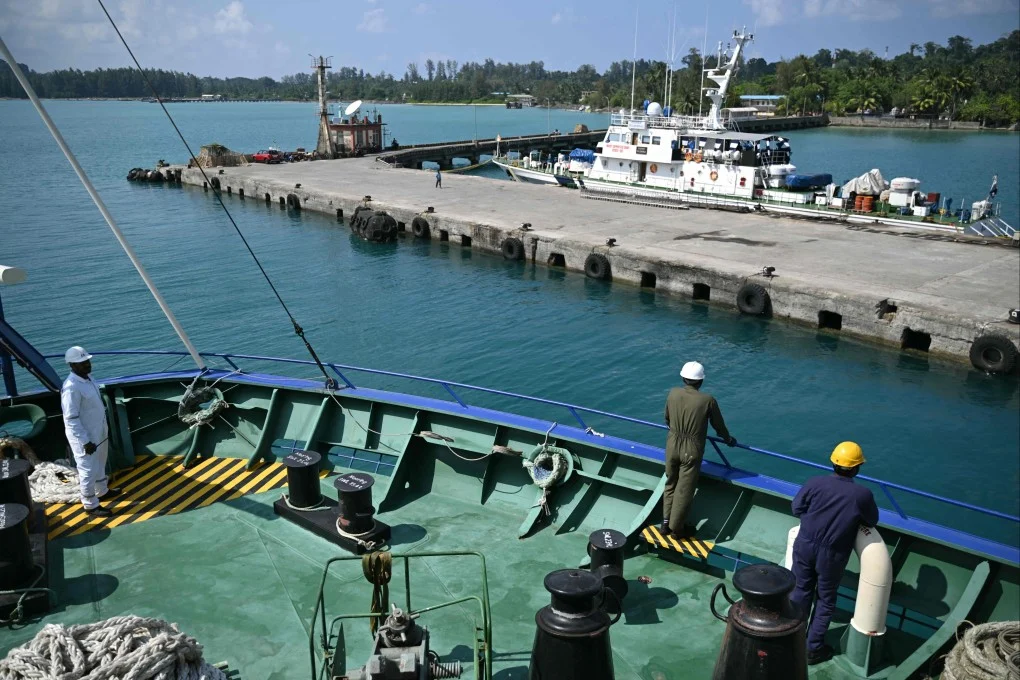
India has announced its ambitious project to transform Great Nicobar Island into a strategic military base, aiming to enhance its defense capabilities in the Indian Ocean region. This initiative arises at a time when maritime relations between India and China are increasingly strained, particularly due to the global energy crisis triggered by the closure of the Strait of Hormuz.
Through this project, estimated to cost around $10 billion, India seeks to bolster its military presence in a vital area experiencing significant competition among major powers. The Strait of Hormuz is a crucial transit point for oil and gas, and any closure significantly impacts energy supplies to Asia.
Project Details and Infrastructure Plans
The Indian plan includes the construction of advanced infrastructure on Nicobar Island, featuring military facilities and modern ports. This project is expected to enhance India's ability to control maritime traffic in the Indian Ocean, allowing it to counter potential threats from China.
This move comes at a time when the world is facing a severe energy crisis, as the closure of the Strait of Hormuz has disrupted oil and gas supplies to many Asian countries. This situation highlights the fragility of global supply chains and the importance of commercial choke points.
Background & Context
Historically, maritime relations between India and China have been tense, with each country striving to enhance its influence in the Indian Ocean. This project is part of India's broader strategy to strengthen its military presence in the region, especially in light of China's military expansion.
Nicobar Island is considered a strategic location, situated near major shipping lanes. The development of this island could contribute to enhancing India's capability to protect its economic and security interests in the region.
Impact & Consequences
This initiative is expected to escalate tensions between India and China, as this military base may be perceived as a direct threat to Chinese interests in the Indian Ocean. These dynamics could affect the stability of the region, prompting reactions from other countries.
Moreover, these developments may lead to a reshaping of alliances in the area, as other nations might seek to strengthen their relations with India to address common challenges.
Regional Significance
The global energy crisis and the implications of the closure of the Strait of Hormuz are particularly significant for Arab countries, which heavily rely on oil exports. This situation underscores the need to diversify energy sources and enhance regional cooperation to safeguard economic interests.
In light of these developments, there may be an opportunity for Arab nations to strengthen their partnerships with India, particularly in the fields of energy and trade, which could contribute to enhancing economic stability in the region.