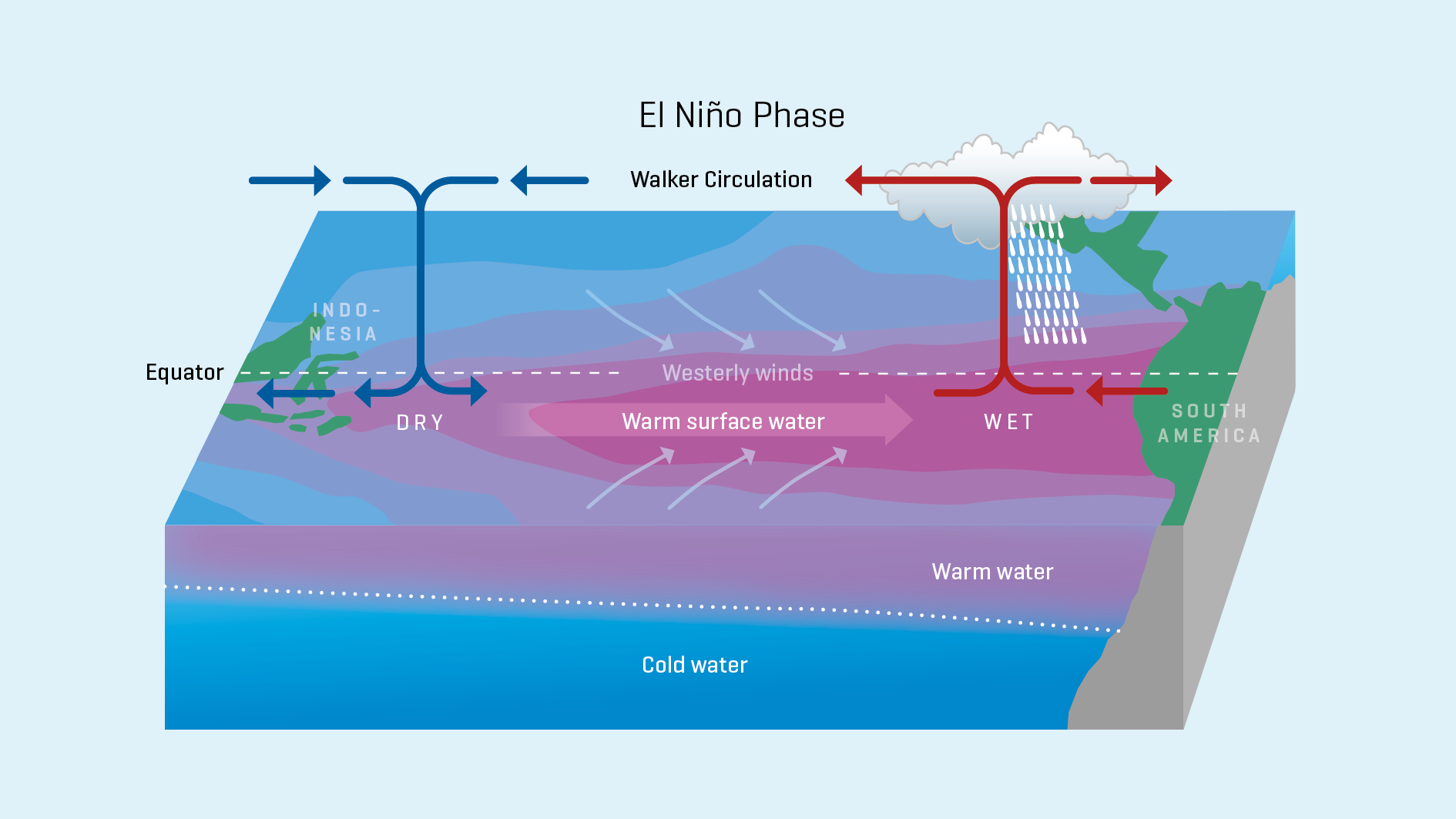
Indonesian Minister of Agriculture, Andi Amran Sulaiman, announced the acceleration of measures to address the impacts of El Niño through the implementation of five key strategies aimed at ensuring the stability of rice production and enhancing food security in the country. These steps come at a critical time, as severe drought is expected due to El Niño from April to June 2026.
During a coordination meeting to combat drought, Sulaiman emphasized the importance of taking swift and effective actions to tackle climate challenges, noting that forecasts from the meteorological agency indicate significant risks due to El Niño. He explained that these strategies aim to maintain agricultural production and ensure the continuity of food security in Indonesia.
Details of the Strategies
The five strategies announced by the minister include, first, conducting a comprehensive survey of drought-prone areas and enhancing the early warning system, which will enable the government to take swift and effective actions. Second, improving water management by rehabilitating irrigation networks, utilizing water reservoirs, and enhancing pump irrigation systems.
Third, accelerating crop planting in areas where water is still available, particularly in Central, East, and West Java, in addition to encouraging the use of drought-resistant crop varieties. Fourth, improving land use, including wetlands and established farms, to ensure they are cultivated without delay. Fifth, enhancing coordination between the central and local governments, the military, and all stakeholders to ensure the effective implementation of these strategies.
Background & Context
The phenomenon of El Niño is one of the climatic phenomena that significantly affects weather patterns across the globe, including Indonesia. Historically, Indonesia has experienced negative impacts due to this phenomenon, leading to severe droughts in some areas, which affected agricultural production and food security. Therefore, early preparedness to face this phenomenon is vital for maintaining national economic stability.
In recent years, the Indonesian government has worked to strengthen food security strategies, especially in light of increasing climate challenges. Studies have shown that climate change can exacerbate food crises, necessitating proactive measures.
Impact & Consequences
The actions taken by the Indonesian government to address the effects of El Niño could improve food security in the country, contributing to price stability and enhancing farmers' ability to face challenges. Additionally, strengthening coordination among various governmental and local entities can improve the effectiveness of responses to climate crises.
On the other hand, the success of these strategies heavily depends on the speed of implementation and cooperation among all stakeholders. If these plans are executed effectively, they could contribute to achieving sustainable food security and enhancing Indonesia's ability to confront future climate challenges.
Regional Significance
The phenomenon of El Niño is a global issue that affects many countries, including Arab nations. The climate changes resulting from this phenomenon can lead to negative impacts on agriculture and food security in the region. Therefore, Indonesia's experiences in confronting this phenomenon could serve as a model for Arab countries facing similar challenges.
In conclusion, Arab countries must enhance their strategies to address climate changes and learn from the successful experiences of other nations, such as Indonesia, to ensure food security sustainability and achieve sustainable development.