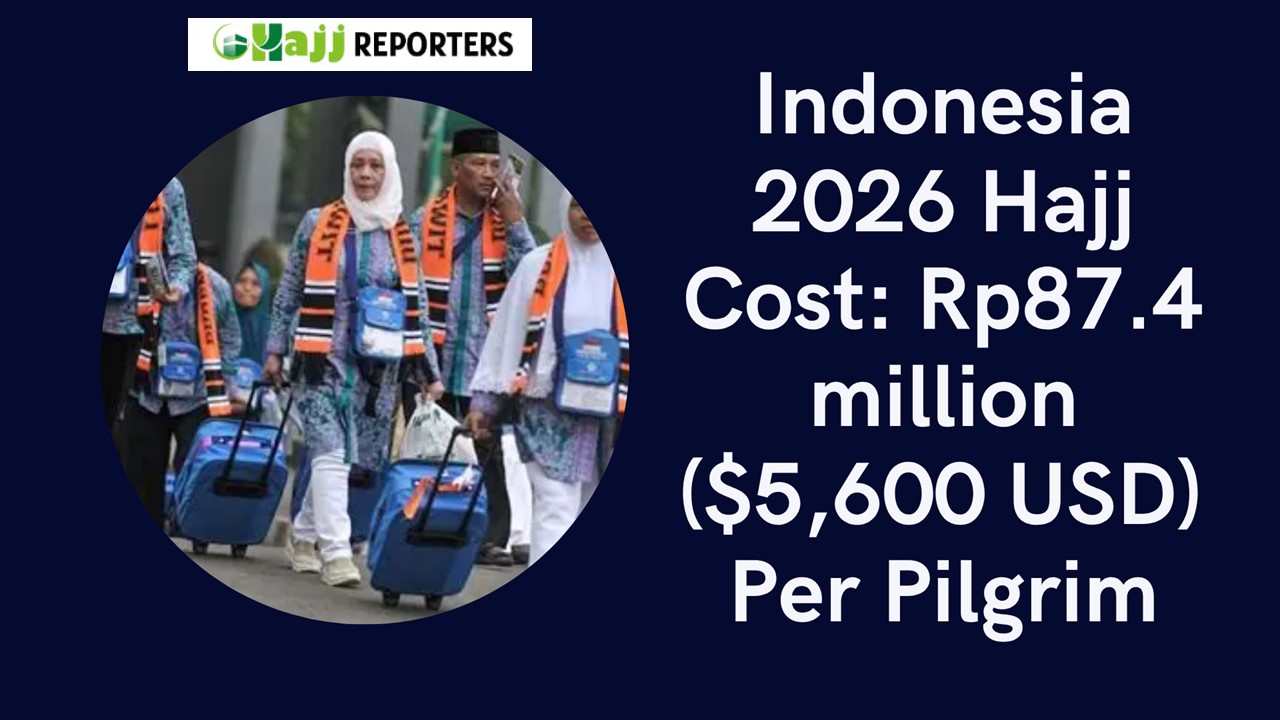
Indonesian President Joko Widodo announced a reduction in the cost of Hajj for 2026 by 2 million rupiah, despite the ongoing rise in fuel prices, including aviation fuel. This announcement was made during a government meeting at the presidential palace in Jakarta, where the president emphasized the government's commitment to easing the financial burdens on pilgrims.
Speaking before approximately 800 officials, Widodo clarified that the government would not impose any additional burdens on pilgrims due to the global rise in fuel prices. The cost of Hajj for 2026 has been set at 87,409,366 Indonesian rupiah per pilgrim, reflecting the government's dedication to providing affordable Hajj services.
Details of the Announcement
During the meeting, Minister of Hajj and Umrah Mohamad Irfan Yusuf indicated that President Widodo had instructed that no increases in Hajj costs be passed on to pilgrims due to rising fuel prices. He explained that the cost of Hajj could be significantly affected by geopolitical conditions, as fuel prices have surged due to regional conflicts, leading airlines to propose ticket price increases.
Before the outbreak of the conflict between Iran and Israel, the cost of air travel per pilgrim was estimated at around 33.5 million rupiah. As the conflict escalated, fuel costs increased, prompting airlines to suggest price hikes, with costs potentially reaching 46.9 million rupiah if flight routes remain unchanged, or even 50.8 million rupiah if routes are altered to avoid tense areas.
Background & Context
Historically, Indonesia has been one of the largest countries sending pilgrims to Mecca, with thousands traveling annually to perform Hajj. As the costs of Hajj have risen due to global economic conditions, the Indonesian government has been compelled to find solutions to alleviate the burdens on its citizens. The increase in fuel prices has impacted many sectors, including travel and aviation, prompting the government to take decisive steps to keep Hajj costs within reasonable limits.
The cost of Hajj is a sensitive issue in Indonesia, as many citizens aspire to fulfill this religious obligation. The government has faced significant challenges in recent years due to rising prices, which has led it to reconsider its Hajj policies.
Impact & Consequences
The government's decision to reduce Hajj costs is a positive step reflecting its commitment to its citizens. This decision may contribute to an increase in the number of pilgrims able to perform the Hajj, thereby strengthening the religious and social bonds among citizens. Additionally, lowering the costs may encourage more individuals to apply for Hajj, reflecting the government's desire to enhance the spiritual atmosphere within the community.
However, the biggest challenge remains how to manage potential price increases due to global economic conditions. The government must continue to monitor prices and ensure that pilgrims are not burdened with additional costs.
Regional Significance
Indonesia's decision to reduce Hajj costs represents an important step in strengthening relations among Islamic countries. As the largest Muslim-majority nation by population, Indonesia plays a crucial role in fostering ties between Islamic nations. This decision may encourage other countries to take similar steps to ease the burdens on their citizens wishing to perform Hajj.
In conclusion, there is hope that the Indonesian government will continue to take positive steps that contribute to enhancing the religious spirit and alleviating the financial burdens on pilgrims.