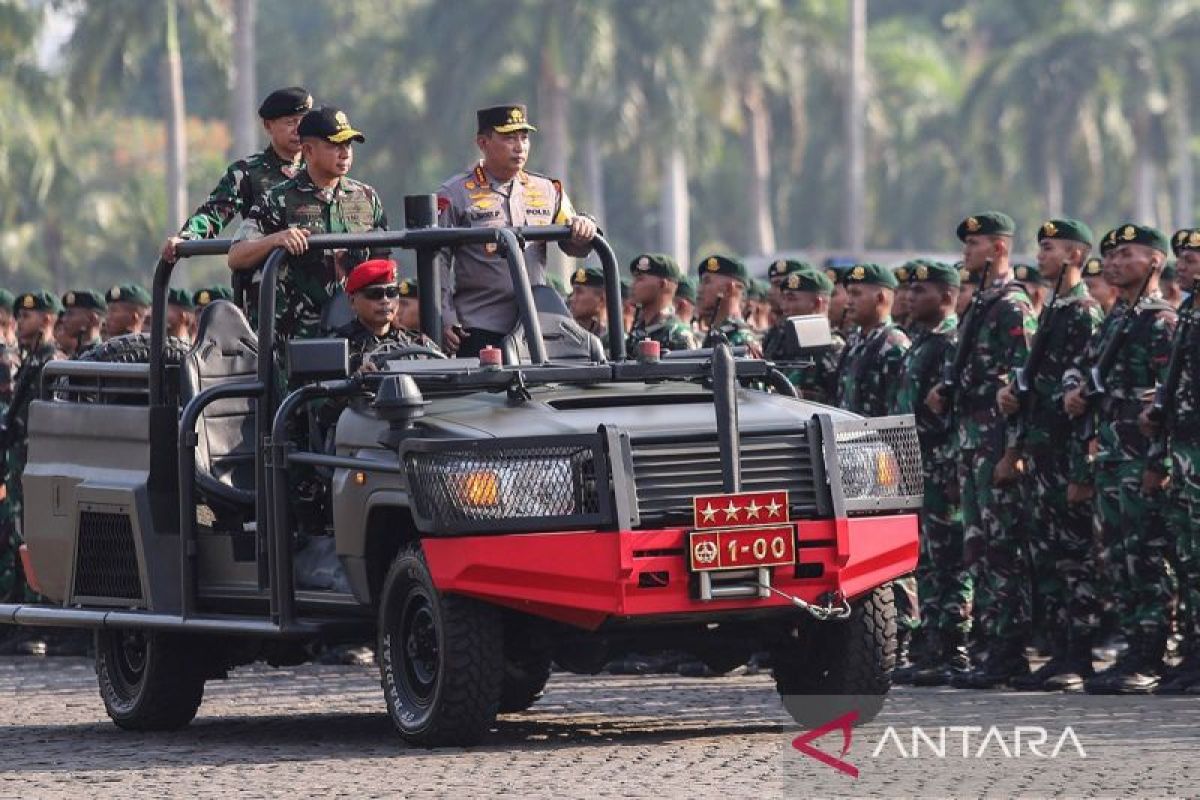
In a move reflecting growing Indonesian concern over Israeli violations, Ahmad Doli Kurnia Tandjung, Vice President of the Golkar Party, announced his support for the Indonesian government in taking decisive actions after the deaths of three soldiers from the Indonesian National Armed Forces (TNI) in an Israeli attack on the United Nations Interim Force in Lebanon (UNIFIL) camp.
This statement came in a press release issued on Wednesday, where Tandjung emphasized the importance of national unity in confronting any aggressions or violations of international humanitarian law. He noted that this incident should serve as a motivation to increase pressure on Israel to halt its repeated aggressions.
Details of the Incident
The three Indonesian soldiers, namely Brigadier General Farizal Romadon, Captain (Inf) Zulmi Aditya Iskandar, and Sergeant Muhammad Noor Eishwan, died in an attack that occurred on March 29 and 30. The attack, which targeted the UNIFIL camp, comes at a time when the situation in Lebanon is experiencing heightened tensions due to ongoing conflicts in the region.
Tandjung pointed out that this attack is not the first of its kind, as in recent years there have been numerous Israeli violations against Palestinians, with over 8,300 Israeli assaults recorded on Palestinian territories during 2025, including serious violations such as genocide and illegal occupation.
Context and Background
Historically, Indonesia has been one of the countries supporting the Palestinian cause, viewing Israeli aggressions as a challenge to humanitarian values. Indonesia, the largest Muslim-majority country by population, has shown significant solidarity with Palestinians in various international forums, including the United Nations.
These events come at a sensitive time, as pressures are mounting on the Indonesian government to adopt more stringent positions regarding Israeli violations. Tandjung also called on the Indonesian parliament to enhance efforts aimed at pressuring the government to take more effective steps in this context.
Consequences and Impact
The repercussions of this attack extend beyond the military aspect, as Tandjung indicates that the current crisis also affects the Indonesian economy. War and conflicts lead to instability in the region, negatively impacting investments and trade relations.
Moreover, the deaths of Indonesian soldiers reflect the risks faced by peacekeeping forces in conflict areas, prompting the Indonesian government to reconsider its strategy regarding participation in international peace missions.
Impact on the Arab Region
These events are part of the larger picture of the conflict in the Middle East, where Israeli violations against Palestinians are increasing. Indonesia's support for the government in taking decisive steps in support of the Palestinian cause aligns with the positions of many Arab countries seeking to enhance Palestinian rights.
In conclusion, the question remains as to how the international community will respond to these violations and whether there will be tangible steps taken to halt Israeli aggressions and protect civilians in conflict areas.