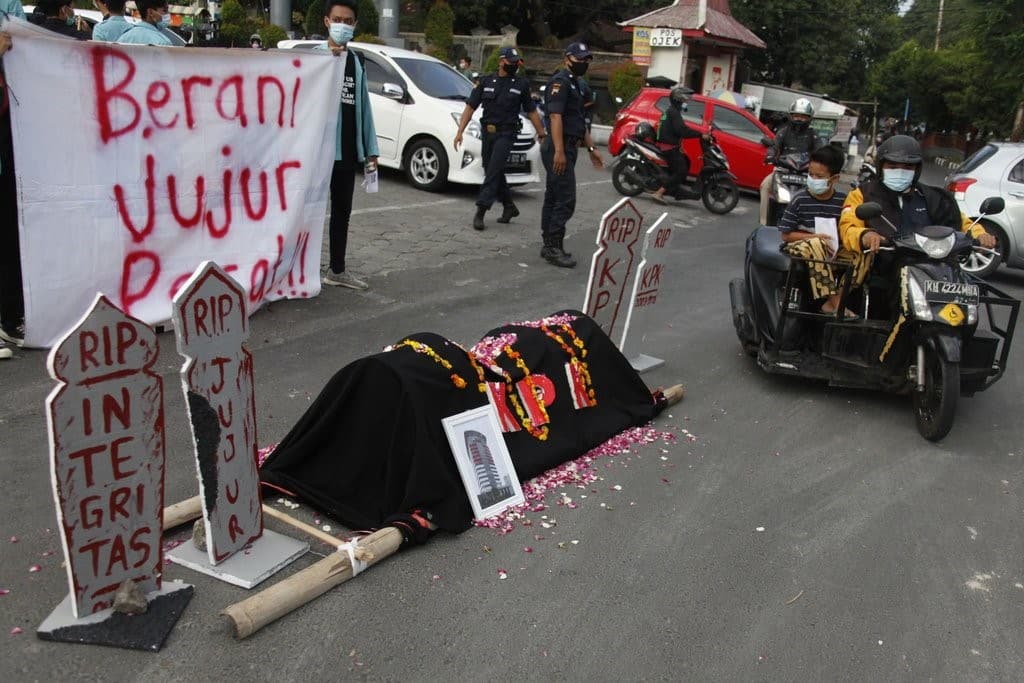
The Indonesian Anti-Corruption Commission (KPK) has summoned several prominent figures from PT Karabha Digdaya, a company under the Ministry of Finance, as witnesses in a corruption case related to a lawsuit over a land dispute covering 6,500 square meters in the Tabus area of Depok, West Java. Among those summoned is Yuli Brianto, the company's director, who is required to appear before the commission at its headquarters.
The summons also includes the Head of Business Development at the company, known by the initials GUN, and the Chairman of the Board of PT Mitra Bangun Prasada, referred to by the initials FM, as part of the ongoing investigations.
Details of the Incident
These developments follow a surprise arrest operation conducted by the KPK on February 5, 2026, during which judges and government officials in Depok were apprehended as part of investigations into corruption related to land management. This operation resulted in the arrest of seven individuals, including the Chief Justice and Deputy Chief Justice of the Depok court, along with several employees of the involved company.
On February 6, 2026, the KPK announced that charges had been filed against five of the detainees for corruption linked to the receipt or offering of bribes in managing the aforementioned land dispute. Among the accused are I Wayan Eka Mariarta, the Chief Justice, Bambang Setiawan, the Deputy Chief Justice, and Trisnaidi Yulrisman, the executive director of Karabha Digdaya.
Background & Context
Corruption cases in Indonesia are sensitive issues that impact the reputation of the government and the public sector. In recent years, the country has witnessed numerous scandals that have led to the summoning of government officials and judges for investigations. The KPK, established in 2002, aims to combat corruption and enhance transparency within government institutions.
This case coincides with the Indonesian government's efforts to strengthen laws related to transparency and accountability, as it seeks to improve the business environment and attract foreign investments. However, ongoing corruption issues hinder these efforts and negatively affect investor confidence.
Impact & Consequences
This case highlights structural problems within Indonesia's judicial and administrative systems, which could lead to a loss of trust in government institutions. Furthermore, rampant corruption can adversely affect the country's economic and social development, making it essential to take stringent measures to combat this phenomenon.
Combating corruption requires cooperation among all stakeholders, including the government, the private sector, and civil society. There must be effective mechanisms for monitoring and holding accountable those responsible for corruption, in addition to promoting a culture of legality and transparency across all sectors.
Regional Significance
Corruption issues in developing countries, including Indonesia, hold particular significance for Arab nations, as many share similar challenges. These issues can impact Arab investments in Indonesia, necessitating that Arab investors exercise caution and understand the legal and political environment in the country.
Moreover, enhancing transparency and combating corruption can serve as a model for Arab countries seeking to improve their investment climates and bolster confidence in their institutions.