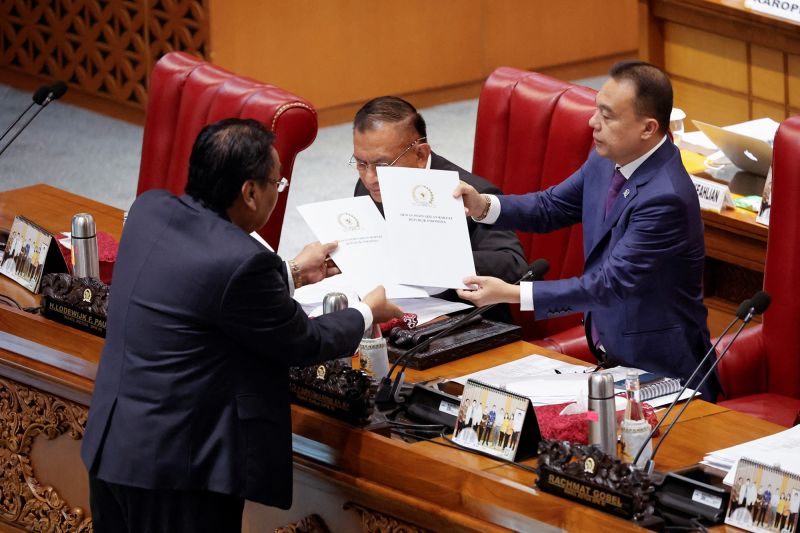
In a move reflecting increasing pressure on the Indonesian judicial system, the Chairman of the Legal Affairs Committee in the Indonesian Parliament, Habiburrahman, announced the summoning of the Karo Prosecutor's Office in North Sumatra to discuss the case of Amdal Situb, a video journalist accused in a case that has stirred significant controversy in Indonesian society. This step follows sharp criticisms from the parliament regarding the delay in Situb's release despite a court ruling in his favor.
Habiburrahman indicated that there is an urgent need to evaluate the performance of the Karo Prosecutor's Office, expressing his disappointment at the office's failure to adhere to proper legal procedures. He confirmed that the parliament will hold a hearing with representatives from the Prosecutor's Office next Thursday, aiming to understand the reasons behind this delay.
Details of the Incident
The case revolves around Amdal Situb, who was detained on corruption-related charges; however, the court issued a ruling for his release after it was established that there was insufficient evidence to convict him. Despite this, Situb faced delays in his release, having to wait for long hours for the necessary paperwork to be signed by the Karo Prosecutor's Office. This delay has raised questions about the effectiveness of the judicial system in handling sensitive cases.
Habiburrahman also pointed out that there were protests by a group of individuals outside the Prosecutor's Office, raising suspicions of illegal interventions by certain elements within the judicial system. He assured that these allegations would be investigated, and the parliament would maintain close monitoring of the case.
Background & Context
Historically, Indonesia has witnessed numerous cases that have raised concerns about the integrity of its judicial system, with recurring criticisms regarding corruption and favoritism within government institutions. The Amdal Situb case is not the first of its kind; rather, it comes in a broader context of demands for legal reforms that enhance transparency and accountability.
This case serves as an example of the challenges Indonesia faces in its pursuit of justice, requiring concerted efforts from all stakeholders, including the parliament, to ensure that such incidents do not recur. There are also increasing calls for comprehensive reforms in the judicial system to bolster public trust.
Impact & Consequences
This case represents a real test for the Indonesian judicial system, as the outcomes of the investigations could affect public confidence in legal institutions. If the case is not handled transparently and fairly, it could exacerbate negative sentiments toward the judicial system, potentially reflecting adversely on social and political stability in the country.
Moreover, the parliament's intervention in this case may open the door for further scrutiny of government institutions' performance, possibly leading to structural changes in how the judicial system operates in Indonesia. Such changes may be necessary to ensure that similar incidents do not occur in the future.
Regional Significance
While this case may seem distant from the Arab region, issues related to corruption and justice are global concerns that transcend borders. Indonesia's experiences in combating corruption may provide valuable lessons for Arab countries facing similar challenges. This case could contribute to enhancing dialogue on the importance of legal reforms in the Arab world.
In conclusion, the Amdal Situb case highlights the urgent need for reforms in the Indonesian judicial system and underscores the importance of transparency and accountability in fostering public trust. All stakeholders must work together to ensure justice is served and individual rights are protected.