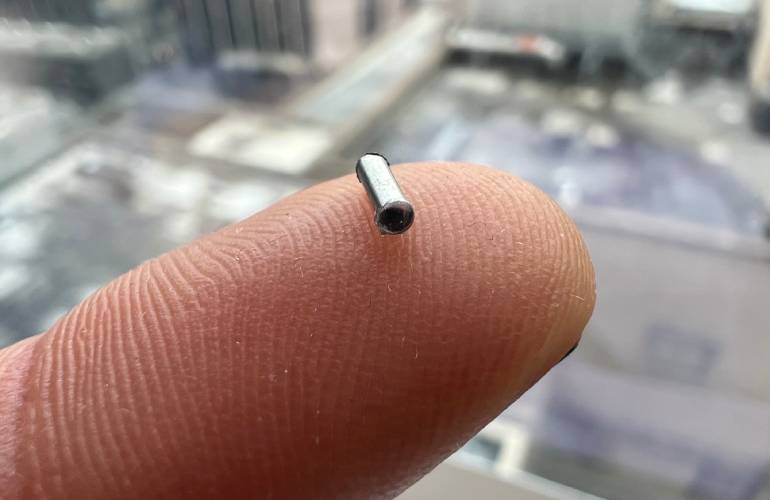
A team of researchers has announced the invention of a smart implant that is placed under the skin, which automatically distributes medications according to the body's needs. This modern technology is considered a revolution in the medical field, aiming to improve treatment efficacy and reduce medical errors.
The implant monitors drug levels in the blood and releases the necessary doses at the right time, enhancing treatment effectiveness and reducing the need for manual medication intake. This innovation is seen as an ideal solution for patients suffering from chronic diseases that require regular medication.
Event Details
This smart implant was developed by a team of researchers at Harvard University, where it was successfully tested on a group of animals. The implant contains precise sensors capable of measuring drug concentrations in the blood and operates using nanotechnology to ensure high accuracy in dose distribution.
This technology is a significant step towards achieving more personalized healthcare, as it can be used to treat a variety of diseases, including diabetes and heart diseases. Additionally, the implant helps reduce the burden on the healthcare system by decreasing the number of medical visits required for treatment follow-up.
Background & Context
Historically, methods of drug distribution relied on taking pills or injections, which could lead to irregular medication intake or even overdoses. In recent years, we have witnessed significant developments in medical technology, including the use of wearable devices and smart technologies to enhance patient care.
This smart implant is part of the broader trend towards using technology in healthcare, helping to achieve better outcomes for patients and saving time and resources for healthcare professionals.
Impact & Consequences
This new technology could have a significant impact on how healthcare is delivered in the future. It is expected to contribute to improving the quality of life for patients and reducing healthcare costs by minimizing the need for traditional treatments.
Moreover, this implant may help reduce medical errors resulting from irregular medication intake, thereby enhancing patient safety and reducing health risks associated with it.
Regional Significance
In the Arab region, where chronic diseases such as diabetes and heart diseases are among the most prominent health challenges, this technology could make a significant difference. It could contribute to improving patient care and providing innovative solutions to address health challenges.
Furthermore, adopting this technology could enhance the ability of healthcare systems in Arab countries to provide effective and personalized healthcare, thereby improving the quality of life for citizens.
The smart implant that distributes medications automatically represents an important step towards a more innovative future in healthcare. As research and development continue, this technology could fundamentally transform how treatment is provided to patients.