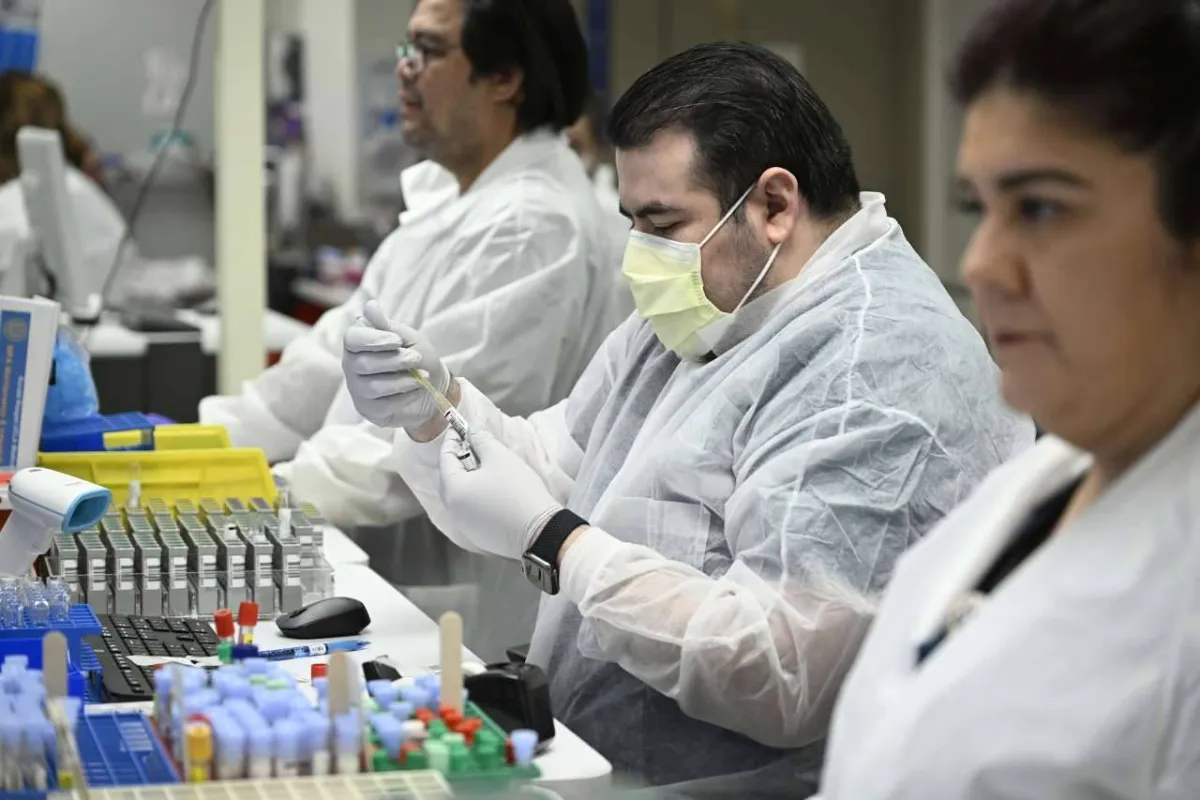
Researchers at the University of California have developed a low-cost blood test that demonstrates promising capabilities for early detection of several types of cancer, as well as diagnosing liver diseases, through a simple analysis of a single blood sample.
This innovative test could mark a significant shift in early detection methods and comprehensive health monitoring at a lower cost, with results published in the "Proceedings of the National Academy of Sciences".
Details of the Test
The new test, named MethylScan, is based on a simple yet scientifically advanced idea: analyzing a single blood sample to extract precise information about the condition of various organs, focusing on early detection of cancer and liver diseases by monitoring subtle molecular signals in the blood.
The mechanism of the test relies on analyzing what is known as circulating free DNA (cfDNA), which are small fragments of genetic material released into the bloodstream upon cell death. As body cells continuously renew, these fragments carry a genetic fingerprint that reflects what is happening within different tissues, allowing scientists to read early indicators of dysfunction or disease.
Background & Context
Researchers are particularly focused on studying DNA methylation, which are chemical modifications that regulate gene activity and vary between tissues, changing when diseases occur. By analyzing these patterns, it is possible to distinguish between healthy and affected cells, and even identify the organ from which the disease signal originates.
To overcome the challenge of the large amounts of normal DNA present in the blood, the team developed a technique that uses special enzymes to remove most of the irrelevant signals, allowing focus on the DNA associated with affected organs, enhancing the accuracy of results while reducing the need for costly sequencing techniques.
Impact & Consequences
Thanks to this methodology, the test can provide a comprehensive picture of the body's health through a single analysis, acting as a biological radar that detects early changes in tissues before symptoms appear, making it a promising tool for early diagnosis and preventive medicine.
The study included analysis of samples from 1,061 individuals, including patients with liver, lung, ovarian, and stomach cancers, as well as individuals with various liver diseases and healthy subjects. The results showed that the test is capable of detecting about 63% of cancer cases across various stages, identifying around 55% of cancers in their early stages, with high accuracy and specificity reaching 98%, significantly reducing false positive results.
Regional Significance
Regarding liver cancer, the test demonstrated remarkable effectiveness, managing to detect about 80% of cases in high-risk groups, such as patients with cirrhosis or hepatitis, with specificity exceeding 90%. The test was also able to pinpoint the source of the signal within the body, assisting doctors in directing diagnostic examinations more accurately.
The role of the test extends beyond cancer detection, as it has shown the ability to differentiate between various types of liver diseases, such as viral hepatitis and metabolic-related diseases, with an accuracy of about 85%. This technique represents an important step toward developing a single blood test capable of early detection of a wide range of diseases, potentially transforming the future of medical diagnostics and enhancing opportunities for early prevention and treatment.