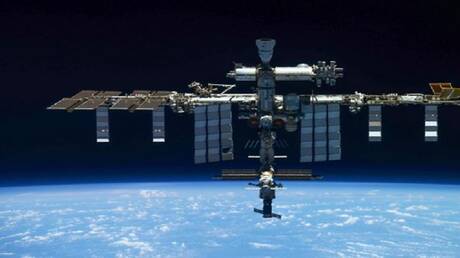
Scientists from the National Research Center 'Kurchatov Institute' have developed a new biotechnological method for generating oxygen aboard the International Space Station, in collaboration with experts from the Institute of Biomedical Problems of the Russian Academy of Sciences. This technology aims to improve the living conditions for astronauts in space and provide oxygen sustainably.
This initiative is part of multiple efforts to enhance sustainability in space, as scientists seek to reduce reliance on Earth supplies. Through this technology, the space station can produce oxygen autonomously, contributing to cost reduction and extending the duration of space missions.
Details of the Development
The new technology relies on complex biological processes, utilizing living organisms to convert available materials into oxygen. This innovation reflects scientific progress in the field of space exploration and enhances humanity's ability to continue exploring space for longer periods.
Currently, scientists are testing this technology in simulated environments to ensure its effectiveness before applying it in space. Preliminary results indicate that this technology successfully produces oxygen with high efficiency, opening new horizons for space exploration.
Background & Context
Historically, the International Space Station has depended on oxygen supplies from Earth, which posed challenges for supply operations. With the increasing interest in space exploration, it has become essential to develop new technologies that ensure the sustainability of life in space.
These developments are part of global efforts to explore space, as many countries aim to send manned missions to other planets, such as Mars. Advancements in technologies like this could significantly impact the future of space exploration.
Impact & Consequences
If this technology proves successful, it will revolutionize how resources are managed in space. It will allow long-term missions to reduce their reliance on Earth supplies, increasing the feasibility of undertaking more ambitious exploratory projects.
This technology may also contribute to developing new methods for producing oxygen in harsh environments, which could have applications on Earth, such as improving agricultural techniques in arid regions.
Regional Significance
In light of global trends towards space exploration, Arab countries can benefit from these new technologies. Investing in scientific research and technology can enhance the standing of Arab nations in the field of space.
Furthermore, collaboration with global scientific institutions in developing such technologies can strengthen the capabilities of Arab countries in the fields of science and technology, contributing to achieving sustainable development.