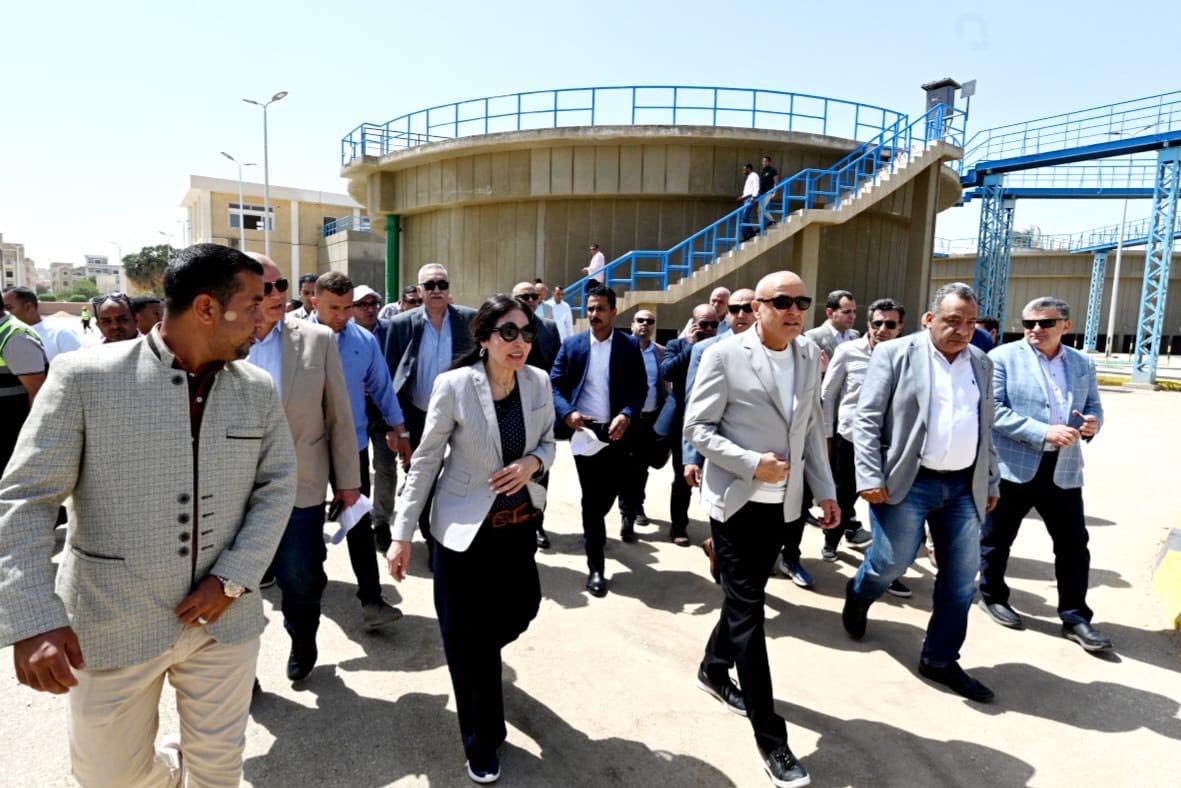
Engineer Randa El-Manshawi, the Minister of Housing and Urban Communities, visited drinking water and sewage projects in Luxor Governorate, where she was welcomed by Engineer Abdel-Mottaleb Emara, the Governor of Luxor. This visit is part of the presidential initiative "Decent Life," with participation from Engineer Ahmed Omran, Deputy Minister of Housing for Utilities, along with several ministry leaders and executive officials.
The minister highlighted that drinking water and sewage projects are a top priority for the state due to their direct impact on improving citizens' quality of life and supporting sustainable development plans. She affirmed the continuation of these projects' implementation according to the highest technical standards and in line with urban expansion plans.
Details of the Visit
The tour included an inspection of the water purification station in New Taiba, which has a designed capacity of 35,000 cubic meters per day. The minister listened to a detailed explanation of the operational stages, starting from drawing water from the Nile River, through the treatment processes of sedimentation, filtration, and disinfection, leading to the pumping of water into the distribution network.
The minister confirmed that the New Taiba station represents a comprehensive model of modern infrastructure, supporting the state's efforts to provide safe and sustainable water services, especially in new cities and urban expansion areas. She also praised the ministry's pivotal role in implementing infrastructure projects within the presidential initiative.
Background & Context
This visit comes at a time when Egypt is witnessing increased efforts to improve the level of basic services in rural areas, as the state aims through the presidential initiative "Decent Life" to achieve a qualitative leap in living standards. This initiative aims to enhance the quality of life for citizens in the most needy areas, reflecting the government's commitment to developing infrastructure.
Drinking water and sewage projects are considered fundamental pillars for achieving sustainable development, playing a vital role in enhancing public health and the environment. Improving these services contributes to achieving the sustainable development goals set by the United Nations.
Impact & Consequences
It is expected that drinking water and sewage projects will improve living conditions for citizens in Luxor, thereby enhancing economic and social development in the region. Providing clean drinking water and effective sewage systems is a crucial factor in attracting investments and achieving sustainable development.
Moreover, these projects will help reduce water-related diseases, positively reflecting on the public health of the population. Therefore, investing in these projects is an investment in a better future for citizens.
Regional Significance
Egypt's experience in implementing drinking water and sewage projects serves as a model for the Arab region, where many countries face similar challenges in providing clean water and basic services. The success of these initiatives can encourage other countries to adopt similar strategies to improve the quality of life for their citizens.
Furthermore, regional cooperation in water management can contribute to enhancing water security in the region, promoting stability and sustainable development.
In conclusion, the visit of the Minister of Housing to the drinking water projects in Luxor reflects the Egyptian government's commitment to improving the level of basic services, contributing to sustainable development and enhancing the quality of life for citizens.