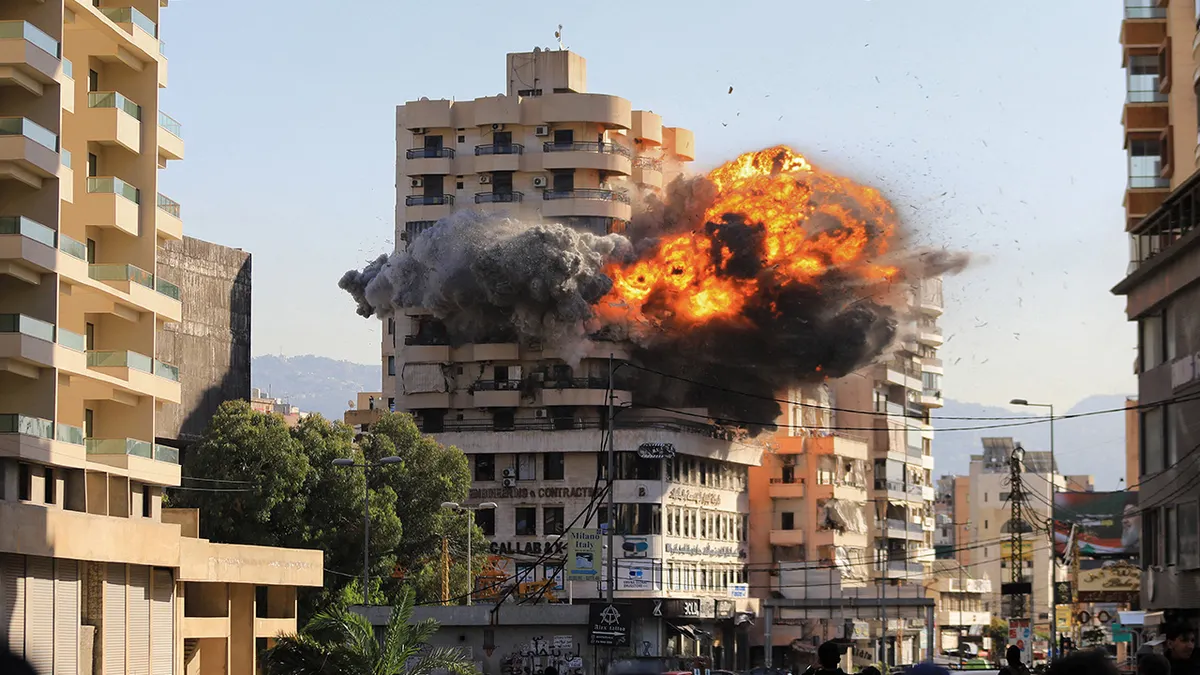
Lebanon's capital, Beirut, and its suburbs experienced intense airstrikes shortly after a ceasefire agreement was announced. The attacks, which targeted vital areas in the city, south, and Bekaa Valley, raised significant concerns among local residents who were hoping for a return to calm after a period of tension.
These airstrikes come at a sensitive time, as there was hope for stability following a series of violent clashes in the region. Reports indicate that the airstrikes specifically targeted residential neighborhoods and infrastructure, resulting in civilian casualties.
Details of the Incident
Late last night, a ceasefire was announced following intensive negotiations between the conflicting parties. However, the period of calm did not last long, as warplanes resumed their strikes on various areas, exacerbating the humanitarian situation in the country.
Information suggests that the airstrikes targeted areas such as the southern suburbs of Beirut, which is considered a stronghold for many armed factions. Additionally, regions in the south and Bekaa Valley were also targeted, complicating the security situation in Lebanon further.
Background & Context
Lebanon has long suffered from political and economic crises, leading to worsening security conditions. The recent clashes were a result of escalating tensions between various factions, which have been exacerbated by regional and international crises.
Historically, Lebanon has witnessed multiple conflicts, and ceasefires have often been fragile. These airstrikes come at a critical time when the international community is seeking lasting solutions to the Lebanese crisis.
Impact & Consequences
These airstrikes represent a serious escalation in the Lebanese conflict and could worsen the humanitarian situation. With an increasing number of displaced persons and casualties, Lebanon faces significant challenges in providing humanitarian assistance.
The impact on regional stability could be substantial, as these events may escalate tensions in the region, affecting neighboring countries and complicating peace efforts.
Regional Significance
The events in Lebanon illustrate how local crises can affect regional stability. With increasing conflicts in the area, it becomes essential for Arab nations to work together to find effective solutions.
The recent events may increase pressure on Arab governments to intervene or provide support, reflecting the importance of regional cooperation in addressing crises.