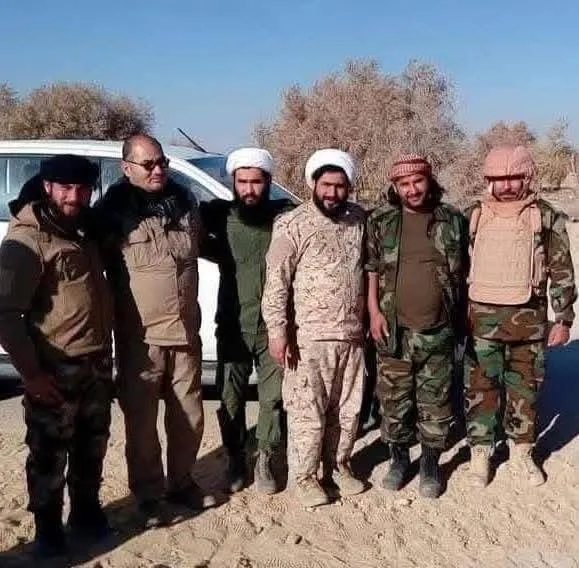
The Internal Security Forces in Raqqa arrested Turki Al-Bouhmed, one of the prominent military leaders in the former regime's militias, during a precise security operation carried out at a farm in the countryside of the province. Al-Bouhmed is considered a significant figure linked to crimes and violations during the rule of the fallen regime, having played a major role in cooperating with Iranian militias such as the Revolutionary Guard and Hezbollah.
Known also as Turki Makhlouf Al-Marai, Al-Bouhmed was the leader of the Tribal Fighters Forces, which was associated with the military intelligence branch. His name rose to prominence in the early years of the Syrian revolution, where he was recognized as one of the leaders of the Desert Commandos militia, affiliated with the former National Defense militia. His group was linked to numerous incidents of looting, pillaging, and torture affecting many residents in the areas they entered.
Details of the Arrest
The arrest of Al-Bouhmed comes at a sensitive time, as security movements in Raqqa demonstrate increasing efforts to combat corruption and crimes committed during the previous regime. Many crimes committed by Al-Bouhmed have been documented, including forced displacement and the recruitment of youth to join Iranian militias. He also contributed to the arrest of a large number of supporters of the Syrian revolution, which heightened discontent in the region.
Local media circulated images and videos documenting the moment of Al-Bouhmed's arrest, which sparked widespread reactions on social media platforms. Many considered his arrest a positive step towards achieving justice and holding those involved in human rights violations accountable.
Background & Context
Historically, the Syrian regime's militias have been associated with war crimes and serious violations against civilians, especially in areas that have witnessed violent conflict such as Raqqa and Deir ez-Zor. Al-Bouhmed was known as one of the key leaders who contributed to strengthening the regime's influence in those areas, making him a primary target for current security efforts.
In recent years, Raqqa has undergone significant transformations following its liberation from ISIS control, yet the scars of conflict remain evident. The arrest of Al-Bouhmed is part of broader efforts aimed at rebuilding trust between local populations and authorities, and achieving justice for the victims.
Impact & Consequences
The arrest of Al-Bouhmed is expected to have significant implications for the security situation in Raqqa. This arrest serves as a strong message to other militias that local authorities will not tolerate any violations of human rights. It may also increase pressure on those involved in past crimes, potentially contributing to an improved security situation in the region.
Furthermore, Al-Bouhmed's arrest could encourage further cooperation between local communities and authorities, contributing to enhanced stability in Raqqa. However, the biggest challenge remains how to address the legal issues related to past crimes and ensure accountability for all involved.
Regional Significance
The arrest of Turki Al-Bouhmed represents a turning point in efforts to achieve justice in Syria, as this event is part of a broader context concerning the accountability of war criminals in the region. This arrest may inspire other countries in the region to pursue similar cases, potentially contributing to the promotion of human rights and the achievement of justice.
In conclusion, Al-Bouhmed's arrest is an important step towards achieving justice in Syria, yet the road ahead remains long. Continuous efforts are required to ensure accountability for all involved in human rights violations and to rebuild trust between authorities and local communities.