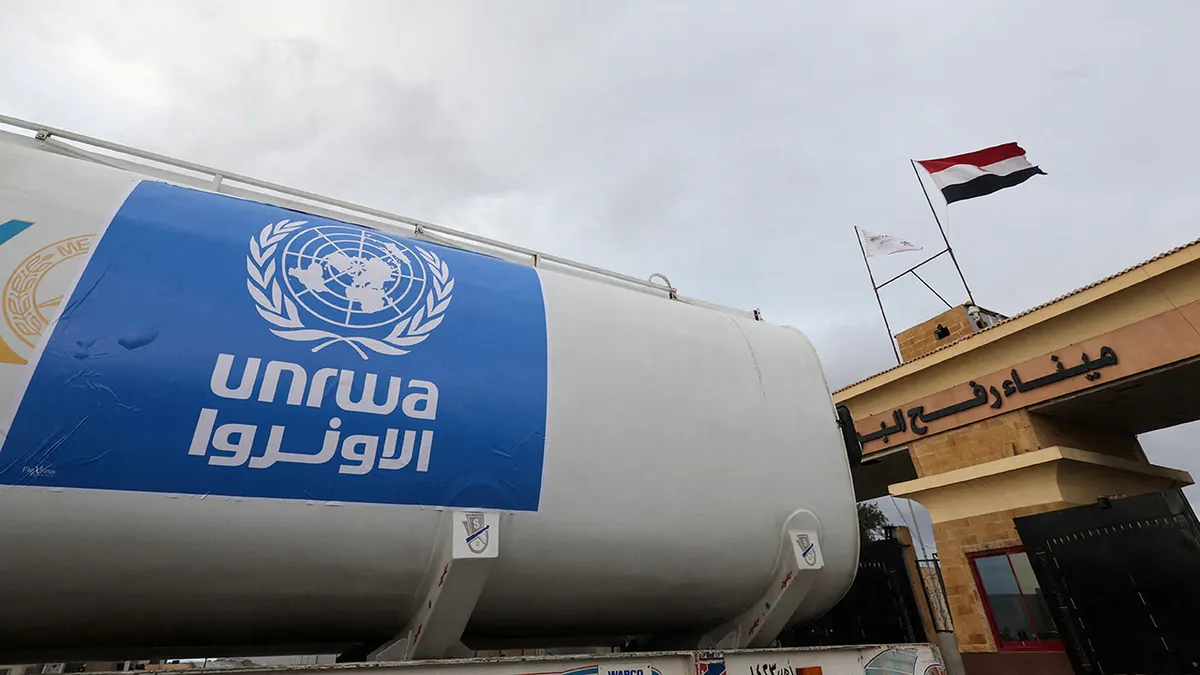
The United Nations Relief and Works Agency for Palestine Refugees in the Near East (UNRWA) expressed its shock at a new Israeli law that imposes the death penalty on Palestinians convicted of crimes against Israelis. This statement was made by the agency's Commissioner-General, Philippe Lazzarini, during a press conference in Geneva, where he described the law as "harsh" and "discriminatory against a specific group of the population."
Lazzarini emphasized that this law, which was passed by the Israeli Knesset, represents a dangerous step in the wrong direction, noting that the international community is moving towards abolishing the death penalty rather than reinstating it. He expressed hope that the Israeli Supreme Court would be able to annul this law.
Details of the Law
The law was enacted last Monday, making the death penalty the standard punishment for Palestinian citizens in the occupied West Bank who are convicted of fatal attacks against Israelis. This legislation comes at a time of escalating tensions in the region, with reports indicating that over 9,300 Palestinians are held in Israeli prisons, including 350 children and 66 women.
Human rights organizations report that these detainees are subjected to harsh practices, including torture and medical neglect, leading to the deaths of many. The situation in Israeli prisons has worsened since the onset of the Israeli military campaign in the Gaza Strip in October 2023, which has resulted in the deaths of over 72,000 people and injuries to 172,000 others.
Background & Context
Historically, the issue of Palestinian prisoners has been a central topic in the Israeli-Palestinian conflict. Palestinians endure harsh conditions in Israeli prisons, and many consider their detention part of an occupation policy. In recent years, there has been an increase in arrests, particularly amid the tense conditions in the region.
In past years, there have been numerous international attempts to pressure Israel to improve the conditions of prisoners, but these efforts often face rejection. The new law is seen as an additional escalation in the repressive policies pursued by Israel against Palestinians, complicating the situation in the region further.
Impact & Consequences
Imposing the death penalty on Palestinians is a step that could exacerbate tensions in the region, potentially provoking angry reactions from Palestinians and Arab nations. This law could also negatively impact peace efforts in the area, as it is considered a gross violation of human rights.
Concerns are growing that this law could lead to further violence and tension, as Palestinians may feel particularly targeted. Additionally, this move could increase international pressure on Israel, especially from human rights organizations calling for respect for the rights of Palestinian prisoners.
Regional Significance
Arab countries are directly affected by the ongoing events in Palestine, as the Palestinian cause is one of the most prominent issues uniting Arabs. This Israeli step may provoke strong reactions from Arab governments and peoples, potentially escalating political positions in the region.
Under these circumstances, it is crucial for the Palestinian issue to remain at the forefront of Arab and international attention, and for pressure to be applied on Israel to halt its violations against Palestinians. The escalation in Israeli policies could lead to serious repercussions for stability in the region as a whole.