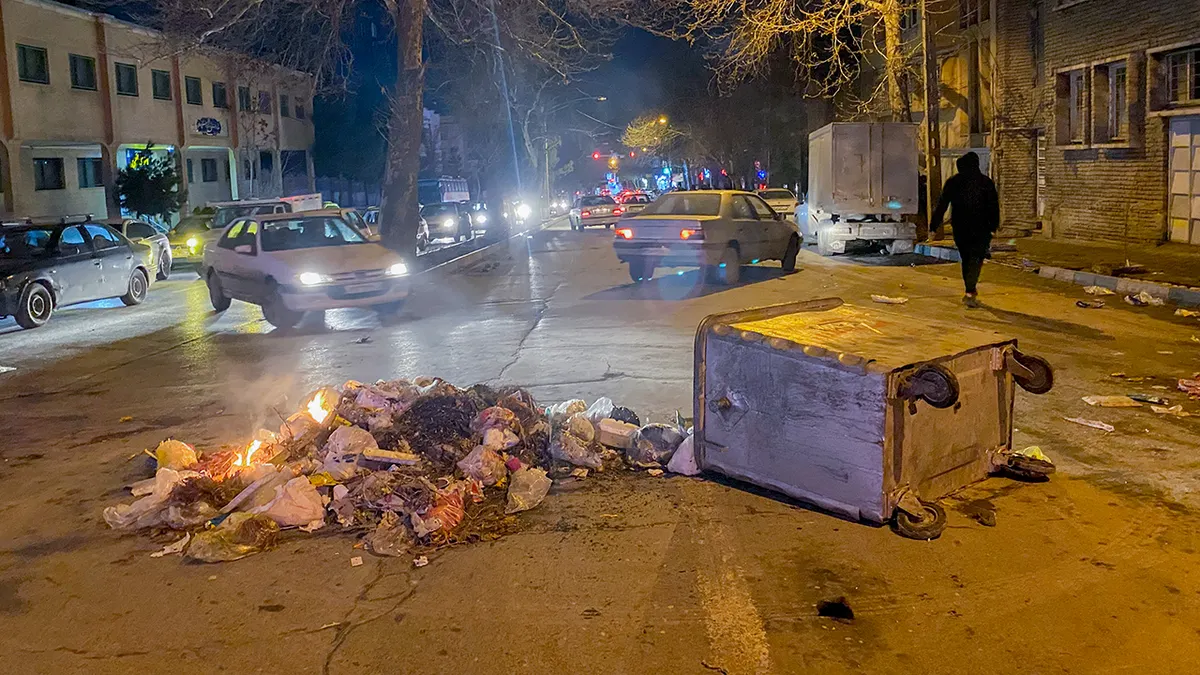
Iran is currently facing an unprecedented crisis characterized by the longest internet outage in the country's history. This disruption, which has lasted for several days, has resulted in a complete paralysis of digital communication, raising widespread concerns about its negative effects on citizens' daily lives and the Iranian economy.
This crisis comes at a sensitive time for Iran, as internal and external pressures on the government are increasing. Many observers have pointed out that this outage reflects the government's attempts to control information and prevent popular protests that may arise due to economic and social crises.
Details of the Event
The internet outage in Iran began several days ago, with internet services nearly completely halted across the country. Reports indicate that this disruption followed a series of popular protests that erupted due to rising prices and deteriorating economic conditions.
Many vital sectors have been affected by this outage, including education, where students have had to stop using online educational platforms. Businesses have also been impacted, as companies were unable to communicate with their customers or conduct financial transactions online.
Background & Context
Historically, Iran has witnessed numerous government attempts to limit freedom of expression and impose internet censorship. These methods have been increasingly utilized in recent years, especially following the popular protests that erupted in 2019, during which the government employed repressive tactics to prevent information from reaching citizens.
The internet in Iran is considered a vital tool for communication and expressing opinions; however, the government continually seeks to control this digital space. Recent events have shown that the government is willing to take drastic measures to prevent any form of protest or opposition.
Impact & Consequences
The ramifications of the internet outage in Iran extend beyond economic dimensions, also affecting freedom of expression and human rights. Many activists have expressed concern that this outage could lead to increased government repression and a tightening of the noose around dissenters.
Furthermore, this situation may negatively impact Iran's international relations, as these events could be used as a pretext for tightening sanctions or increasing political pressure from Western countries. Consequently, this outage could exacerbate the internal and external crises facing the country.
Regional Significance
Iran is considered one of the influential countries in the Middle East, and thus any crisis it undergoes may affect neighboring countries. Under the current circumstances, the region may witness an increase in political tensions, especially if protests in Iran continue and pressure on the government escalates.
Moreover, the internet outage in Iran could serve as a model for some regimes in the region seeking to control information and prevent protests. Therefore, what is happening in Iran may provide warning signals to neighboring countries on how to handle internal crises.
In conclusion, the internet outage in Iran represents a multi-dimensional crisis that requires international attention and local awareness. There must be joint efforts to ensure freedom of expression and human rights, lest the country plunge into a permanent digital darkness.