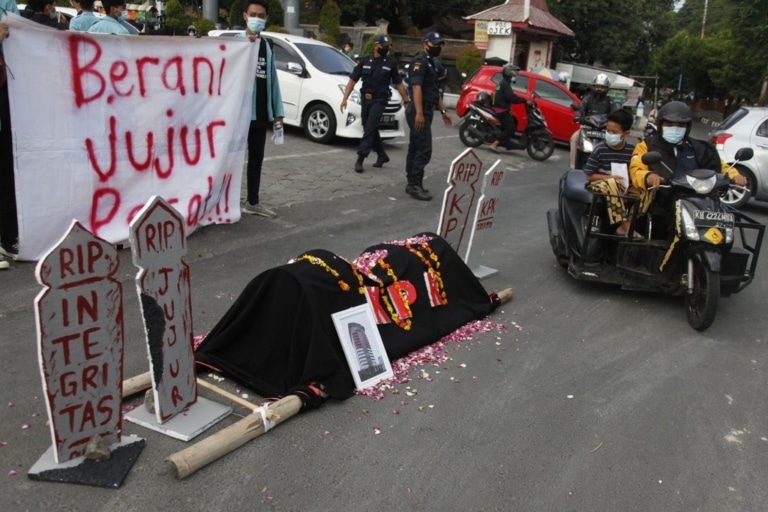
In a new development regarding the corruption case related to the Hajj lottery in Indonesia, the Indonesian Corruption Eradication Commission (KPK) has confirmed that it is currently focusing on summoning several Hajj organizing offices after identifying two suspects in the case. This step is part of the commission's efforts to recover lost public funds, estimated at around 622 billion rupiah, according to official reports.
KPK spokesperson Budi Prasetyo explained that investigations are ongoing and that the commission aims to maximize the recovery of financial assets. He noted that the involved offices had profited from the distribution of Hajj quotas, which were conducted in ways believed to be illegal.
Details of the Case
The KPK began investigating the corruption case related to the Hajj lottery on August 9, 2025, when the suspects were announced, including Yaqut Cholil Qoumas, the former Minister of Religious Affairs, and Ishfah Abidal Aziz, one of his aides. Although Fuad Hasan Masyhur, the owner of the Hajj organizing office Maktour, has not been formally charged, he was previously prevented from leaving the country.
On February 27, 2026, the KPK received a report from the auditing authority regarding the financial losses resulting from the case, which were confirmed on March 4, 2026, when the losses amounting to 622 billion rupiah were announced.
Background & Context
This corruption case is considered one of the largest scandals Indonesia has witnessed in recent years, as it pertains to the organization of Hajj, which is regarded as an important religious ritual for Muslims. The case has sparked widespread criticism from civil society, which has called for greater transparency and accountability in Hajj management.
Historically, Indonesia has seen numerous corruption cases, but the Hajj case may be the most impactful due to its connection to deep religious sentiments among citizens. Previous investigations have shown that corruption in Hajj management is not a new issue, with several similar cases revealed in past years.
Impact & Consequences
This case highlights the urgent need for radical reforms in Hajj management in Indonesia, where the government must enhance transparency and combat corruption to ensure the rights of pilgrims. Additionally, this case may affect Indonesia's reputation as a Hajj organizing country, potentially leading to a decline in trust from prospective pilgrims.
Furthermore, this case could lead to changes in government policies related to Hajj management, with expectations of strict actions against any illegal practices in the future.
Regional Significance
As the largest Muslim-majority country by population, Indonesia's corruption issues related to Hajj could impact its relations with Arab countries. This case may also raise concerns among Arab nations that receive Indonesian pilgrims, necessitating enhanced cooperation in Hajj organization.
In conclusion, this case underscores the importance of combating corruption across all sectors, especially those linked to religious practices. Indonesian authorities must take serious steps to ensure that such incidents do not recur in the future.