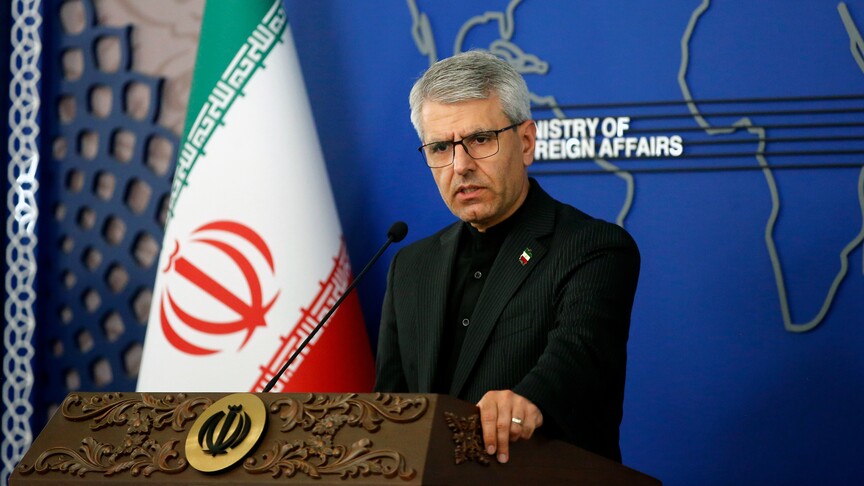
Iran has accused the United States of fully coordinating with Israel in airstrikes targeting its territory, with the Iranian Foreign Ministry spokesperson asserting that these operations are part of a hostile policy aimed at destabilizing the region. These remarks come at a sensitive time when relations between Iran and the West are increasingly strained.
In a related context, the Iranian spokesperson criticized comments made by the director general of the International Atomic Energy Agency, Rafael Grossi, describing them as "political and irresponsible." These statements reflect Iran's concerns regarding the agency's role in monitoring its nuclear activities, which Tehran views as part of an international pressure campaign against it.
Details of the Incident
Concerns are growing over escalating tensions in the region, as Israel continues to carry out airstrikes targeting Iranian sites in Syria, which some view as part of a broader strategy to counter Iranian influence in the Middle East. The Iranian spokesperson indicated that these strikes are conducted in full coordination with the United States, complicating the security situation in the area.
He added that Iran will not stand idly by in the face of these aggressions and will take all necessary measures to protect its sovereignty. These statements come at a time when Iran is engaging in diplomatic efforts to strengthen its relations with other countries in the region, including Russia and China.
Background & Context
Historically, relations between Iran and the United States have been tense, especially following Washington's withdrawal from the Iranian nuclear deal in 2018. Since then, the United States has imposed a series of economic sanctions on Iran, exacerbating the country’s economic and social conditions.
In recent years, Israel has intensified its military operations against Iran, believing that the Iranian nuclear program poses a threat to its national security. The region has witnessed several armed conflicts as a result of these tensions, impacting regional stability.
Impact & Consequences
These statements from the Iranian side indicate a potential escalation in tensions between Iran and the United States, which could lead to military or diplomatic reactions from both sides. Furthermore, continued military pressure on Iran may push it to take more aggressive steps in the region.
Such developments could affect global oil markets, as Iran is one of the largest oil producers in the region. Any escalation in the conflict could lead to fluctuations in oil prices, impacting the global economy.
Regional Significance
Arab countries are directly affected by the tensions between Iran and the United States, with some viewing Iranian influence as a threat to their security. Therefore, any escalation in the conflict could increase divisions in the region and enhance instability.
These events may also impact peace efforts in the region, as some Arab countries seek to achieve political settlements with Iran, while others aim to counter its influence.
In light of these tense conditions, the question remains about how events will unfold in the region and whether there is a possibility for peaceful solutions to restore stability.