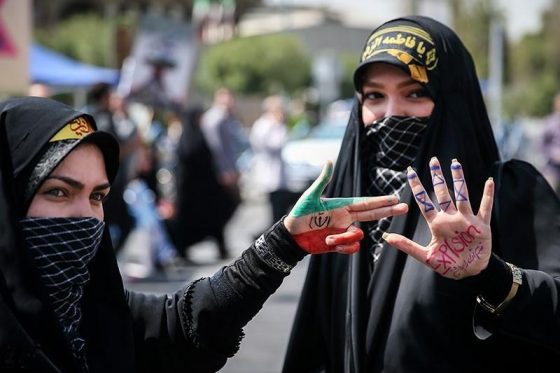
Every year on the last Friday of Ramadan, Iran observes what is known as 'Quds Day,' a political tradition launched by the first Supreme Leader, Ayatollah Khomeini, following the victory of the Islamic Revolution in 1979. This day is regarded as an opportunity to express solidarity with the Palestinian cause and to reject Israeli occupation, becoming an integral part of Iranian political discourse.
The Quds Day celebrations include organizing massive rallies in various Iranian cities, where citizens gather to show their support for Palestine. These events demonstrate Iran's commitment to the Palestinian cause and reinforce its position as a major supporter of resistance against Israeli occupation. Additionally, this occasion serves as a chance to renew calls for unity among different Palestinian factions.
Details of the Event
The Quds Day celebrations in Iran encompass numerous activities, including political speeches, cultural performances, and large demonstrations. Government officials, as well as religious and cultural figures, participate in these events, emphasizing the importance of the Palestinian cause in official Iranian discourse. This occasion is also used to convey political messages to Western countries and Israel, expressing their rejection of occupation.
These celebrations are also a means of showcasing national strength and enhancing Iranian identity, as participants express their feelings towards what they consider a national and religious duty to support Palestinians in their struggle against occupation.
Background & Context
Quds Day was first launched in 1979, after the Islamic Revolution in Iran, as part of Ayatollah Khomeini's vision to promote Islamic identity and enhance solidarity with Muslims worldwide. Since then, this day has become a symbol of resistance against occupation and is used as a platform to highlight the suffering of the Palestinian people.
Historically, Iran has been considered one of the countries supporting the Palestinian cause, providing financial and military assistance to Palestinian factions. Over time, Quds Day has become part of Iran's strategy to enhance its influence in the region by supporting resistance movements such as Hamas and Hezbollah.
Impact & Consequences
The Quds Day celebrations in Iran are indicative of the ongoing tensions between Iran and Israel, viewed as a direct challenge to Israeli policies in the region. These events also exacerbate divisions among Arab countries, with some showing support for Israel while others back the Palestinian cause.
These celebrations also provide Iran with an opportunity to assert its position as a regional power, seeking to bolster its influence in the area through support for resistance movements. They also strengthen its stance against Western pressures, especially amid rising tensions surrounding Iran's nuclear program.
Regional Significance
The Quds Day celebrations in Iran serve as a call for Arab countries to unite in support of the Palestinian cause. However, the political divisions in the Arab world complicate the possibility of achieving this goal. This day highlights the importance of Arab solidarity in confronting the challenges facing the Palestinian cause and reinforces the need for unified strategies to address occupation.
At the same time, these celebrations provide an opportunity to renew the discussion about Iran's role in the region, as it is viewed by some Arab countries as a threat, while others consider it an ally in confronting Israeli occupation. This divergence of opinions reflects the political complexities facing the region.
In conclusion, Quds Day symbolizes solidarity with the Palestinian cause and reflects the political tensions in the region. While Iran seeks to strengthen its position as a major supporter of Palestine, the challenges faced by Arab countries in achieving unity keep the Palestinian cause at the heart of political discussions.