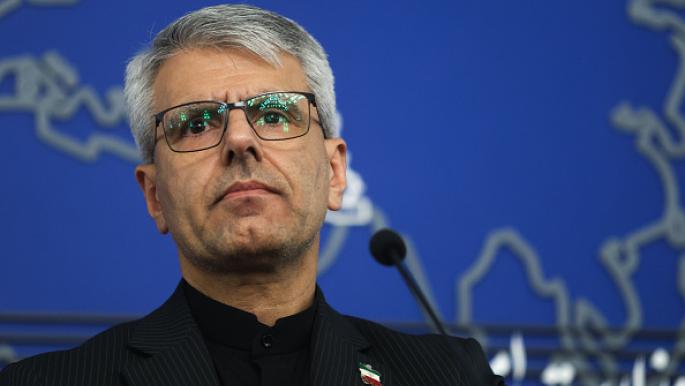
Iran's Foreign Ministry spokesperson, Ismail Baqaei, confirmed on Monday that the Israeli attacks targeting both Beirut and Iran are conducted "in full coordination" with the United States. These statements come at a sensitive time when the region is experiencing escalating tensions.
These remarks serve as a warning from Tehran, highlighting what it perceives as American interference in its internal affairs. The Israeli strikes, which target sites in Iran, are viewed as part of a broader strategy aimed at undermining Tehran's influence in the region.
Details of the Incident
Recently, the region has witnessed an escalation in Israeli attacks, with drones and missiles targeting locations in Lebanon and Iran. These strikes are framed by Israel as part of its efforts to combat Iranian threats, but Tehran sees them as a blatant violation of its sovereignty.
Baqaei pointed out that these military operations are not occurring in isolation from American support, reflecting the close coordination between Tel Aviv and Washington. This coordination, according to the Iranian official, disrupts diplomatic efforts and complicates the situation in the region.
Background & Context
Historically, relations between Iran and Israel have been tense, especially following the Islamic Revolution in 1979. Since then, Iran has regarded Israel as a primary adversary, facing numerous military attacks targeting its military and nuclear sites.
In recent years, Israel has intensified its attacks against what it considers Iranian threats, particularly amid the rising Iranian influence in Syria and Lebanon. These dynamics have led to heightened tensions between the two countries, raising concerns within the international community.
Impact & Consequences
The Iranian statements emphasize that the Israeli attacks are not merely military operations but part of a broader strategy aimed at destabilizing Iran. This situation could lead to greater escalation in the conflict, negatively impacting regional security.
Moreover, the American-Israeli coordination may provoke reactions from Iran's allies in the region, increasing the likelihood of new conflicts. This escalation could affect peace efforts in the area and complicate any future diplomatic attempts.
Regional Significance
These developments are of significant importance to Arab countries, as they could lead to changes in regional alliances. Many Arab nations are closely monitoring the rising tensions between Iran and Israel, as any escalation could impact the stability of the entire region.
Additionally, these events may reopen discussions regarding the role of the United States in the Middle East and its influence on regional security. Under these circumstances, some Arab countries may seek to strengthen their cooperation with Iran or even with Israel, altering traditional alliance maps.
In conclusion, the Iranian statements regarding American-Israeli coordination in the attacks reflect a growing sense of concern in Tehran. As tensions continue to rise, the question remains open regarding how these dynamics will affect the future of diplomacy in the region.