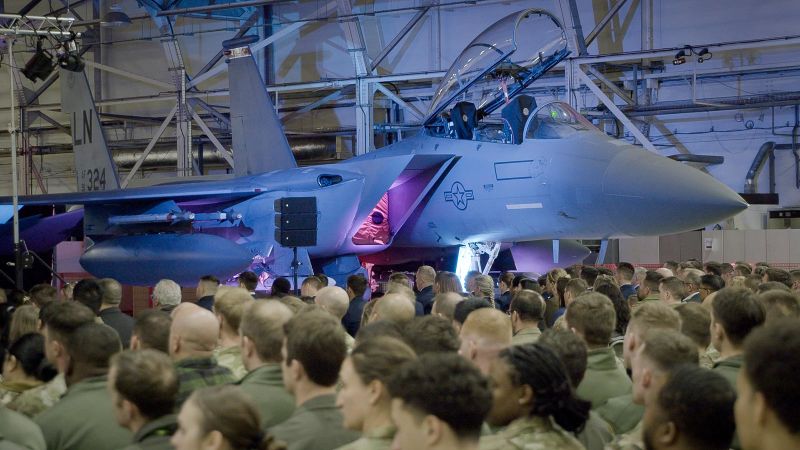
Iran has announced that it has shot down a second U.S. F-35 fighter jet, a move that may reflect a new escalation in military tensions between Tehran and Washington. Iranian authorities confirmed that they have initiated a search for the pilot who was aboard the aircraft, while the U.S. Department of Defense has not issued any official confirmation regarding the incident.
These developments come at a sensitive time, as mutual threats between the two sides have increased, especially after U.S. President Donald Trump threatened to escalate attacks against Iran once again. These statements arise amid escalating regional crises, raising concerns about a military escalation that could impact the stability of the region.
Details of the Incident
According to Iranian statements, the downing of the U.S. fighter jet occurred as part of air defense operations, with Iran claiming that it managed to target the aircraft while it was flying in Iranian airspace. In contrast, the United States has not provided any information regarding the missing aircraft or the pilot, which adds to the ambiguity surrounding the incident.
The F-35 jets are among the most advanced military aircraft owned by the United States, featuring cutting-edge technologies that make them difficult to detect. Therefore, the downing of one would have significant implications for the reputation of the United States in the field of air power.
Background & Context
Tensions between Iran and the United States date back several years, with relations between the two countries deteriorating significantly after Washington's withdrawal from the Iranian nuclear deal in 2018. Since then, the United States has imposed strict economic sanctions on Iran, exacerbating the economic and political situation in the country.
The region has also witnessed numerous military incidents that have heightened tensions, including attacks on oil facilities in Saudi Arabia, which Iran has been accused of orchestrating. These events have contributed to increasing fears of a potential military conflict in the region.
Impact & Consequences
If Iran confirms the downing of the U.S. fighter jet, it could lead to unprecedented military escalation between the two sides. The United States may take retaliatory actions, further intensifying the conflict in the Middle East, which is already suffering from multiple crises.
This incident could also affect international relations, as other countries may intervene in the dispute, complicating the situation further. Global oil markets are likely to be impacted as well, as any military escalation in the region could lead to rising oil prices due to concerns over supply disruptions.
Regional Significance
The neighboring Arab countries to Iran and the United States find themselves in a precarious position, as their stability could be significantly affected by any military escalation. Many of these countries rely on the United States for security and defense, placing them in a difficult position should a new war erupt in the region.
Moreover, any escalation could lead to a flow of refugees from Iran or neighboring countries, increasing the pressures on Arab nations already grappling with internal crises.
In conclusion, the situation in the region remains tense, and the international community must work to de-escalate tensions and avoid any military escalation that could lead to catastrophic outcomes.