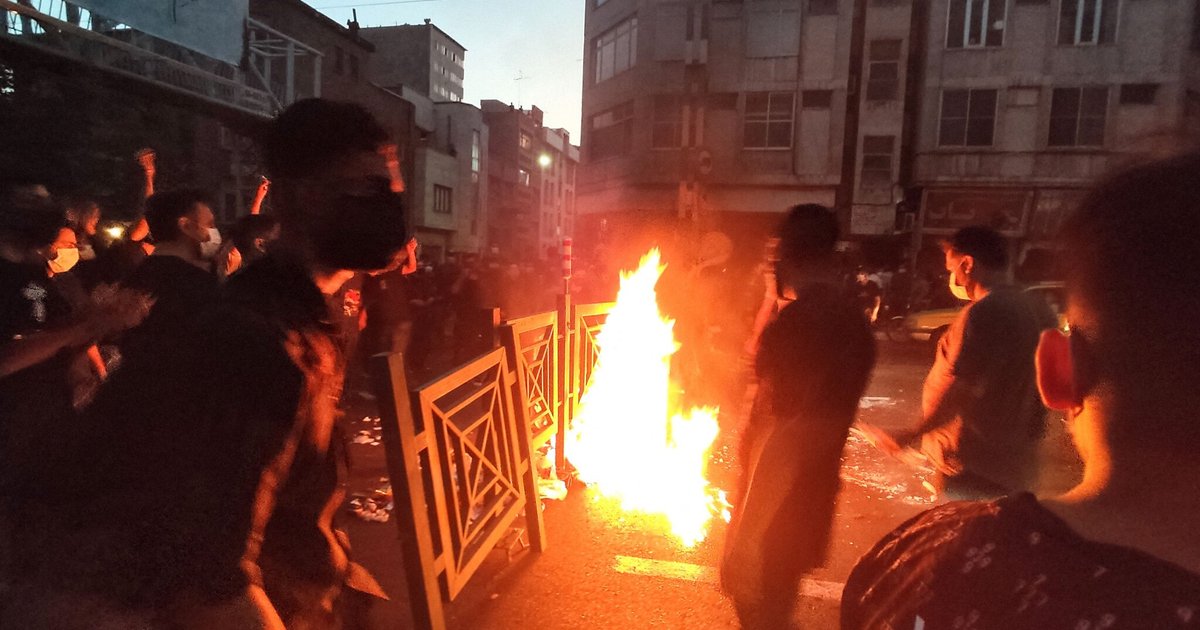
The Iranian authorities executed a man on Tuesday who was accused of being a leader in a network associated with Israeli intelligence. This information was reported by the Mizan news agency, which is affiliated with Iran's judiciary, stating that the man was charged with setting fire to a mosque in the capital, Tehran, during protests that erupted in the country last January.
This action comes at a time of increasing internal tensions in Iran, where widespread protests against the government began in January, leading to violent clashes between demonstrators and security forces. Concerns have been raised that these protests could be exploited by external entities, prompting the government to take stringent measures against those accused of collaborating with such forces.
Details of the Incident
Reports indicate that the accused was part of a network believed to operate on behalf of Israeli intelligence, and he was arrested during the protests that swept the country. He was charged with setting fire to a mosque, which Iranian authorities deemed a terrorist act warranting the maximum penalty. This execution aligns with the Iranian government's policy to confront what it perceives as security threats from abroad.
The death penalty remains a highly controversial punishment in the international community, with human rights organizations arguing that it contradicts basic human rights. Nevertheless, Iran continues to carry out death sentences in cases related to national security, intensifying criticism from the global community.
Background & Context
Historically, Iran has experienced numerous popular protests over many years, reflecting citizens' dissatisfaction with economic and political conditions. In recent years, these protests have notably escalated, especially following the United States' withdrawal from the nuclear agreement and the re-imposition of economic sanctions on the country.
Iran views these protests as being exploited by foreign powers, particularly Israel and the United States, which leads it to adopt strict measures against anyone believed to be cooperating with these forces. Recent events have shown that the Iranian government is prepared to go to great lengths to protect its national security, even if it means carrying out death sentences.
Impact & Consequences
The execution in this case could have significant repercussions for the internal situation in Iran. It may lead to further protests from human rights organizations and citizens opposing the death penalty. Additionally, it could heighten tensions between Iran and Western countries, which express concern over human rights in the nation.
Regionally, this move may affect Iran's relations with its neighbors, especially amid ongoing tensions in the area. This punishment could be seen as a message from the Iranian government that it will not tolerate what it perceives as threats to its national security, potentially escalating tensions in the region.
Regional Significance
The events in Iran hold considerable importance for the Arab region, as any escalation in tensions could impact the stability of neighboring countries. Issues related to human rights and public freedoms are sensitive topics in many Arab nations, making it essential to monitor developments in Iran and their implications for the region.
Ultimately, the issue of human rights in Iran remains a contentious topic, with varying opinions on the legitimacy of carrying out death sentences. As protests and tensions continue, the question of how these events will affect the future of Iran and the region as a whole remains open for discussion.