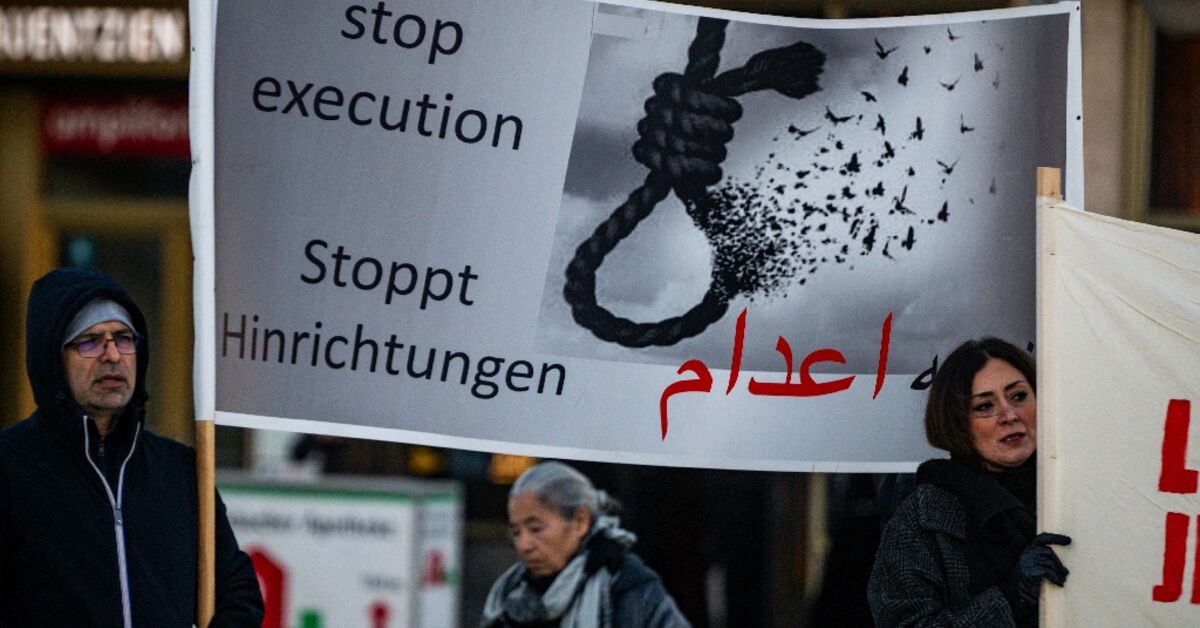
Iranian authorities executed 18-year-old Amir Hossein Hatami on Thursday morning, who was convicted of setting fire to a security base during protests that erupted in the country last January. The execution took place in Ghezel Hesar prison, known for its harsh conditions, following a revolutionary court in Tehran issuing the death sentence against him in February, along with six others.
This action comes at a time when executions are increasing in Iran, as the government continues to suppress popular protests that erupted due to economic and political crises. The execution of Hatami has drawn widespread condemnation from human rights organizations, which view this step as a blatant violation of human rights.
Details of the Incident
Amir Hossein Hatami, who was 18 years old at the time of his execution, was arrested during the protests that broke out in January 2023, expressing public anger over the deteriorating economic conditions in the country. Authorities accused him of setting fire to a security base, a charge many consider to be based on flimsy grounds, as he was convicted without sufficient evidence to support the accusation.
This incident is part of a series of executions carried out by Iran in recent months, with reports indicating a significant rise in the number of executions, reflecting the government's repressive policy towards dissenters and protesters.
Background & Context
Historically, Iran has witnessed numerous popular protests expressing dissatisfaction with government policies, yet the government has always responded forcefully to these protests. Since 2019, protests have escalated in the country due to economic crises, including rising fuel prices and unemployment, exacerbating social conditions.
In recent years, Iran has also seen heightened tensions with the United States and Israel, with the Iranian government accusing these countries of interfering in its internal affairs. This escalation in tensions has influenced the government's policy towards protesters, as it seeks to demonstrate its strength through the implementation of death sentences.
Impact & Consequences
The execution of Amir Hossein Hatami may have serious repercussions for the internal situation in Iran, potentially leading to increased protests and demonstrations against the government. Additionally, this action could strengthen the position of human rights organizations calling for a halt to executions in the country, placing greater international pressure on the Iranian government.
Moreover, the rise in executions could affect Iran's image in the international community, potentially leading to new sanctions or increased political pressure on the Iranian government.
Regional Significance
The events in Iran are of significant importance to Arab countries, as the situation in Iran directly impacts security and stability in the region. The escalation of protests and repression in Iran may raise concerns among neighboring countries, especially those facing similar challenges in human rights.
Furthermore, tensions between Iran, the United States, and Israel may affect relations between Arab states and these powers, potentially leading to changes in political alliances in the region. Under these circumstances, Arab countries should closely monitor the situation in Iran and be prepared to address any repercussions that may arise from these events.