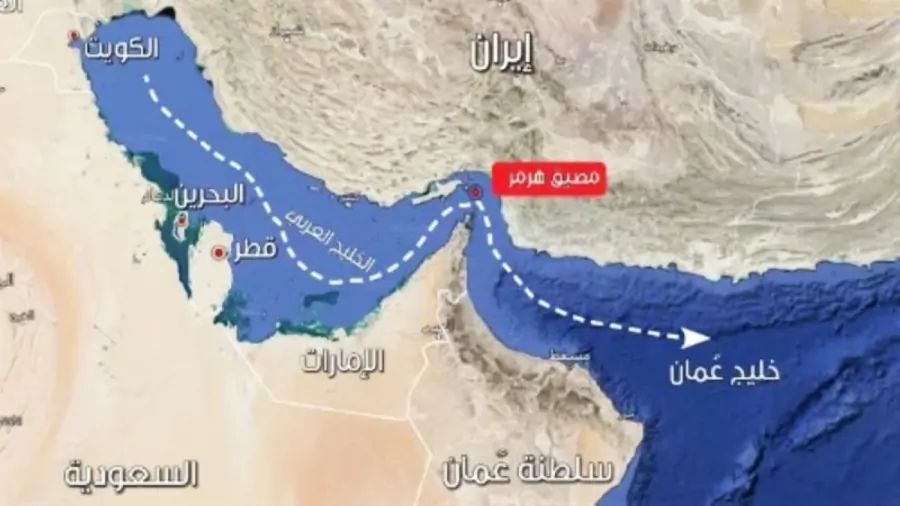
A senior Iranian official revealed to Al Jazeera Net that Iran will impose insurance fees on ships wishing to transit the Strait of Hormuz as part of its strategy to enhance security in the region. The official explained that these fees will apply to ships coming from certain friendly countries, reflecting Tehran's direction towards finding new sources of income amid difficult economic conditions.
The official also confirmed that Iran has already begun allowing Iraqi ships safe passage through the strait, noting that several Indian, Pakistani, Turkish, and French ships have previously obtained transit permits. This step is part of a protocol approved by Iran's top institutions, aimed at compensating for the costs imposed by the war on the country.
Details of the New Fees
In the wake of recent attacks by the United States and Israel on petrochemical complexes in the Mahshahr port, the Iranian official stated that the country will respond proportionately to these actions, emphasizing the importance of collecting compensation costs. Iran aims to enhance its presence in the region and ensure maritime navigation safety, especially amid increasing tensions.
The introduction of these fees is seen as a strategic move to bolster Iran's economic resilience and assert its influence in a critical maritime corridor that is vital for global trade.
Background & Context
This decision comes at a sensitive time as economic pressures on Iran escalate due to international sanctions, prompting the country to seek new ways to boost its revenues. The Strait of Hormuz is a crucial passage for oil shipments, and any disruption could have significant implications for global energy markets.
Iran's strategy appears to be a response to both external pressures and internal economic challenges, aiming to secure its maritime interests while navigating a complex geopolitical landscape.
Impact & Consequences
The imposition of these fees could lead to heightened tensions in the region, as other nations may retaliate against these measures, potentially affecting global trade flows through the strait. The maritime industry is closely watching these developments, as they could influence shipping routes and insurance costs.
Moreover, the response from affected countries could escalate into broader conflicts, impacting not only regional stability but also international relations and economic dynamics.
Regional Significance
This step is significant as it reflects changes in Iran's maritime security policy and its implications for global trade routes. The Strait of Hormuz is a vital artery for oil transportation, and any alterations in its operational protocols could have far-reaching effects on global energy supply.
Closing this new chapter in Iran's maritime policy could reshape alliances and economic interactions in the region, making it a focal point for international attention.