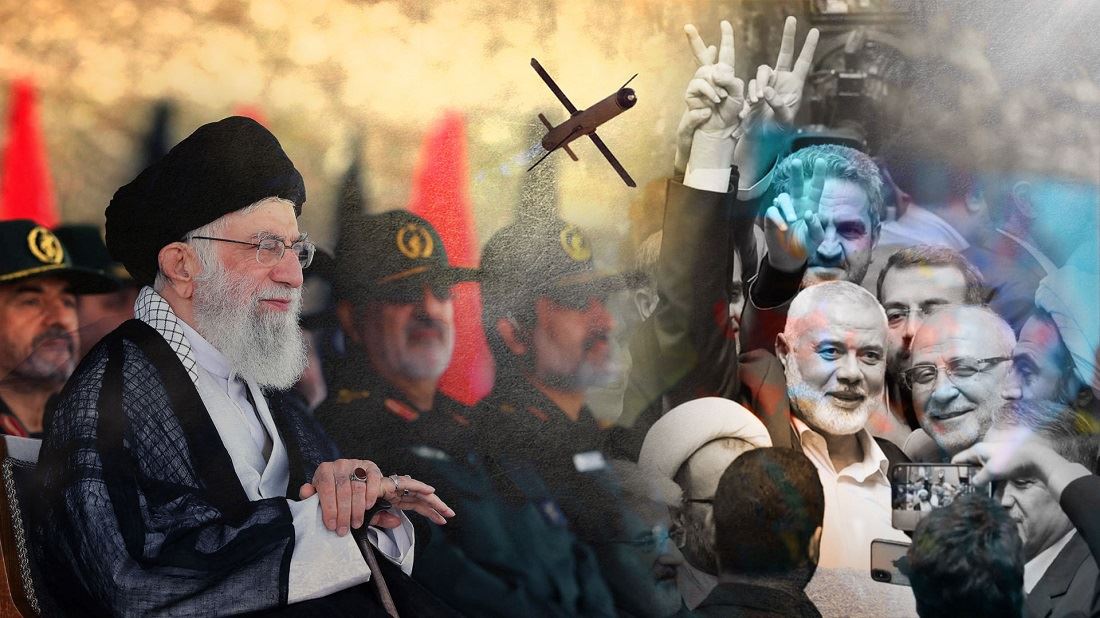
Iran's intelligence system exhibits a unique complexity that reflects the multitude of agencies involved in information gathering and analysis. While Iran appears to possess a cohesive security system from the outside, the internal reality reveals a tangled web of intelligence agencies that raises questions about who manages the "security mind" of the country.
A report by Al Jazeera indicates that the Iranian security structure consists of several institutions, with the SAVAK being the most prominent security arm of the Shah's regime before the Iranian revolution. Following the downfall of this agency, its structure disintegrated, giving rise to multiple institutions competing for authority.
Details of the Event
The Ministry of Intelligence and National Security has emerged as the official agency responsible for gathering and analyzing information both domestically and internationally, supported by significant material and logistical capabilities. However, the influence of this ministry has gradually diminished in favor of the Islamic Revolutionary Guard Corps (IRGC), which has notably strengthened its intelligence presence, especially after the protests that swept the country in 2009.
Since then, the IRGC has established a parallel intelligence system, which includes the IRGC Intelligence Organization, tasked with information gathering, counter-espionage operations, and special operations. Other agencies are also involved in monitoring threats and protecting the regime.
Background & Context
The Iranian intelligence system is not limited to the Ministry of Intelligence and the IRGC; it also includes the intelligence of the conventional army, responsible for tactical tasks to support military operations, and the Security Forces Command, which encompasses multiple units, including cyber police and counter-espionage agencies.
Each agency has its own counter-espionage unit, leading to significant overlaps in jurisdiction. This multiplicity has not only created redundancy in operations but has also resulted in a state of mutual surveillance among the agencies due to a lack of trust between them.
Impact & Consequences
In an attempt to overcome these challenges, an "Intelligence Coordination Council" was established, comprising representatives from various agencies, aimed at distributing tasks and discussing common issues. However, this framework has not fully succeeded in ending the competition or achieving the necessary coordination.
This multiplicity is fundamentally linked to the nature of the Iranian political system post-revolution, as the Islamic Republic sought to prevent the monopoly of power and information by a single entity, resulting in a balance between official institutions and the IRGC. However, this policy, despite its objectives, has produced counterproductive effects, as conflicting authorities and differing visions have led to security confusion.
Regional Significance
This imbalance became evident in 2020, following the assassination of nuclear scientist Mohsen Fakhrizadeh, where disagreements among the agencies surfaced publicly. In a statement by former Intelligence Minister Mahmoud Alavi, he indicated that the perpetrator was a member of the armed forces, emphasizing that his ministry lacked the authority to operate within this institution, reflecting the deep divisions within the security apparatus.
The structure of Iranian intelligence reveals a complex equation based on the multiplicity of agencies and power balance, yet it simultaneously suffers from internal competition that limits its effectiveness, raising ongoing questions about the capability of this system to confront increasing security challenges.