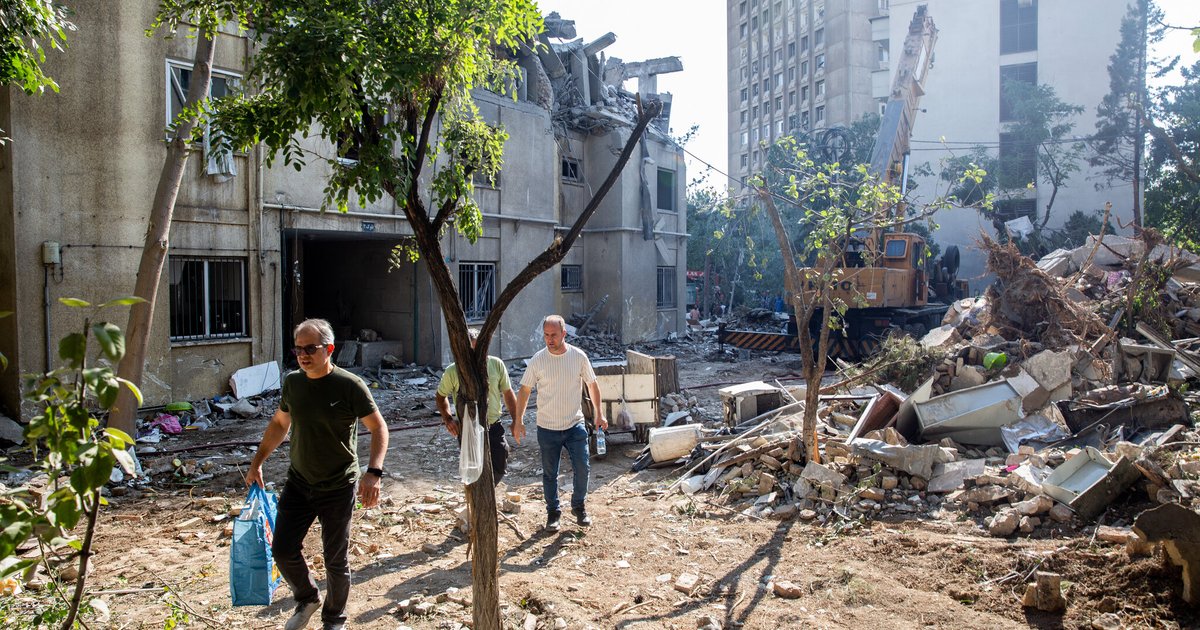
Iran has initiated a series of extensive attacks against the occupied territories, reflecting a notable escalation in military tensions in the region. These attacks come at a time when former U.S. President Donald Trump is seeking to mediate a ceasefire, raising questions about the political and military dimensions of this escalation.
The Iranian attacks, which targeted military and strategic sites, indicate Tehran's capability to execute complex operations under the current circumstances. Reports suggest that these operations may be part of a broader strategy aimed at enhancing Iran's influence in the region.
Details of the Attacks
According to military sources, the attacks were carried out using a variety of weapons, including missiles and drones. The strikes targeted sensitive sites belonging to the occupied territories, resulting in significant damage. These attacks occur in the context of escalating tensions between Iran and the occupied territories, with both sides exchanging accusations regarding military violations.
Simultaneously, Trump is attempting to leverage these conditions to promote the idea of a ceasefire, announcing his willingness to mediate between the conflicting parties. This move comes at a critical time, as international pressure on Iran to curb its military activities in the region is increasing.
Background & Context
Historically, Iranian relations with the occupied territories have been marked by ongoing tensions, as Iran considers the occupied territories a primary enemy. Recent events, including the U.S. withdrawal from the nuclear agreement, have contributed to heightened tensions. Additionally, Iran's support for armed groups in the region has complicated the security landscape.
These attacks are seen as part of a broader Iranian strategy aimed at bolstering its regional position, especially in light of the challenges it faces from the United States and its allies. The escalation of attacks may also be a response to the increasing pressures Iran is experiencing on the international stage.
Impact & Consequences
Analysts predict that these attacks could lead to a greater escalation in the conflict, potentially affecting regional stability. Furthermore, any potential U.S. intervention could complicate matters, leading to varied reactions from the involved parties.
If these dynamics continue, we may witness a shift in the balance of power in the region, which could impact relations between Arab states and Iran. The military escalation may also have economic and social repercussions for neighboring countries.
Regional Significance
These developments are particularly significant for Arab states, as they could lead to increased tensions in other areas. The military escalation may impact regional security, necessitating a response from Arab nations to address these challenges.
Ultimately, the question remains as to how the international community will respond to these situations, and whether there is a possibility of reaching a peaceful resolution that ensures stability in the region. The current events represent a real test for regional and international policies towards Iran and the occupied territories.