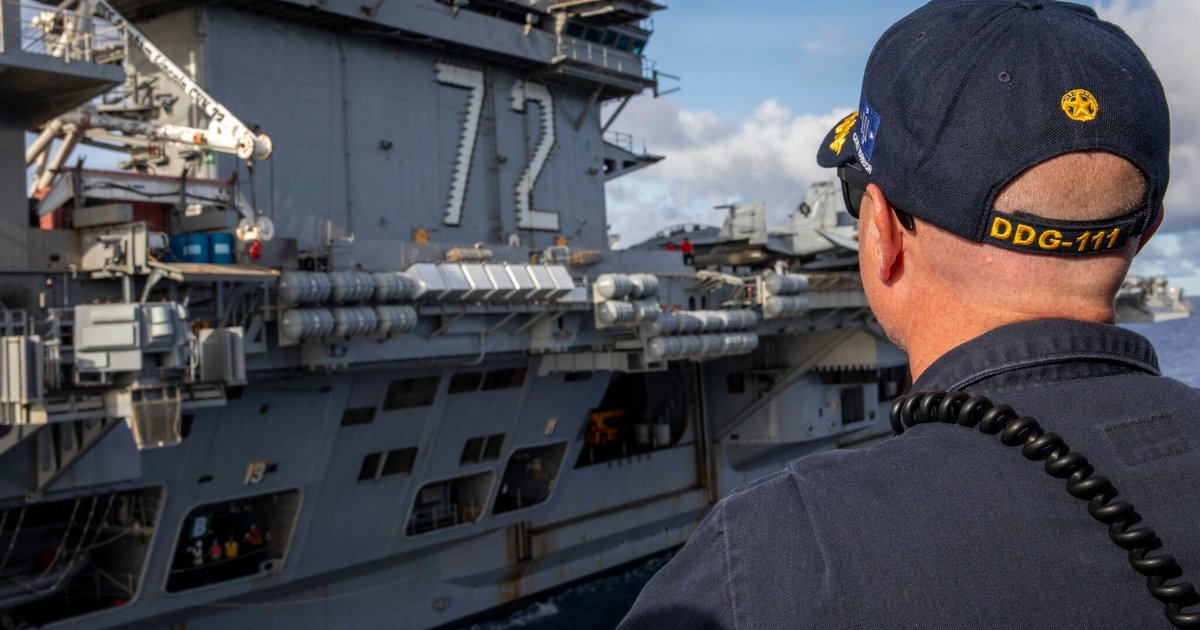
In an unprecedented military escalation, the Iranian Revolutionary Guard has launched four Ghadir missiles at the US aircraft carrier Abraham Lincoln, according to media reports. The attack, which took place near the Arabian Gulf, comes amid increasing tensions between Iran and the United States, particularly following joint military operations conducted by the latter with Israel.
Reports also indicate that the Iranian Revolutionary Guard has carried out a missile attack on a secret meeting of American pilots in the United Arab Emirates. This escalation follows a series of events in the region, where mutual attacks between Iran and US forces have intensified.
Details of the Incident
The attack on the Abraham Lincoln aircraft carrier represents a provocative step by Iran, occurring after the United States and Israel announced joint military operations on February 28. These operations resulted in the deaths of several Iranian military leaders, further heightening tensions in the region.
In related news, Iranian sources reported that the attack led to a significant number of casualties, estimating over 1200 dead, reflecting the extent of the damage Iran has suffered due to US military operations.
Background & Context
Historically, relations between Iran and the United States have been fraught with tension since the Islamic Revolution in 1979. These tensions have escalated particularly after the US withdrawal from the Iranian nuclear deal in 2018, leading to severe economic sanctions on Tehran. In recent years, Iran has increased its military activities in the region, including the development of its missile programs.
The recent military operations conducted by the US and Israel against Iran are part of a broader strategy aimed at curbing Iran's influence in the Middle East. These operations raise concerns among many neighboring Arab countries, which fear the escalation of conflict.
Impact & Consequences
The Iranian attack on the US aircraft carrier could lead to a larger escalation in military conflict in the region. The United States is expected to respond strongly to this attack, potentially leading to a comprehensive military escalation. Such escalation could affect oil prices and global financial markets, as any military conflict in the Gulf could significantly drive up oil prices.
Moreover, this escalation may open the door for new military interventions by other countries in the region, complicating the security situation further. International reactions to this escalation will be closely watched, as any increase in tensions could impact regional and international stability.
Regional Significance
Neighboring Arab countries are directly affected by the rising tensions between Iran and the United States. Many of these countries, such as Saudi Arabia and the UAE, fear that this escalation could threaten their national security. Additionally, any military escalation could lead to an influx of refugees and increased sectarian tensions in the region.
In conclusion, the Iranian attack on the US aircraft carrier Abraham Lincoln marks a turning point in the ongoing conflict, necessitating close monitoring by the international community. The rising tensions could have far-reaching implications for regional and international security.