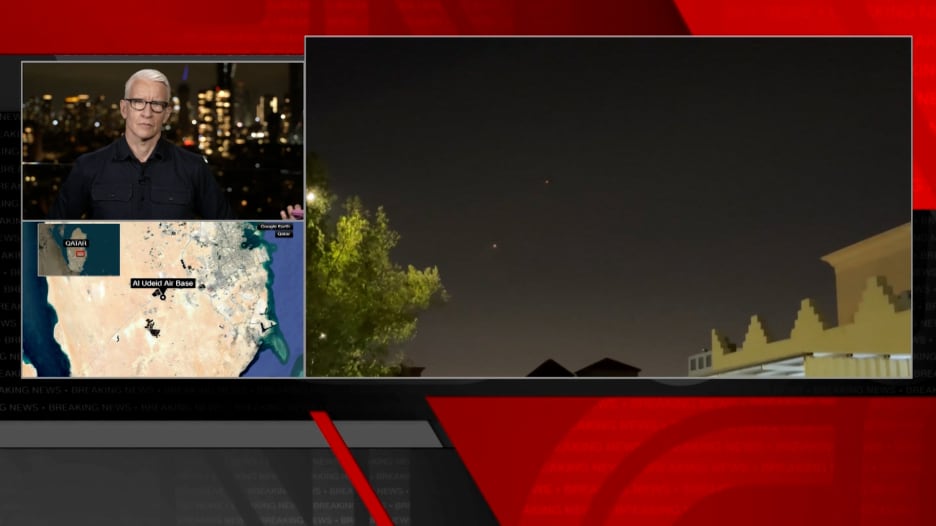
Iran has just launched a new missile attack on central Israel, making this the twelfth in a series of strikes targeting Israeli territory over the past 24 hours. This escalation comes at a sensitive time as tensions between Iran and Israel are on the rise, raising fears of a larger military confrontation in the region.
The Iranian missile attacks are occurring amidst increasing tensions between Tehran and Tel Aviv, with both nations exchanging accusations of inciting violence. Israeli military sources have confirmed that air defenses intercepted some of these attacks, but the damage caused by the recent strikes is raising concerns within political and military circles.
Details of the Recent Attack
The latest attack follows a series of strikes targeting military and civilian sites in Israel, utilizing advanced missiles. Reports indicate that some missiles landed in populated areas, resulting in injuries and material damage. This escalation coincides with Iran's ongoing development of its military capabilities, which is alarming the international community.
Simultaneously, Israel continues to bolster its air defenses, announcing plans to increase the number of defensive batteries in sensitive areas. The Israeli government has also confirmed that it will respond forcefully to any new aggressions, heightening the likelihood of further escalation in the conflict.
Background & Context
Historically, Iranian-Israeli relations have seen increasing tensions since the Islamic Revolution in Iran in 1979. Israel views Iran as an existential threat, particularly with Tehran's pursuit of its nuclear program. In recent years, reciprocal attacks between the two sides have escalated, with Iran targeting Israeli sites through its regional proxies, while Israel has responded with airstrikes on Iranian positions in Syria.
These events coincide with rising tensions in the Middle East, where regional powers are competing for influence. Iran is considered one of the key players seeking to expand its influence in the region, which intensifies the conflict with Israel and other Arab states.
Impact & Consequences
The repeated Iranian attacks on Israel could lead to significant military escalation, potentially dragging the region into a full-scale war. Additionally, international reactions to these attacks will be crucial, as major powers like the United States and Russia may intervene to mediate or support one side.
Furthermore, the ongoing escalation could impact the regional economy, potentially leading to increased oil prices and disrupting trade flows. The deteriorating security situation may also prompt neighboring countries to bolster their military forces, raising the likelihood of new conflicts.
Regional Significance
The Arab states neighboring Israel and Iran find themselves in a sensitive position, as any military escalation could affect their stability. Concerns about refugee flows or increased terrorist activities may rise if a full-scale war breaks out.
Additionally, Arab countries seeking normalization with Israel may find themselves in a precarious situation, facing internal and external pressures as a result of the escalation. It is crucial for these nations to adopt prudent policies to maintain their stability and security amid these changing circumstances.
In conclusion, the situation in the region remains complex, with political and military interests intertwining, making it difficult to predict the course of events. The international community must take urgent steps to mitigate the escalation and ensure security and stability in the region.