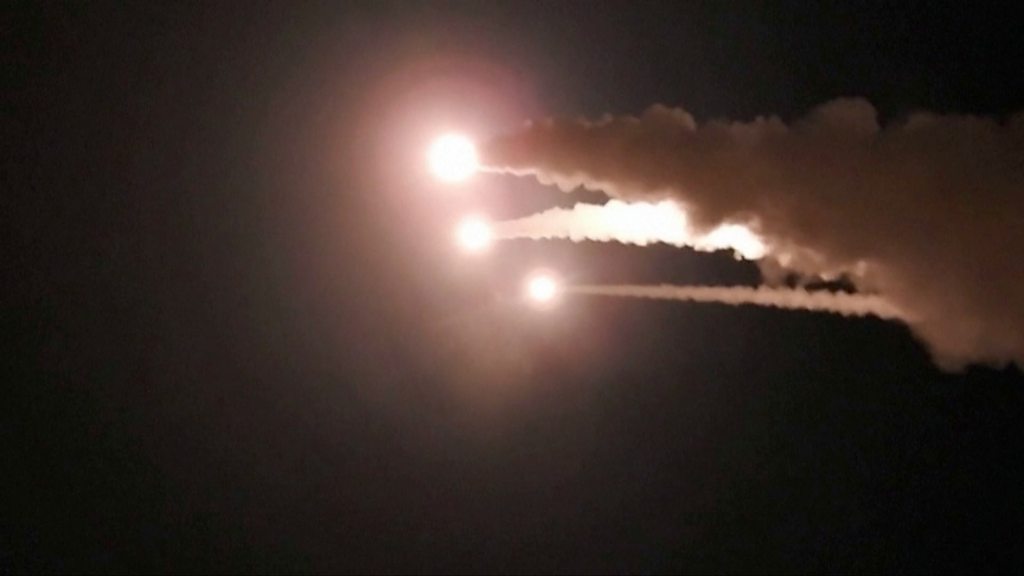
Iran has confirmed its missile attacks on Israeli territory, stating that these operations signify the 'beginning of a full week of continuous strikes.' This escalation occurs against a backdrop of increasing tensions in the region, raising fears of a larger military confrontation between Iran and Israel.
The footage released by Iranian media shows missiles being launched towards targets in Israel, reflecting Tehran's intention to bolster its military strength in response to what it perceives as ongoing threats from Israel. This escalation follows a series of military skirmishes between the two sides, intensifying the already heightened tensions in the Middle East.
Details of the Incident
As Iran continues to enhance its military capabilities, the recent attacks indicate its desire to send a strong message to Israel. Iranian military sources have confirmed that these strikes were meticulously planned and are part of a broader strategy to counter Israeli threats.
Reports suggest that the attacks may continue throughout the week, increasing the likelihood of further escalation in the conflict between the two nations. This situation has raised concerns within the international community, which is striving to de-escalate tensions in the region.
Background & Context
Historically, relations between Iran and Israel have been fraught with increasing tensions, as Iran views Israel as a primary adversary in the region. Recent years have seen a rise in mutual attacks, including cyber operations and direct military engagements.
These events coincide with political developments in the region, including potential peace talks between some Arab states and Israel, complicating the regional landscape further. Additionally, the presence of U.S. forces in the area adds another layer of complexity, as Iran considers their presence a threat to its national security.
Impact & Consequences
These missile strikes could lead to a significant escalation in the conflict between Iran and Israel, potentially dragging the region into a wider war. International reactions will be crucial in determining the course of events, as the global community seeks to prevent military escalations that could have catastrophic outcomes.
The ramifications of these developments are likely to affect oil prices and financial markets, as any escalation in the conflict may heighten tensions in global energy markets. Neighboring countries may find themselves compelled to take clear stances, further complicating the regional situation.
Regional Significance
These events are particularly significant for Arab nations, as any escalation in the Iran-Israel conflict could impact security and stability in the region. Arab countries looking to improve relations with Israel may find themselves in a sensitive position.
Moreover, military escalation could lead to an influx of refugees into neighboring countries, increasing pressure on these nations. Therefore, the situation necessitates coordinated Arab efforts to address the growing security challenges.
The recent escalation between Iran and Israel highlights the ongoing tensions in the region and underscores the need for effective strategies to address these challenges. The international community and Arab nations must work together to avoid further escalation of the conflict and achieve stability in the region.