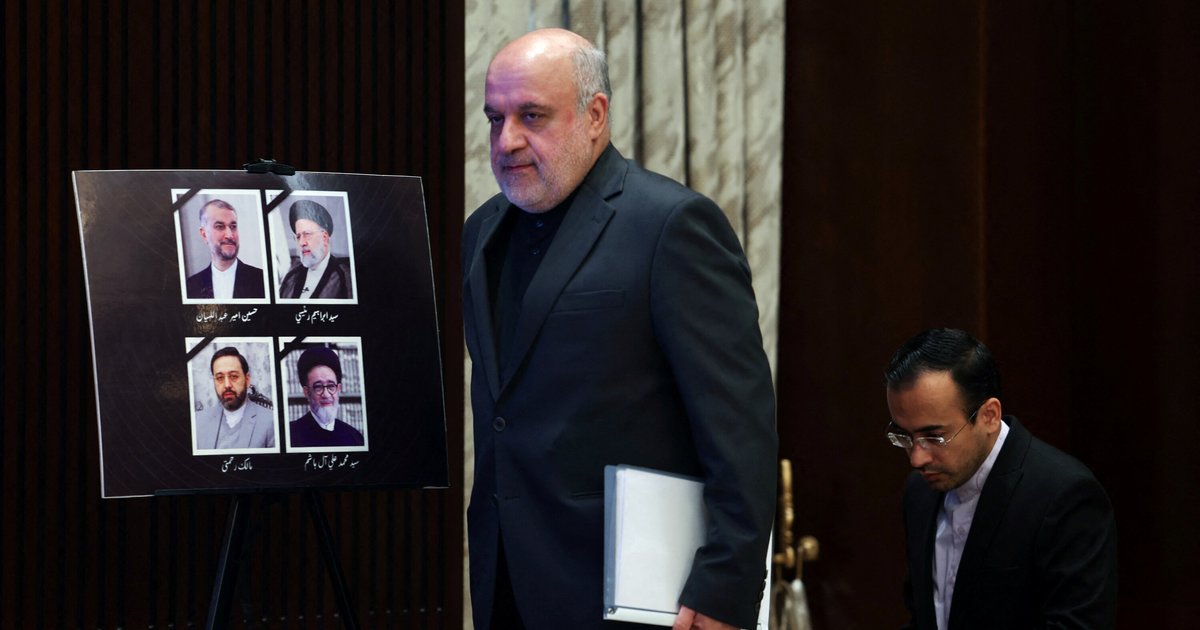
A new diplomatic crisis has erupted between Beirut and Tehran, as Iran, through its Foreign Ministry spokesperson, declared it would keep its ambassador in Lebanon, Mohammad Reza Shibani, despite the Lebanese government's decision to not accept his accreditation. The Lebanese government has deemed Shibani a persona non grata, giving him a deadline to leave the country due to violations of diplomatic norms by the Iranian embassy.
This crisis comes at a sensitive time, as the region is experiencing increasing political and security tensions. Iran's decision has sparked widespread discontent among Lebanese political circles, with some viewing it as a challenge to Lebanese sovereignty and a breach of diplomatic protocols.
Details of the Incident
Last week, the Lebanese government issued an official decision rejecting the accreditation of Iranian ambassador Mohammad Reza Shibani, citing actions by the Iranian embassy that were deemed inconsistent with diplomatic norms. Despite this, Iran announced it would continue to support Shibani, complicating the relationship between the two countries further.
It is noteworthy that Shibani has served as Iran's ambassador to Lebanon for a long time and is associated with several political events in the country. This Iranian decision comes at a time when Lebanon is grappling with severe economic and political crises, exacerbating tensions among various political factions.
Background & Context
Historically, Lebanese-Iranian relations have been tense, particularly in light of Iran's increasing influence in the region. Hezbollah, backed by Iran, is one of the prominent political and military forces in Lebanon, making it challenging for the Lebanese government to take decisive stances towards Tehran.
Concerns are growing that this crisis could lead to a further escalation in relations between Lebanon and Iran, especially given the tense regional circumstances. There is also apprehension regarding the impact on internal stability in Lebanon, which is already suffering from multiple crises.
Impact & Consequences
This crisis may exacerbate the political situation in Lebanon, as various political forces could exploit this event to their advantage. Moreover, Iran's continued support for Shibani may increase pressure on the Lebanese government, potentially leading to greater internal divisions.
Furthermore, this crisis could affect Lebanon's relations with other Arab countries, as it may be perceived as a challenge to Lebanese sovereignty. Amid the multiple crises facing Lebanon, this Iranian decision could have negative repercussions on the international aid the country desperately needs.
Regional Significance
This crisis is part of the larger conflict between Iran and the Gulf Arab states, as Iran seeks to expand its influence in the region. These tensions could lead to increased divisions among Arab countries, reflecting the geopolitical struggles in the area.
Ultimately, this crisis illustrates how relationships between nations can be significantly impacted by diplomatic decisions, and how local crises can intertwine with regional and international dimensions. It remains to be seen how events will unfold in the coming days.